Parrotlet Feeding: Diet, Schedule, and Foods to Avoid
On This Page▾

A parrotlet's bowl is pellets doing most of the work, fresh produce filling the gaps, and seed kept as a small extra, not the foundation. Pellets are a manufactured bird food in uniform bits, sold by bird size. A few details are specific to this species and worth knowing before you fill the dish.
What Parrotlets Eat
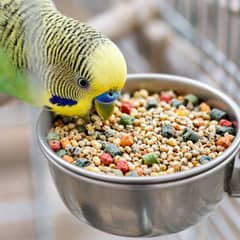
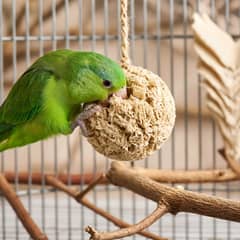
The foundation should be a formulated small parrot pellet, about 75 to 80% of what the bird eats, with fresh vegetables and fruit making up most of the rest. Limit seeds and nuts to a tiny portion, no more than once a day, rather than treating them as the base of the diet. A little seed is fine, especially as enrichment in a foraging toy. An all-seed diet is not: it leads to malnutrition, obesity and fatty liver disease. A bit of cooked egg or plain cooked pasta makes an occasional treat.
Vegetables, every day: carrot, corn, peas, green beans, broccoli, sweet potato, squash, zucchini, bell peppers, cauliflower, and leafy greens such as collards, chard and dandelion greens. Celery is safe but carries little nutrition.
Fruit, a little: banana, orange, pear, apple, kiwi, pomegranate, mango, papaya, grapes and berries. Fruit is mostly water and sugar, so keep it to a small share, and take out apple seeds and cherry and peach pits first.
Introduce new foods gradually, since parrotlets can be stubborn about anything unfamiliar.
Feeding Approach
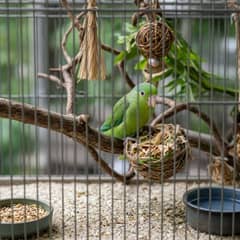
Parrotlets are free-choice eaters: they pick at food throughout the day instead of eating set meals, so refresh the pellet bowl in the morning, when they are hungriest, and top it up if it empties before evening. That bowl is the baseline, and the seed allowance and some of the pellets can go into foraging toys so the bird works for part of its day. A bird this small that fails to solve a toy still has to eat, which is why the bowl stays.
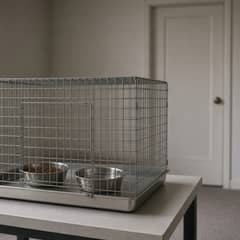
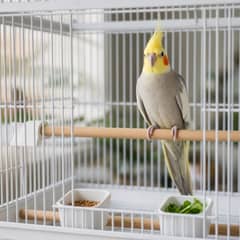
Use three dishes: one for pellets, one for fresh fruit and vegetables, one for water. Offer fresh vegetables and a little fruit daily, finely chopped for a bird this small, and pull anything uneaten within a couple of hours, before it spoils. Keep fresh water available at all times and clean the dishes daily. Clamp-on dishes that stay put on the cage bars make this easier to keep on top of.
How Much a Day
No fixed pellet ration suits every parrotlet. The pellet bowl stays full and the bird takes what it needs. The measured part of the day is the extras: seeds and nuts come as one tiny daily portion, which can be handed out as training rewards through the day.
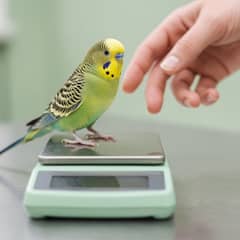
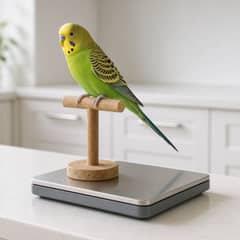
The number that matters is what one particular bird eats, and a perch scale finds it.
- Weigh the food going into the cage in the morning.
- Weigh what is left 24 hours later, and take the difference.
- Do that for seven days and average it.
That average is the bird's daily intake. Plan from it when you swap seed for pellets, so the bird is always offered as much food as it normally eats in a day.
The bird goes on the scale too, weekly as a routine and more often while its diet is changing. On a diet change, a loss of more than 1 to 2% of body weight in a week, about a third to two thirds of a gram on a 33 gram bird, means the switch is going too fast: put back some of the old food and slow down.
Moving a Seed-Raised Parrotlet to Pellets
Give a new parrotlet the food it was eating before for its first couple of weeks, and start the switch only once it has settled in.
Most birds raised on seed are slow to take to pellets, and a stubborn small bird can go hungry beside a dish it does not recognize as food. Nearly all come around with patience, but the switch can take months, or a year or more. Never try to starve a bird onto pellets.
A bird that takes to pellets readily can switch on a set schedule, using the daily intake you measured:
- Week one: three quarters of the daily intake as seed, one quarter as pellets.
- Week two: half seed, half pellets.
- Week three: one quarter seed, three quarters pellets.
- Week four: cut the seed down to the small daily portion it will keep.
Most birds need a slower route:
- Put a dish of pellets in first thing in the morning.
- A couple of hours later, offer the old seed with about 10% pellets mixed through it, so the bird has to work around the pellets. A few ground pellets sprinkled over the seed get it used to the taste.
- Once the bird has clearly tried the pellets, cut the seed and raise the pellets in small steps.
- If it still refuses, offer the seed for only an hour or two, a couple of times a day, with pellets in the cage the whole time.
- Weigh the bird through every step, and slow down if it loses more than 1 to 2% of its weight in a week.
Calcium and Grit
Keep a cuttlebone or mineral block in the cage at all times for calcium. It matters even more for a hen, especially one that is laying, since a calcium deficiency is the factor most consistently linked to egg binding.
Skip grit. Free access to it can cause a dangerous blockage in the crop, the food pouch at the base of the neck, or further down the gut, so offer it only if a vet recommends it for a bird having trouble digesting.
A parrotlet's upper beak has small ridges that hold a seed in place while the lower beak cracks and removes the hull. With the hull gone before the seed is swallowed, there is nothing left for grit to grind.
Foods to Avoid
Never offer:
- Avocado and onion, which are toxic to parrots of every kind.
- Chocolate and caffeine, which can cause a dangerously fast heart rate and, in enough quantity, seizures or death.
- Alcohol, which is toxic even in small amounts.
- Garlic, cooked or raw, which like onion can trigger a serious anemia.
- Xylitol, an artificial sweetener in some sugar-free products.
- Food from your mouth, or anything you have taken a bite of, since the yeast and bacteria in a human mouth can make a bird sick.
Also avoid excess salt and high-fat table food, which strain the kidneys and liver. The seeds and pits of apples, cherries and peaches contain compounds that affect heart function, so remove them.
Why Parrotlets Stop Eating
- Resistance to switching from seed to pellets. This can take weeks or months in a bird raised on seed. Offering pellets when the bird is hungriest, and mixing them with a little seed at first, tends to help.
- Heavy molting. Growing a full new set of feathers raises the demand for protein sharply and can tax the body.
- A new environment or handling stress. A short spell of eating less after a move is common.
- Hormonal or egg-related behavior. A hen can be triggered into laying without a male present at all, and the strain of laying shows in her appetite and behavior.
- General illness. Lethargy, feathers held fluffed all the time, nasal or eye discharge, and tail-bobbing with each breath often come with appetite loss in a sick bird.
When to Worry
Parrotlets hide illness as a survival instinct, so take any clear, lasting drop in eating to an avian vet, a vet who treats birds, within about a day instead of watching it for several. A bird that is also lethargic, fluffed, discharging from the eyes or nose, or breathing with its mouth open needs the vet the same day.
Pellets First, Seed in the Toys
Keep the pellet bowl full, chop the vegetables small, and put the little seed it gets into foraging toys. Weigh the bird through any diet change, and call the vet early if it stops eating.
Sources & Further Reading
Last reviewed 20 Sep 2026 · 6 sources
- Lafeber Pet Birds: Pacific Parrotlet, Personality, Food & Care; Parrotlet, Personality, Food & Care
- PetMD: Meet the Parrotlets (Laurie Hess, DVM)
- University of Florida Small Animal Hospital: How to Care for Your Pet Bird
- VCA Animal Hospitals: Feeding Conures; Taming, Training and Talking to Birds
- Merck Veterinary Manual: Nutritional Diseases of Pet Birds
- World Parrot Trust: Pacific Parrotlet
A routine chart and equipment log you can fill in for your own setup. The Universal Pet Kit has it, among 19 forms for any pet that you can type into or print.
Frequently Asked Questions
How often should I feed my parrotlet?
There are no set meals. Fill the pellet bowl each morning, top it up if it empties before evening, and serve fresh vegetables and a little fruit daily.
Should a parrotlet's diet be mostly seeds or pellets?
Mostly pellets, about three quarters or more, with fresh vegetables and a little fruit every day. Seeds and nuts are a tiny portion, once a day at most.
What foods are toxic to a parrotlet?
Avocado and onion first, for any parrot. Chocolate, caffeine and alcohol are dangerous too, and so is anything sweetened with xylitol. Never share food from your own mouth.
Do parrotlets need grit to digest their food?
No. A parrotlet cracks the hull off a seed before swallowing it, so there is nothing for grit to grind, and grit it eats can block the crop or gut. Offer it only if a vet asks you to.
Why has my parrotlet stopped eating?
Often something manageable: resistance to switching from seed to pellets, molting, a new environment, or hormonal behavior in a hen. But because parrotlets are small with a fast metabolism, appetite loss paired with a sign of illness such as lethargy, fluffed feathers or discharge needs an avian vet the same day.
How long does it take to switch a parrotlet to pellets?
Anywhere from a few weeks to a year or more. Go at the bird's pace, weigh it as you go, and never starve it into eating pellets.
More on the Parrotlet
Recommended Gear
As an Amazon Associate I earn from qualifying purchases through the links above, at no extra cost to you.

Written by Michael Ryan
Mike keeps two rescued bearded dragons, Dex and Cera, and writes the care guides on BeastlyFacts from his own research and mistakes. He is not a veterinarian.
More about Michael Ryan →You May Also Like
Subscribe - it's free
An occasional email when something new is worth your time. No spam.
Health and More