Zebra Danio Feeding: Diet, Schedule, and the Live Food That Can Trigger an Accidental Spawn
On This Page▾

Zebra danio feeding is simple, small amounts of a quality flake or micro-pellet food, offered twice a day. The one thing worth knowing before you start rotating in live food for variety: it's also the classic way keepers accidentally trigger a spawn.
The Staple Diet
Zebra danios are omnivores. In the wild, Seriously Fish describes them as micropredators, snapping up aquatic crustaceans and other small invertebrates from the water column pretty much constantly throughout the day. In the tank, Aquarium Co-Op recommends building the diet around fish flakes or nano pellets, supplemented with freeze-dried foods, frozen bloodworms, and live baby brine shrimp. A little chopped spinach or other soft greens now and then rounds things out nicely, since danios take more plant matter in their diet than a strict carnivore like a betta.
Unlike the small-mouthed cardinal tetra, zebra danios have a moderately upturned mouth built for snapping prey at or near the surface, so standard flake sizes work fine for adults, you don't need to hunt down micro-sized food the way you would for a smaller-mouthed nano fish.
Feeding Frequency and Portions
Twice daily, offering only what the school finishes in two to three minutes, is the practical standard. That lines up with general zebrafish husbandry guidance used in research colonies too: ZFIN's standard reference on zebrafish care recommends adults get fed at least twice a day, noting that multiple light feedings let fish make better use of the food than one large meal. It's a good reminder that this species' near-constant wild grazing habit doesn't actually require constant tank feeding to keep the fish healthy, two focused feedings covers it.
Foods to Avoid
Excessive protein-rich live or frozen food and any regular overfeeding are the main risks. Avoid low-quality live foods from questionable sources, which can introduce parasites, and don't overdo vegetable matter, even though danios tolerate some, too much still fouls water and can cause bloating.
Live and Frozen Food: The Breeding Wrinkle
This is the part of zebra danio feeding that's genuinely different from most other beginner fish. Aquarium Co-Op notes that zebra danios are prolific, fast-maturing spawners, and conditioning them on live or frozen food (the same bloodworms and brine shrimp recommended above for variety) is a well-known way to trigger a spawning event, sometimes within days. A cooler partial water change can push it along further.
That's a real point of contrast with guppies, the other classic beginner fish. Guppies are livebearers, a well-fed, healthy female will produce broods of live fry more or less on her own schedule regardless of what you feed her. Zebra danios are egg-scatterers instead: a pair or small group releases eggs into open water with no nest and no parental care, and Animal Diversity Web confirms adult zebra danios provide no parental care to young at all, in fact they'll eat their own eggs within minutes unless the eggs fall somewhere the adults can't reach. If you're not trying to breed, that's good news: skip the daily live-food conditioning routine and keep the tank free of fine-leaved plants or marble substrate the eggs could survive in, and an accidental spawn mostly resolves itself. Weigh that last part against what the enrichment research measured, which is that planted tanks produced better larval survival and less anxious adults than bare ones: a planted tank and the occasional spawn the adults clear themselves is the better trade than stripping the tank to prevent one.
In the wild, zebra danios feed almost constantly, picking off zooplankton, mosquito larvae, and insects drifting past all day long, according to Seriously Fish. That sounds like it should mean a tank danio needs food available around the clock too, but it doesn't. Two focused feedings a day, each finished in a couple of minutes, covers the same nutritional ground without foods sitting around fouling the water in between meals.
Supplementation
None specific is required beyond a varied diet. Rotating in live or frozen food alongside a quality flake or pellet covers nutrition and coloration on its own.
The Mistakes That Matter
Overfeeding is the big one: uneaten food decays and spikes ammonia and nitrite in a tank this size, and zebra danios' reputation for toughness doesn't make them immune to that. The other mistake is more of a surprise than a hazard: heavy, sustained live-food conditioning in a mixed-sex group is a genuine way to end up with an unplanned batch of fry.
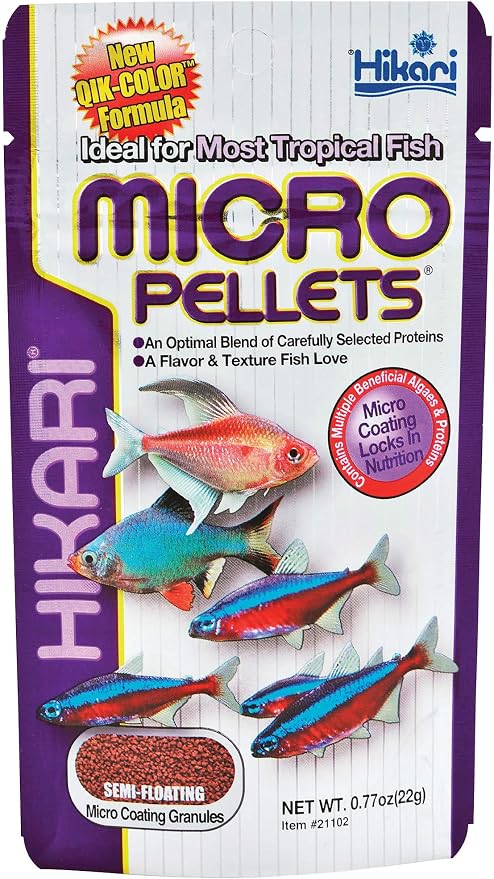
Feed a high-quality micro-pellet food as the base and you've covered most of what this species needs day to day.
The Zebra danio encyclopedia profile has the natural history.
Sources & Further Reading
❓ Frequently Asked Questions
What do zebra danios eat?
A high-quality flake or micro-pellet food as the staple, supplemented with live or frozen bloodworms, brine shrimp, and daphnia a few times a week. Aquarium Co-Op also recommends freeze-dried options and occasional chopped greens like spinach. Zebra danios are omnivores and unfussy eaters.
How often should I feed zebra danios?
Twice a day is the practical standard, offering only what the school finishes in two to three minutes. That matches general zebrafish feeding guidance used in research settings too: the standard husbandry reference at ZFIN recommends adult zebrafish get fed at least twice daily.
Can feeding trigger zebra danios to breed unexpectedly?
Yes, and it catches a lot of first-time keepers off guard. Conditioning danios on live or frozen food is a classic way to trigger spawning, since it mimics the food abundance that kicks off breeding activity in the wild. If you don't want fry, skip the daily live-food routine and don't add fine-leaved plants or marbles the eggs can fall into and survive in.
Are zebra danios livebearers like guppies?
No. Unlike guppies, which give birth to free-swimming fry, zebra danios are egg-scatterers: a spawning group releases eggs into open water or plants with no nest built and no parental care afterward. In fact, adult danios will eat their own eggs within minutes if given the chance, so intentional breeders remove the adults or use a mesh or marble substrate the eggs can fall through to safety.
Do zebra danios need vitamin supplements?
No. A quality flake or pellet with live or frozen food rotated in covers their nutritional needs on its own, no separate supplement required.
📰 More on the Zebra Danio
📘 Zebra Danio care guide
🐠 How Much Does Zebra Danio Ownership Really Cost?
🐠 Zebra Danio Handling: Why the Easiest Fish to Keep Is One of the Hardest to Catch
🐠 Common Zebra Danio Health Issues, Backed by the Best-Documented Fish Disease Data in the Hobby
🐠 Zebra Danio Tank Setup: The Rare Community Fish That Might Not Need a Heater
🐠 Zebra Danio Enrichment: The Most Studied Fish in the World Lives in a Bare Box
🛒 Recommended Gear
As an Amazon Associate, we earn from qualifying purchases through the links above - at no extra cost to you.
Written by Michael Ryan
Mike keeps two rescued bearded dragons, Dex and Cera, and writes the care guides on BeastlyFacts from his own research and mistakes. He is not a veterinarian.
More about Michael Ryan →Comments
No comments yet - be the first!