Axolotl Enrichment: Hides, Foraging, and Safe Novelty
On This Page▾

Enrichment for an axolotl isn't about toys, it's about choice: somewhere to rest out of open water, cover that feels secure, and food that takes a little searching instead of arriving in the same spot every time.
Every single item in an axolotl tank has to be smooth and stable. No eyelids, delicate external gills, and a real impaction risk from loose or sharp material mean the bar for "safe" is unusually high.
Hides and Structure
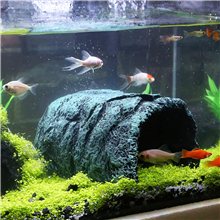
Provide at least 2 hides per adult, ideally 3 to 4 of different shapes and heights. Sideways terracotta pots with the drainage hole sealed, wide PVC pipe sections with the edges fully sanded, and smooth resin or ceramic caves all work well. Live or silk plants add cover too, java fern and anubias tied to decor rather than buried, with marimo moss balls kept larger than the axolotl's head. A gentle current on one side from a baffled filter, paired with a genuinely still-water refuge on the other, lets the axolotl choose its own water movement.
Foraging
Static feeding, dropping food in the same spot and walking away, skips real hunting behavior entirely. Tong-feeding or scattering nightcrawler pieces so the axolotl has to locate them is a simple upgrade. A sand saucer, a shallow dish of very fine sand under 1mm with small food items hidden in it, gives a contained way to add searching behavior without loose sand across the whole tank. Rotate feeding locations every few days, and never use gravel or coarse sand anywhere in the enclosure, impaction is a leading cause of preventable death in this species.
Sensory Novelty
Axolotls have no eyelids and generally prefer dim, low light. Floating plants or subdued lighting create the dappled shade they're actually drawn to, rather than a brightly lit tank.
A mild monthly rearrange of non-critical decor, plants, stones, extra tunnels, adds spatial novelty without removing the hides an axolotl already relies on. Introducing one new safe item for 5 to 7 days at a time, then rotating it out, works the same way. Skip strong currents and bright lighting, neither is enrichment for this species, both are just stress.
Safety Rules
No gravel, no coarse sand, no small loose stones anywhere in the tank. Every edge sanded or factory-smooth. Skip nets for routine handling, they snag on gills and toes. Temperature has to stay in the low to mid 60s F for the animal to be healthy at all, well before enrichment is a relevant question.
Sources & Further Reading
Last reviewed 14 Aug 2026 · 2 sources
- RarePetHub: Axolotl Enrichment, 15 Ways to Keep Your Pet Happy
- Axolotl Central Care Guide
- Billingham, E. (2017). "The curious tale of axolotl enrichment." Refinement Database.
❓ Frequently Asked Questions
What counts as enrichment for an axolotl?
Anything that gives the axolotl a choice: multiple hides to rest in versus open water, plant cover, and food presented in a way that takes some searching instead of a static pile in one spot. It never replaces correct cold water temperature, clean water, and a safe smooth-bottomed tank, those come first.
Are toys or objects safe for an axolotl tank?
Only if every edge is smooth and every piece is too large to swallow. Axolotls have no eyelids, delicate gills, and a real impaction risk from anything loose or sharp. Test any new item by running your hand over it, if it scratches you, it can injure the axolotl.
What is the sand saucer method?
A shallow dish filled with very fine sand, under 1mm grain, placed in one corner, with small food items hidden in it for short hunting bouts. It gives a safe way to add foraging without putting loose sand across the whole tank, where it becomes an impaction risk instead.
How often should I rearrange an axolotl's tank?
Rarely for anything load-bearing. Of the 3 to 4 hides in the tank, keep most of them stable and never moving, and limit changes to occasionally introducing one new smooth item, or a mild rearrange of non-critical decor about once a month. Frequent full overhauls remove the security the tank is supposed to provide.
Can axolotls be kept together for enrichment?
Cohousing isn't enrichment for this species and carries real risk, axolotls will bite at limbs and gills, especially around feeding time or if sizes are mismatched. Housing separately is the safer default.
📰 More on the Axolotl
📘 Axolotl care guide
🦎 How Much Does an Axolotl Really Cost?
🦎 Should You Handle an Axolotl? Only When You Truly Have To
🦎 Common Axolotl Health Issues (Most Trace Back to Temperature)
🦎 Axolotl Tank Setup: Cold Water and No Gravel
🦎 Axolotl Feeding: Schedule, Diet, and the Substrate Mistake That Matters Most
🛒 Recommended Gear
As an Amazon Associate, we earn from qualifying purchases through the links above - at no extra cost to you.
Written by Michael Ryan
Mike keeps two rescued bearded dragons, Dex and Cera, and writes the care guides on BeastlyFacts from his own research and mistakes. He is not a veterinarian.
More about Michael Ryan →Comments
No comments yet - be the first!