Guppy Tank Setup: Warm Water, Gentle Filtration, and a Plan for Fry
On This Page▾

Guppies are one of the more forgiving fish to house well, a warm, cycled tank with gentle filtration covers most of what this species needs.
Tank Size
A base of at least 18 by 12 inches, about 11 gallons, is the minimum for guppies, and a group of 5 or more suits a tank at least 24 inches long. Given how readily guppies breed, a 20-gallon tank is a better long-term choice if you're not actively separating males and females. Go long and rectangular rather than tall, and use a lid, guppies are capable jumpers.
A 10-gallon tank is a solid starting point for most first-time keepers.
Temperature
A tropical species, comfortable in the 64 to 82°F range, with 82°F as the ceiling. A heater is necessary unless your room stays consistently warm year-round, sized to the volume of the tank, about 50 watts for a 10-gallon. Hold the temperature steady anywhere inside that range rather than aiming for one number.
Water Chemistry
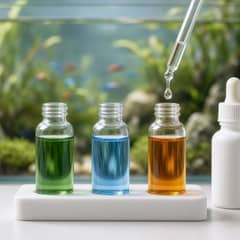
Guppies do best at a pH of 7.0 to 8.5 in moderately hard to hard water, roughly 8 to 30 dGH. They may manage in soft, acidic water, but long-term maintenance belongs in harder water, so soft tap water needs raising. Guppies like good calcium and magnesium content, and if your tap water runs soft, a mineral block or crushed coral can help buffer it into a more suitable range.
Filtration
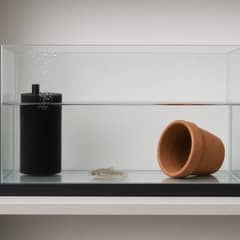
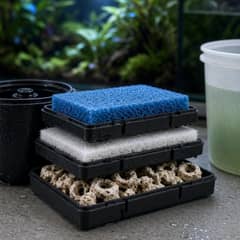
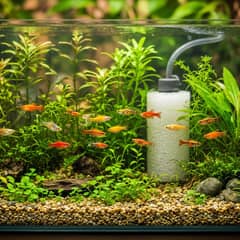
Keep the flow gentle. A sponge filter works well and is the safer choice if you're allowing breeding, since it won't pull fry into strong current. A hang-on-back filter with adjustable flow also works well for a non-breeding setup. Strong currents should be avoided: filtration built for bigger, messier fish is more than guppies need, and the current itself can stress them.
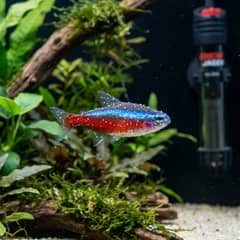
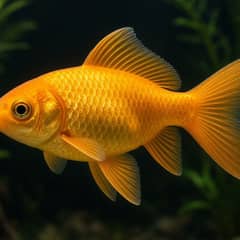
Guppies are very peaceful and suit a quiet community of other livebearers, rasboras, corydoras, small plecos and peaceful tetras, provided those tetras share the harder water above. Keep them away from fin-nippers such as tiger barbs and serpae tetras, and away from bettas, a fin-nipping risk to a guppy's tail, or goldfish, a cold-water species that grows large and needs 20-plus gallons and serious filtration, a mismatch for a small tropical fish like this one. The Betta fish tank setup guide and Goldfish tank setup guide cover what those two species need instead.
Substrate
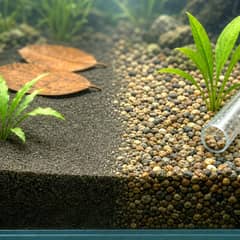
Fine gravel or sand both work well, and darker substrate colors tend to make guppy coloring stand out more. Avoid sharp or coarse gravel, which can damage delicate fins.
A guppy tank has no need for the inert floor a soft-water tetra tank depends on. Guppies want moderately hard to hard water, and a calcareous substrate pushes the water that way, releasing calcium and other minerals that raise hardness and pH. Even ordinary pea gravel carries enough calcium to boost both. Crushed coral or coral sand goes further: laid as the whole bed, it makes the water very hard and lifts the pH above 8.0, which still sits inside the guppy's 7.0 to 8.5. In soft tap water, a coral bed or some coral mixed into the gravel does the same job as the crushed coral under Water Chemistry, and keepers in very soft water areas use small amounts this way to stop the pH drifting down. A calcareous floor commits the tank to hard water, so leave it out if the guppies share with soft-water fish.
Lighting
A basic LED light on an 8 to 10 hour daily cycle is sufficient. This isn't strictly necessary for the fish's health, but it supports live plants if you're using them and makes for better viewing.
The Two Non-Obvious Requirements
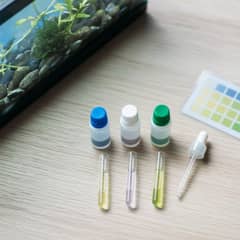
Cycle the tank before adding fish. Establishing the beneficial bacteria colony that processes waste takes four to six weeks in most aquariums, and a bottled bacteria product can shorten that somewhat. Skipping this step is one of the most common beginner mistakes in the hobby generally, not just with guppies, and it's a big part of what drives ammonia stress in a new guppy tank.
Always use a water conditioner on tap water before it goes in the tank, dechlorinating and neutralizing chloramine and heavy metals that are otherwise harmful to fish.
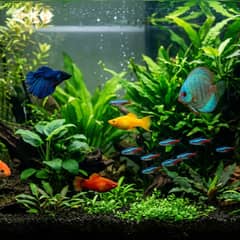
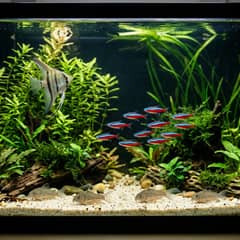
Dense live plants aren't just decoration in a guppy tank, they're a genuine population control lever. Adult fish eat the young, so if you're allowing your guppies to breed, dense plants such as Java fern or vallisneria, along with floating vegetation, give fry somewhere to hide, which raises their survival. If you'd rather your population stay naturally controlled, skipping dense cover lets normal predation keep numbers in check instead. Same tank, same species, two very different outcomes depending on how you plant it.
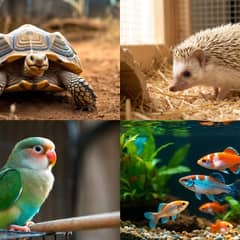
And if you're weighing enclosure complexity across pets, a 10-gallon tank is about as simple as setup gets in this batch, our Sulcata tortoise enclosure setup guide covers the opposite end, an animal that eventually needs a substantial outdoor enclosure rather than a countertop tank.
The Guppy encyclopedia profile has more on the species itself.
Sources & Further Reading
Last reviewed 18 Jul 2026 · 4 sources

A routine chart and equipment log you can fill in for your own setup. The Universal Pet Kit has it, among 19 forms for any pet that you can type into or print.
Frequently Asked Questions
What size tank does a guppy need?
A base of at least 18 by 12 inches, about 11 gallons, is the minimum, and a tank at least 24 inches long suits a group of 5 or more. Guppies breed readily, so a 20-gallon holds up better long term unless you separate males and females. Go long and rectangular rather than tall, and use a lid, guppies are capable jumpers.
What temperature do guppies need?
A tropical species, comfortable from 64 to 82°F, with 82°F as the ceiling. Unless the room stays warm year-round, run a heater sized to the tank, about 50 watts for a 10-gallon. Hold the temperature steady anywhere inside that range.
What water chemistry do guppies need?
A pH of 7.0 to 8.5 and moderately hard to hard water, roughly 8 to 30 dGH. Guppies may manage in soft, acidic water, but long-term they belong in harder water. Good calcium and magnesium content helps, and soft tap water can be buffered up with a mineral block or crushed coral.
What kind of filtration is best for a guppy tank?
Gentle flow, since strong currents should be avoided. A sponge filter is the safer choice if you're letting them breed, since it won't pull fry into the current, and a hang-on-back with adjustable flow suits a non-breeding tank. Filtration built for bigger, messier fish is more than guppies need, and the current itself can stress them.
Do I need to cycle a guppy tank before adding fish?
Yes. Most aquariums take four to six weeks to cycle fully, which is how long the bacteria colony that processes waste takes to establish. Skipping it is among the most common beginner mistakes in the hobby, guppies or not. A fishless cycle can take less with a bottled bacteria product.
More on the Guppy
Recommended Gear
As an Amazon Associate I earn from qualifying purchases through the links above, at no extra cost to you.

Written by Michael Ryan
Mike keeps two rescued bearded dragons, Dex and Cera, and writes the care guides on BeastlyFacts from his own research and mistakes. He is not a veterinarian.
More about Michael Ryan →You May Also Like
Subscribe - it's free
An occasional email when something new is worth your time. No spam.
Health and More