Common Guppy Health Issues (Stress, Water Quality, and Quarantine)
On This Page▾

Most guppy illness traces back to stress, poor water quality, overcrowding, or skipped quarantine, and each of those is something a keeper controls.
Ich (White Spot Disease)
Small white dots like grains of salt on the skin and fins, often preceded by flashing (rubbing against tank decor), extra mucus, weakness, rapid breathing, lethargy, and loss of appetite. Ich is a parasite that arrives with new fish or shared equipment and spreads quickly from fish to fish, and outbreaks tend to follow stress and rapid temperature changes. Treat by raising the tank gradually to around 82°F, the top of the guppy's range, alongside a commercial ich medication. The warmth shortens the parasite's life cycle, and the medication does the killing: in warm water it goes in daily, for about 3 to 7 treatments depending on the product.
Guppies live in fresh water and in some brackish water in the wild, and their salinity range is wide. That is why a salt bath of 4 to 5 parts per thousand (4 to 5 grams per liter, about 15 to 19 grams per gallon) for 7 to 10 days is an option for them against ich in a small tank, a method that only suits fish that can handle the extra salt. Guppies are among them, so a salt course, dissolved first and raised gradually, is a sound alternative to medication for this species.
Guppies turn up in almost every kind of water across their range, from highly turbid ponds, canals and ditches at low elevations to pristine mountain streams at high elevations.
Velvet
Small golden or rust-colored spots or a fine dusty coating on the body, along with clamped fins and scratching against decor. Treat with a copper-based medication, though a fish vet may use chloroquine instead, and plan a recheck after 7 to 10 days. This is contagious between fish, so quarantine affected individuals if possible. Velvet is caused by a parasite, not by the water itself. Keepers commonly add a step of their own during treatment: raising the temperature slightly and dimming the tank lights.
Fin and Tail Rot
Ragged, frayed, or discolored fin edges can mean a bacterial infection, with poor water quality, ammonia buildup, stress, or an untreated injury often behind it. Fixing the water, the diet and the setup is the main treatment. Antibiotics are rarely needed for fin rot, because a drug struggles to reach the edges of the fins. Many bacterial infections do respond to antibiotics, but lab testing is needed to know which drug will work, so a fish vet is the route for a case that does not improve once the water is corrected. Once the infection clears, the fin starts to regrow. Left unaddressed, it can progress and become systemic.
Dropsy
Bloating combined with scales that raise into a pinecone-like pattern. Dropsy is a sign, not a single disease. A bacterial infection with Aeromonas is one cause, and it may respond to antibiotics once lab testing picks the right one. Other causes, such as kidney disease from certain parasites, have no practical treatment, so the outlook depends on what is behind the swelling. By the time the pinecone pattern is visibly obvious, the outlook is often poor.
Swim Bladder Disorder
Buoyancy problems, floating, sinking, or swimming at odd angles. Keepers commonly put a mild case down to overfeeding or constipation, and commonly fast the fish for a day or two before returning to normal, appropriately sized feeding.
Camallanus: Red Threads at the Vent
A cluster of blood-red threads hanging from a guppy's vent is Camallanus, a parasitic roundworm that infects guppies and other aquarium fish. An infected fish passes larvae in its waste. Tiny crustaceans such as cyclops and daphnia eat them, and a guppy that eats those crustaceans picks up the worm. The larvae can also infect fish directly, and the parasite can keep reproducing in a tank with no crustaceans for several months, so water changes alone do not clear it. The worms are under about 3/8 inch long. A few worms are enough to do serious harm in a fish this small. Shared plants, gravel and nets carry it between tanks too.
Treatment is a dewormer, either fenbendazole or levamisole, dosed to the whole tank following the label or a vet's directions. Treat every fish in the tank, since the ones without visible worms may still carry them. After treating, remove waste and debris from the tank as often as possible so the fish do not pick the worm back up. The drug does not reach the larvae, so the tank gets a second dose two to three weeks later.
The Husbandry Pattern Worth Remembering
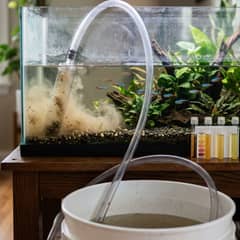
Stress, poor water quality, overcrowding, and skipped quarantine account for most fish disorders. A properly cycled tank, a stable temperature maintained with a reliable aquarium heater, and regular partial water changes using a water conditioner address the first three, and they prevent far more than any medication does after the fact.
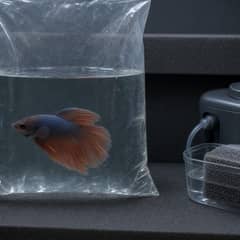
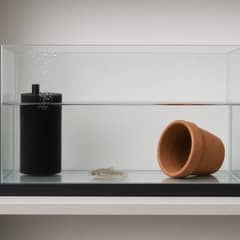
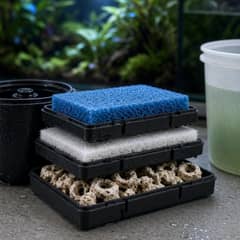
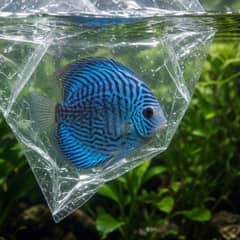
Active disease often shows up 1 to 3 weeks after fish arrive, which is why a minimum 30-day quarantine is recommended before new fish join an established tank. A modest separate tank with its own gentle sponge filter is worth setting up for this, and it does double duty as a place to isolate a sick fish later. Quarantine catches most problems before they spread.
Uneaten food is a common and avoidable driver of the water-quality decline behind several of these conditions. Guppies beg whether they are hungry or not, so the begging is no measure of how much they need.
When Treatment Stops Working
A fish still wasting after a full course of treatment, or one with pinecone-stage swelling, calls for a fish vet, because only some causes of dropsy respond to treatment. The professional directories that list vets who treat fish cover North America and beyond. When nothing is left to try, a clove oil overdose is an accepted euthanasia method for fish, though it is used extra-label, and the fish stays in the solution for at least 10 minutes after the gills stop moving. Putting a live fish in the freezer is not humane. Flushing a live guppy is not humane either. Use a small container of the guppy's own tank water for the clove oil.
Check the Guppy encyclopedia profile for more.
Sources & Further Reading
Last reviewed 18 Jul 2026 · 7 sources
- Merck Veterinary Manual: Disorders and Diseases of Fish; Parasitic Diseases of Fish
- University of Florida IFAS Extension: Ichthyophthirius multifiliis (White Spot) Infections in Fish; Yanong RPE, Nematode (Roundworm) Infections in Fish, Circular 91
- Levsen and Jakobsen (2002): Selection pressure towards monoxeny in Camallanus cotti facing an intermediate host bottleneck situation
- Levsen and Berland (2002): Post-embryonic development of Camallanus cotti (Nematoda: Camallanidae), with emphasis on growth of some taxonomically important somatic characters, Folia Parasitologica 49: 231-238
- Texas A&M IACUC: Guidelines on Euthanasia of Fish, Amphibians and Reptiles (PDF, downloads)
- FishBase: Poecilia reticulata, Guppy
- Jessie Sanders, DVM, Aquatic Veterinary Services: Fin Rot in Pet Fish

Log weight, feeding and meds, so your vet has the full picture. The Universal Pet Kit has it, among 19 forms for any pet that you can type into or print.
Frequently Asked Questions
What's the most common cause of guppy health problems?
Stress, poor water quality, overcrowding, and skipping quarantine account for most fish disorders. Ammonia buildup, temperature swings, and crowding are the ones a keeper controls.
What is ich and how do you treat it in guppies?
White dots like grains of salt on the skin and fins, often after flashing, extra mucus, rapid breathing, lethargy, and loss of appetite. Raise the tank gradually toward 82°F, the top of the guppy's range, and dose a commercial ich medication daily for about 3 to 7 treatments, following the label. Guppies have a wide salinity range, so a salt course is an alternative to medication.
What is velvet and is it contagious?
Small golden or rust-colored spots or a fine dusty coat, often with clamped fins and scratching against decor. Copper-based medication is the standard treatment, a vet may use chloroquine instead, and a recheck after 7 to 10 days may be needed. It spreads between fish, so quarantine affected individuals if possible. Velvet is a parasite, and a common keeper step during treatment is to raise the temperature slightly and dim the lights.
What is dropsy and can it be treated?
Bloating, with the scales raised into a pinecone pattern. It is a sign with several causes: a bacterial infection may respond to antibiotics once lab testing picks the drug, while some kidney-related causes have no practical treatment. By the time the pinecone pattern is visibly obvious, the outlook is often poor.
How do I prevent most guppy health issues in the first place?
A cycled tank, steady temperature, and regular partial water changes address stress and water quality, and they prevent far more than medication does after the fact. Quarantining new fish for at least 30 days keeps problems out of an established tank and catches most before they spread.
More on the Guppy
Recommended Gear
As an Amazon Associate I earn from qualifying purchases through the links above, at no extra cost to you.

Written by Michael Ryan
Mike keeps two rescued bearded dragons, Dex and Cera, and writes the care guides on BeastlyFacts from his own research and mistakes. He is not a veterinarian.
More about Michael Ryan →You May Also Like
Subscribe - it's free
An occasional email when something new is worth your time. No spam.
Deep Dive
Health and More