Gerbil Feeding: Schedule, Diet, and Why Seed Mixes Fail This Species
On This Page▾

A sunflower-seed-heavy mix looks like a complete gerbil diet on the label, but a gerbil will happily pick out the fatty seeds and leave the balanced parts behind, which is exactly how a seemingly complete diet quietly causes obesity.
The Staple Diet
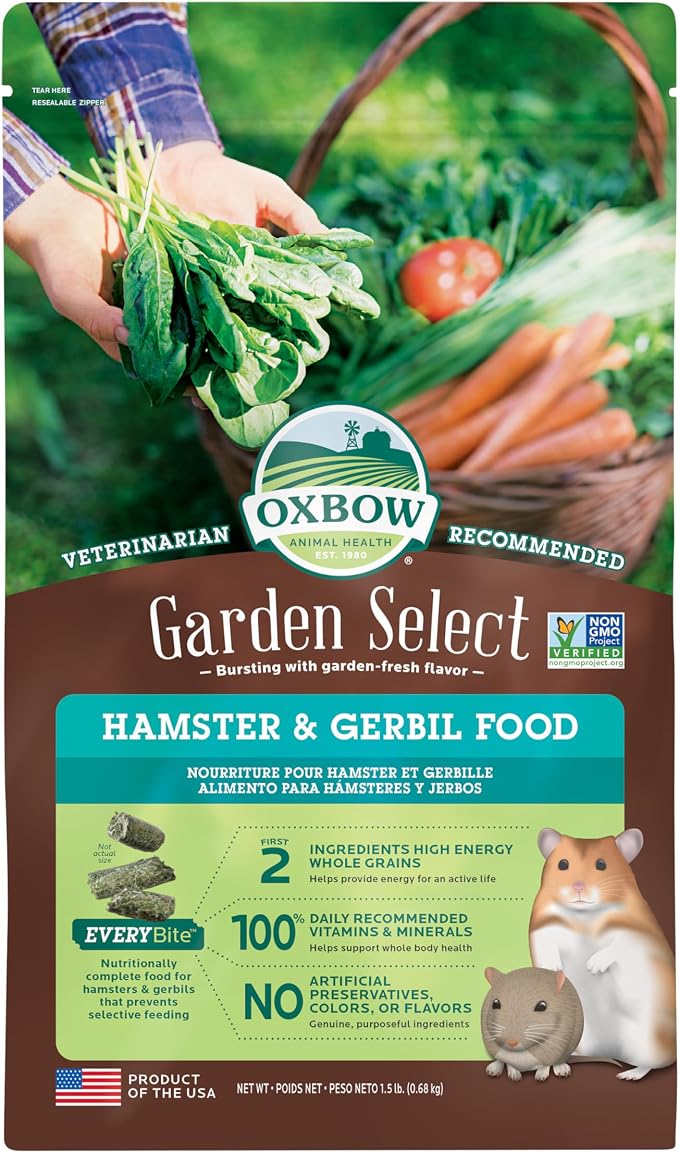
A nutritionally complete, uniform pelleted diet or lab block formulated for gerbils, or a low-fat rodent formula, is the best base because it prevents the selective feeding a loose mix invites. Aim for 18 to 20% protein and keep fat at or under about 4%: past that, gerbils develop raised blood cholesterol, more pronounced in males. The American Gerbil Society's 14% is a floor, not a target, and many products labeled simply "Hamster and Gerbil Food" miss even that, since they're really formulated for hamsters. Check the guaranteed analysis panel on the bag, Oxbow's Garden Select among them. Supplement with small amounts of fresh vegetables like carrot, broccoli, kale, or squash, and occasional animal protein such as a few mealworms a week or a bit of hard-boiled egg.
Feeding Frequency and Portions
Feed once daily, roughly 5 to 8 grams, about a tablespoon, of pellets per adult gerbil. Offer fresh vegetables every other day or a few times weekly, and treat fruit as an occasional weekly indulgence given the sugar content. Treats and supplemental foods together should stay under about 10% of the diet.
Young gerbils under 6 months and pregnant or nursing females need more calories and protein than a maintenance adult, some commercial diets are formulated to be fed without the usual portion cap during those life stages.
Foods to Avoid
Sunflower-seed-heavy and muesli-style mixes as a staple are the central risk, the RSPCA specifically warns against excessive amounts of fatty seeds like sunflower for exactly the obesity reason above. Toxic foods to keep away entirely: grapes and raisins, rhubarb, chocolate, onion and garlic, avocado, raw potato, raw kidney beans, and apple seeds, plus salty, sugary, or processed human food and dairy. Citrus sits a step below that: it is acidic enough to be worth rationing, and the RSPCA still lists oranges among the fruits that can supplement a pelleted diet. Watery lettuce can cause diarrhea, and any hoarded fresh food should be removed before it rots in a cache.
Supplementation
None needed with a complete pelleted diet. Occasional insect protein and fresh produce provide variety rather than correct a deficiency. What matters more day to day is constant fresh water and safe wood to gnaw, since gerbil teeth grow continuously and overgrowth is its own problem.
The Mistakes That Matter
A seed or sunflower-heavy mix as the staple is the single biggest risk, gerbils pick their favorites and ignore the balanced components, leading to obesity and nutritional imbalance that shortens lifespan.
Over-treating with fruit or fatty seeds adds weight gain on top of possible dental and digestive problems. And leaving hoarded fresh food in a cache invites spoilage and digestive upset, gerbils are natural hoarders, which makes this an easy habit to miss.
If you're also weighing a degu, see Two Pets Where You're Really Buying a Pair for how the two compare.
Sources & Further Reading
Last reviewed 14 Sep 2026 · 4 sources
❓ Frequently Asked Questions
What is the best staple food for a gerbil?
The best base is a uniform pelleted diet or lab block made for gerbils, since a gerbil can't pick favorites out of it. Aim for 18 to 20% protein and keep fat at or under about 4%. The American Gerbil Society's 14% is a floor rather than a target, and many bags labeled 'Hamster and Gerbil Food' miss even that.
How much should I feed a gerbil each day?
Roughly 5 to 8 grams, about a tablespoon, of pellets per adult gerbil per day, fed once daily. Offer fresh vegetables every other day or a few times a week, and treat fruit as an occasional weekly indulgence given the sugar content.
Why are seed mixes bad for gerbils?
Gerbils selectively eat the fatty seeds, sunflower especially, and leave the balanced components behind, so a bag that looks nutritionally complete on the label doesn't get eaten that way. The RSPCA specifically warns against excessive sunflower seed for this reason, it's fatty enough to drive obesity on its own.
What foods are toxic to gerbils?
Keep chocolate, avocado, grapes and raisins, rhubarb, citrus fruit, onion and garlic, raw potato, raw kidney beans, and apple seeds away. Skip salty, sugary, or processed human food and dairy, plus watery lettuce, which can cause diarrhea.
Do gerbils need vitamin or mineral supplements?
No, not with a complete pelleted diet. Occasional insect protein like mealworms and fresh produce add variety rather than correct a deficiency. Constant fresh water and safe wood to gnaw on for their continuously growing teeth matter more than any supplement.
Do young or breeding gerbils need more food?
Yes. Young gerbils under 6 months and pregnant or nursing females need more calories and protein, some commercial diets are formulated to be offered without the usual portion limit during those life stages.
🛒 Recommended Gear
As an Amazon Associate, we earn from qualifying purchases through the links above - at no extra cost to you.
Written by Michael Ryan
Mike keeps two rescued bearded dragons, Dex and Cera, and writes the care guides on BeastlyFacts from his own research and mistakes. He is not a veterinarian.
More about Michael Ryan →Comments
No comments yet - be the first!