Amano Shrimp Enrichment: The Algae Runs Out and Nobody Notices
On This Page▾

Amano shrimp are routinely bought as a maintenance tool rather than as a pet. That framing is the source of most of what goes wrong.
An amano shrimp is bought to eat algae, does it well, and then lives in a tank with no algae in it. The single most common welfare failure in this species is slow starvation in a spotless aquarium, and it happens because the animal was classified as equipment rather than as something that eats.
What the Decapod Sentience Review Found
Nothing on Caridina multidentata. The relevant evidence is the decapod sentience review discussed in the Cherry Shrimp enrichment guide.
Birch and colleagues applied an eight criterion framework to over 300 scientific publications and concluded decapod crustaceans are probably sentient, after which UK law was extended to cover them. The report was explicit that the evidence was stronger for some groups than others, and that gaps remain for shrimp specifically.
Whatever weight you give that, it argues against treating a shrimp as a cleaning appliance, which is the practical point for this species.
Amano shrimp are named after Takashi Amano, the aquascaper who popularized them for exactly this job. The name has stuck so firmly that the animal is now more widely known by its function than by anything else about it.
Feed Them, Deliberately
The item this species most needs and most often does not get. Once the algae is cleared, the shrimp are living on whatever they can scavenge, and in a well-maintained tank that is not much.
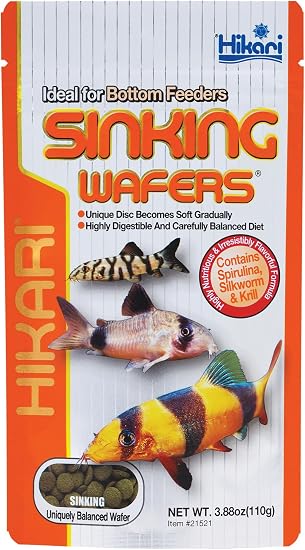
Sinking wafers are the practical answer. Blanched vegetables and shrimp foods work too. Drop food in more than one spot, because amanos are assertive and a single wafer becomes one shrimp's wafer.
Watch them eat. An amano that grabs food and runs off with it is a hungry amano, and that behavior is so characteristic that it gets treated as charming rather than as information.
Surface Area to Work Over
The same principle as any grazing shrimp. Driftwood grows biofilm and gives them structure to climb over, and dense planting, moss and leaf litter add grazeable surface.
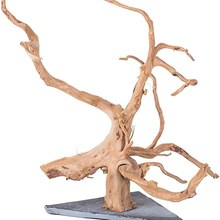
Amanos are larger and more active than cherry shrimp and use more of the tank. A complex, planted layout gets far more visible behavior out of them than an open one.
Water Stability, and No Copper
Copper is lethal to shrimp and arrives in fish medications, some fertilizers and some tap water. Check everything before it goes in.
Beyond that, stability beats precision. Change small amounts of water often, and keep temperature and hardness from swinging.
Molting Cover and a Safe Filter
Freshly molted shrimp are vulnerable and want somewhere to hide until the new shell hardens. Moss, wood crevices and leaf litter provide it.
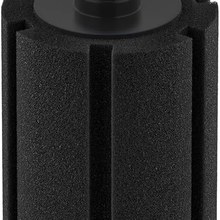
Use a sponge filter or guard the intake of whatever you run. Leave discarded shells in the tank, since shrimp eat them and recover the minerals.
Expect No Population
Worth planning around. Amano larvae need brackish water to develop, so a female will carry eggs and the larvae will die in freshwater.
The population does not replace itself. Unlike cherry shrimp, whatever you buy is what you have, which makes each animal's individual survival worth more attention than it usually gets.
Priority Order
- Actual feeding, on a schedule, once the algae is gone
- Food distributed across several spots
- Grazing surface: wood, moss, planting and leaf litter
- Stable water and nothing containing copper
- Cover for freshly molted shrimp, and old shells left in
- A guarded filter intake
- Accepting they will not breed
What Not to Do
Do not treat an amano as a maintenance appliance that does not need feeding. Do not add copper in any form. Do not assume smaller shrimp are getting food when amanos are in the tank. Do not run an unguarded filter intake. Do not remove discarded shells. Do not make large sudden water changes. And go slowly when moving them, since transfer shock is a common cause of loss.
Feeding is the thing that goes wrong with this species: a planted tank gives them something to graze, but it does not feed a group on its own.
Sources & Further Reading
2 sources
- Borrowed evidence. No enrichment study exists for this species. The sentience findings below cover decapods as a group and are discussed in the Cherry Shrimp enrichment guide.
- Birch J, Burn C, Schnell A, Browning H and Crump A (2021). Review of the evidence of sentience in cephalopod molluscs and decapod crustaceans. LSE Consulting
- Sentience in decapod crustaceans: a general framework and review of the evidence. Animal Sentience
❓ Frequently Asked Questions
Is there research on amano shrimp welfare?
Not on the species. The relevant work is the 2021 review that assessed over 300 papers against eight sentience criteria and concluded decapod crustaceans are probably sentient, which led the UK to extend animal welfare law to cover them.
Do amano shrimp need feeding?
Yes, and this is the mistake the species is defined by. They are bought as an algae crew, they clear the algae efficiently, and then the food source they were bought for no longer exists. A spotless tank is a tank with nothing in it for an amano to eat.
How are they different from cherry shrimp?
Larger, more active, longer lived and much better at clearing algae. They are also more assertive at feeding time and will take food from smaller shrimp. They will not breed in a freshwater tank, which cherry shrimp do readily.
Why will they not breed?
Their larvae need brackish water to develop. Females carry eggs and larvae hatch, but in a freshwater aquarium the larvae die. Breeding them requires a deliberate brackish rearing setup, so an amano population does not replace itself.
Can they be kept with cherry shrimp?
Usually, with the caveat that amanos are considerably bigger and will outcompete them at feeding time. Feed in more than one place, and do not assume the smaller shrimp are getting any of it.
What kills them?
Copper, sudden water changes and slow starvation, in roughly that order of speed. The starvation one is the most common and the least noticed, because it happens over months in a tank that looks clean and healthy.
📰 More on the Amano Shrimp
📘 Amano Shrimp care guide
🦐 How Much Does Amano Shrimp Ownership Really Cost?
🦐 How to Handle Amano Shrimp (Minimal Contact, Careful Acclimation)
🦐 Common Amano Shrimp Health Issues (And Why 'Disease' Usually Isn't the Right Word)
🦐 Amano Shrimp Tank Setup: Minimal Bioload, Real Current, and a Lid That Actually Seals
🦐 Amano Shrimp Feeding: The Hobby's Best Algae Eater, With Real Limits
🛒 Recommended Gear
As an Amazon Associate, we earn from qualifying purchases through the links above - at no extra cost to you.
Written by Michael Ryan
Mike keeps two rescued bearded dragons, Dex and Cera, and writes the care guides on BeastlyFacts from his own research and mistakes. He is not a veterinarian.
More about Michael Ryan →Comments
No comments yet - be the first!