How to Handle a Green Cheek Conure
On This Page▾

Green cheek conures are affectionate, playful, and comical birds that form strong bonds with their people. Most hand-raised conures come to enjoy interaction and can become quite cuddly, often preferring to perch on a shoulder and stay close instead of being held like an object. Green cheeks sit at the quieter end of the conure family, but quiet does not mean undemanding: they suit owners with some prior small-bird experience, or those prepared for the daily time this species needs.
The First Days Home
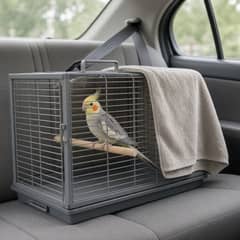
Have the cage set up and stocked before the bird arrives, so it goes straight from the carrier into a finished home. For the first few days, keep the room calm, talk as you pass, and leave the bird alone apart from food, water and the daily paper change. Check that it eats, drinks and leaves normal droppings, and book the first avian vet visit within one to two weeks. If other birds live in the house, keep the new conure in a separate room for 30 to 45 days, with its own bowls, toys and cleaning gear.
Reading a Beak, Not Just a Bite
These birds use their beaks constantly, for climbing, balancing and exploring the world. What feels like a bite is often just investigation or a balance check, not aggression. Genuine nippiness shows up more in young birds, especially under one to two years old, and in hormonal adults, whose hormones track the light schedule they live under.
Watch for warning signs before a bite happens: pinned eyes, where the pupils shrink and widen quickly, flared tail feathers, or lunging. A determined bite from an adult can be painful and draw blood, but conures aren't typically aggressive biters once trust is established.
Building Trust the Right Way
Positive reinforcement works better than any other approach with this species. Respect body language, keep training sessions short and consistent, and offer choices instead of forcing interaction. Teach a step-up cue, with a target stick if it helps, instead of grabbing the bird. For a bird that has never learned it:
- Win the bird's trust first. As you pass the cage, offer a treat that is not part of its regular diet, such as a bud of spray millet or a piece of toasted oat cereal, through the bars or at the open door, so your hand comes to mean good things.
- Once the bird is calm with you, press a finger gently into its chest, just above the feet. A relaxed bird steps on.
- Say "Step up" as it steps onto your finger or a perch.
- Repeat, raising the bird a little higher each time. Getting back up to a high, safe place is the reward.
Slow down at any sign of fright: hissing, panting, lunging, wings spread wide, feathers slicked tight or backing against the wall. Sit by the bird and talk calmly instead, because a frightened bird is likely to bite.
Keep petting to the head and neck. Repeated stroking along the back, under the wings, around the tail base or on the lower body can read to the bird as pair-bonding or mating behavior, which feeds hormonal behavior.
When a Conure Bites
The response matters more than the bite. A strong reaction, even yelling, teaches the bird that biting gets attention or control, and it learns to bite more. If the conure bites while on your hand, set it down slowly and calmly and walk away. Ask for a step-up again only once it has settled.
If it keeps biting, stop trying to pick it up by hand and rebuild the step-up from a perch:
- Hand-feed a favorite treat reserved for training, such as a piece of spray millet, with no request attached, over several days until the bird takes it without lunging.
- Hold the treat so the bird has to put one foot on a wooden dowel to reach it, then both feet.
- Once it steps onto the dowel reliably for the treat, repeat the same steps with your hand.
That can take days or weeks. Gloves make most birds more afraid, so a thick towel is the better shield while trust is rebuilt.
Cage-protective biting is common in pet birds: reaching in to lift the bird out, clean or change dishes can draw a bite from a conure that is gentle everywhere else. Ask it to step onto a perch or come out on its own first, and most of it never happens.
First-Timer Mistakes
- Stay calm at a nip. Yelling or yanking your hand away reinforces the behavior instead of stopping it.
- Give it three to four hours out of the cage every day, because too little leads to boredom, screaming or feather-destructive behavior.
- Never force handling when the bird is visibly scared or overstimulated.
- Plan for a social pet, not a hands-off one. This species becomes needy or vocal when that need is not met.
- Never house a conure alone without real daily time with you. Conures are flock animals at heart.
The flock instinct underneath it runs across the whole parrot family, and what loneliness does to a parrot shows up as biting, screaming and feather pulling in an under-stimulated bird.
Adding a Second Conure
The pairing that works best is another Pyrrhura conure, close in size and care needs. The introduction runs in stages:
- Take the new bird to the vet as soon as it comes home, before the resident is exposed to it. Then keep it in a separate room for 30 to 45 days, the full bird quarantine.
- Put both cages in one room, a distance apart, so the birds get used to the sight and sound of each other. Move the cages closer over the following days to weeks.
- Supervise the first time together closely, and separate them on the spot at any fighting or bullying.
Some birds never accept each other. If two conures keep fighting after weeks side by side, keep them in separate cages for good.
Determining Sex: Not by Looking
Green cheek conures are sexually monomorphic: males and females look the same, so there is no reliable visual test, whatever the claims about head shape or foot color. If you need to know, use a DNA test. A vet or an at-home kit sends a blood sample or a freshly plucked feather to a lab, and the results are highly accurate. Surgical sexing, where a vet looks for testes or ovaries under anesthesia, works too, but it is used less often because of the added risk. Neither is needed just to keep a conure as a pet, and most owners only test if they plan to breed or simply want to know.
Trust First, Then the Step-Up
A green cheek that trusts you treats your shoulder as home base. Read the beak before you call it a bite, answer a nip calmly, and keep the daily time out of the cage that a flock bird needs.
Sources & Further Reading
Last reviewed 29 Jul 2026 · 4 sources
- Lafeber Pet Birds: Green-Cheeked Conure; Male or Female? Your Bird's Gender Goes Beyond Naming; Small Bird Taming and Training Basics
- PetMD: Small Conure Care Sheet
- VCA Animal Hospitals: Biting and Screaming in Birds; Introducing a New Pet Bird
- Dr. Bob's Pet Health Information: Conure Care Guide, Robert Linville, DVM

A pet profile and a sitter sheet you can fill in, so anyone who helps knows the routine. The Universal Pet Kit has it, among 19 forms for any pet that you can type into or print.
Frequently Asked Questions
Are green cheek conures likely to bite?
Not typically, once trust is established. Genuine nippiness shows up more in young birds under one to two years old and in hormonal adults, and most beak contact is the bird investigating or balancing rather than aggression. Watch for pinned eyes, flared tail feathers, or lunging as warning signs before an actual bite happens.
How should I react if my conure nips me?
Calmly, not dramatically. Yelling or yanking your hand away tends to reinforce the behavior rather than stop it. Positive reinforcement, respecting body language, and teaching a step-up cue rather than grabbing the bird works far better over time.
How much daily attention does a green cheek conure need?
Plan on three to four hours of supervised time out of the cage every day. Too little leads to boredom, screaming or feather-destructive behavior, and a flock bird housed alone without real daily time with you reliably develops problems.
Are green cheek conures noisier than other conures?
No, they sit at the quieter end of the conure family. Quiet does not mean undemanding, though: a green cheek needs a lot of daily time with you.
Can green cheek conures be housed with other conures?
Often, with a proper introduction. Other Pyrrhura conures such as the maroon-bellied match them closely on size and care needs, which is what makes shared housing workable.
Can you tell a green cheek conure's sex by looking at it?
No. Males and females look alike, and head shape or foot color is not reliable. A DNA test on a blood sample or a plucked feather is the standard method.
More on the Conure

Recommended Gear
As an Amazon Associate I earn from qualifying purchases through the links above, at no extra cost to you.

Written by Michael Ryan
Mike keeps two rescued bearded dragons, Dex and Cera, and writes the care guides on BeastlyFacts from his own research and mistakes. He is not a veterinarian.
More about Michael Ryan →You May Also Like

Subscribe - it's free
An occasional email when something new is worth your time. No spam.
Deep Dive
Health and More