Conure Feeding: Why the Seed Dish Is the Problem
On This Page▾

A conure offered a mixed dish will work through it selectively, taking the sunflower seeds and peanuts first. That preference is the whole difficulty in one behavior, because the items a conure picks out are the fattiest and least complete things in the bowl, and a bird that eats that way for a year does not look ill until the damage is established.
The Base of the Diet
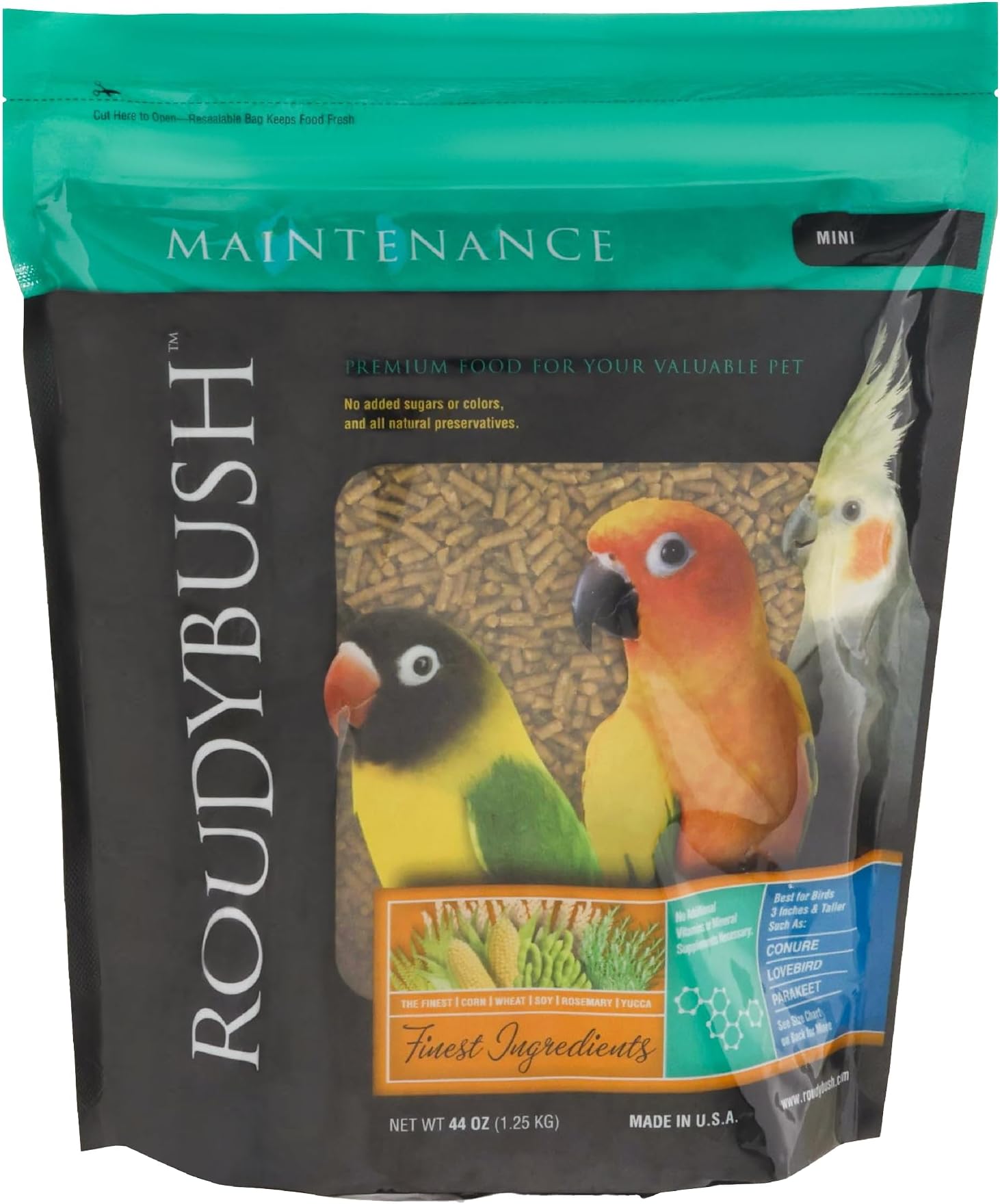
Pellets, and by a wide margin: 75 to 80% of the diet. Foraging formats count as that same balanced base, not as treats, since Nutri-Berries, Avi-Cakes and Pellet-Berries are formulated to the same spec and simply not ground down.
A conure that refuses a plain pellet will often take a foraging format, and swapping the shape of the food is a legitimate route to the same nutrition, and no compromise on it.
Small parrot pellets are the default here, sized for a bird this small.
The Fresh Share
Vegetables and greens take 20 to 40% of daily intake, fruit about 10%. Those figures are daily targets, loose enough that they will not add to a tidy hundred against the pellet share. The practical version: pellets are the base, vegetables come daily, fruit is the small end.
The portion rule for anything beyond the pellet is size: a tablespoon for a conure is the equivalent of a dinner-plate serving for a person, and fruit stays at about 10 percent of the day's intake for its sugar and water.
Vegetables worth building on are the ones carrying the vitamin the seed diet is short of. Bell pepper, broccoli, carrot, cooked sweet potato, snap peas and dark leafy greens all serve. Offer them chopped and available every day, so the bird stops treating them as novelty, since a bird learns what food is by seeing it repeatedly.
The Four Failures of an All-Seed Diet
Four separate failures, usually collapsed into one vague warning.
Vitamin A deficiency. A bird living mostly on seeds and nuts is at the highest risk, since that diet is short on vitamin A and much else while carrying too much fat. The signs are not subtle once known: discharge from the nose, sneezing, swelling around the eyes or sinuses, difficulty breathing, increased drinking and urinating, poor feather quality, feather plucking, sore feet, and loss of appetite.
Metabolic bone disease. A seed-based diet runs short on calcium and vitamin D while carrying too much phosphorus, and birds kept on one can end up with bones that soften, deform and fracture easily.
Goiter. On an all-seed, iodine-deficient diet the thyroid enlarges and presses on the trachea and esophagus.
Obesity. Common in pet birds, and caused by high-fat diets of seeds, nuts and table foods, too much food, and too little exercise.
Those are four different mechanisms with one shared cause, which is why the fix is dietary, and no supplement substitutes for it. The health issues guide covers what fatty liver disease and vitamin A deficiency look like in this species once they arrive.
Getting a Seed Bird Onto Pellets
This is the part with a real wrong way to do it, and it has its own guide: a bird that does not recognize pellets as food can simply stop eating. The stepped and tapered schedules, the daily weight check, and the rule about holding at a ratio instead of pushing through it are all in the pellet conversion guide.
The expectation to carry across is the timescale: days, weeks or months to move a bird onto a new diet. A conversion that stalls is not a failure, and hunger is not the tool.
Foods to Never Offer
Avocado and onion are the two to rule out completely, for a conure or any other parrot. Beyond those, never feed very salty foods such as chips, pretzels and popcorn, chocolate, alcoholic beverages, or products containing caffeine.
Seed itself does not need to leave the house. Put it in foraging toys instead of an open dish, where it does the work of occupying a bird that would otherwise be picking at a bowl, without becoming the diet.
Water and Dishes
Fresh, clean water has to be available at all times, and dishes want cleaning thoroughly every day with soap and water. A conure that bathes in its water bowl will need it changed more than once a day, which is ordinary, not a warning sign.
Sources & Further Reading
Last reviewed 15 Sep 2026 · 3 sources
❓ Frequently Asked Questions
How much of a conure's diet should be pellets?
Most of it, at 75 to 80%. Foraging formats like Nutri-Berries and Avi-Cakes count as that same nutritionally balanced base, not as treats. The remainder goes to fresh vegetables and greens, with a smaller share of fruit.
What vegetables should a conure eat every day?
Dark leafy greens and vegetables should be offered daily, not saved for a weekend treat. Vegetables and greens take 20 to 40% of daily intake and fruit caps at around 10%, so the fresh share leans heavily toward vegetables. Bell pepper, broccoli, carrot, cooked sweet potato, snap peas and leafy greens are the usual working list.
What foods are toxic to a conure?
Avocado and onion top the list, and veterinary guidance rules both out entirely for any parrot. Then chocolate, alcohol, anything containing caffeine, and very salty foods such as chips, pretzels and popcorn.
What goes wrong on an all-seed diet?
Four separate things: vitamin A deficiency, metabolic bone disease from a diet short on calcium and vitamin D and heavy on phosphorus, goiter from iodine deficiency, and obesity. Four mechanisms, one shared cause, which is why the fix is dietary.
📰 More on the Conure
Written by Michael Ryan
Mike keeps two rescued bearded dragons, Dex and Cera, and writes the care guides on BeastlyFacts from his own research and mistakes. He is not a veterinarian.
More about Michael Ryan →Comments
No comments yet - be the first!