How Much Does Cardinal Tetra Ownership Cost?
On This Page▾

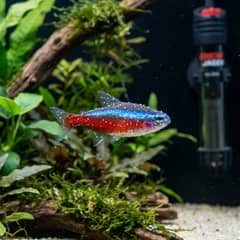
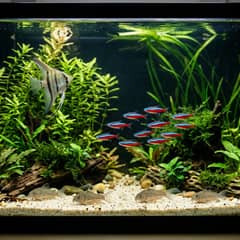
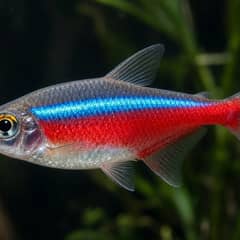
Cardinal tetras cost a little more than neon tetras to buy and about the same to keep, and the budgeting variable is the same one: this is a schooling fish, so you're never pricing out a single animal. The cardinal is a small characin from the Rio Negro and Orinoco drainages of Brazil, Colombia and Venezuela.
The Fish: $3.30 to $8 Each
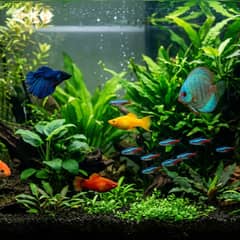
Tank-bred cardinal tetras run about $3.30 to $8 a fish from online sellers, a little less per fish in a larger pack. Since this is a schooling species, you're buying a group, not one fish. A starting school of 10, the number this species needs to settle, runs about $35 to $80 before shipping. Eight is the least to buy, and a mixed-sex group of 8 to 10 is the recommended start.
That is noticeably more than ten neon tetra, which sell for $1 to $3 each, so a cardinal costs two to three times what a neon does. It's worth budgeting for rather than discovering after the fact. The gap has a supply-chain reason: neon tetra is bred at scale and rarely wild-caught, while captive breeding of the cardinal is possible but difficult, so a meaningful share of the trade still comes from a wild fishery on Brazil's Rio Negro, worked with dip nets and baited traps.
Cardinal tetra alone has made up roughly 80% of the ornamental fish exported from the Rio Negro region, averaged across the export records out of Manaus. More than 1,600 fishers from the riverine communities of the middle Rio Negro take part in the fishery, which makes this one small fish the indicator species for the whole trade.
Source: Chao (2001), Project Piaba review
Upfront Setup: $165 to $335 for a 20 Gallon Long
| Item | Cost Range |
|---|---|
| 20 gallon long tank for a school of 10 | $35 - $80 |
| Aquarium heater | $15 - $35 |
| Gentle filter | $5 - $15 |
| Dense live plants | $15 - $60 |
| Two 15.4 lb bags of black sand, or a dark fine gravel, that leaves the pH alone (check the quantity against your tank's floor) | $60 - $80 |
| Liquid water test kit | $25 - $40 |
| Water conditioner that neutralizes chlorine and chloramine | $5 - $15 |
| First supply of micro pellets | $5 - $10 |
| Setup total | $165 - $335 |
Typical price ranges across retailers.
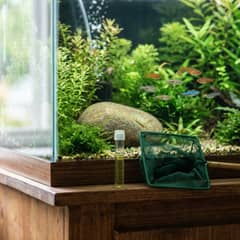
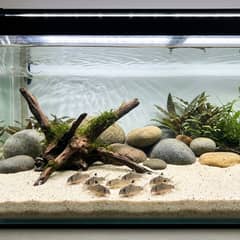
A 20 gallon long is the practical start for the school of 10 this species needs, on a base of at least 24 x 12 inches. Basic decor comes on top of the table. The sand is black because cardinals turn lighter in bright conditions over a pale substrate in clear water, and a sandy floor is the look the species suits best.
The test kit is the one item worth budgeting for on purpose. Cardinal tetras are sensitive to nitrite and need ammonia at zero, both of which show up in an incompletely cycled tank: in laboratory tests, half the fish died within 96 hours at 1.1 mg/L of nitrite. Confirming your cycle before stocking, not after, is the cheapest insurance this species has, and what a finished cycle reads on a test kit is a different question from how long the tank has been running.
The Extras: A Spare Tank for Quarantine
| Extra | Cost Range |
|---|---|
| Bare 10 gallon tank for quarantine, with no substrate or decor | $15 - $30 |
| Heater for the quarantine tank | $15 - $30 |
| Sponge filter for the quarantine tank | $5 - $20 |
| All the extras together | $35 - $80 |
Typical price ranges across retailers.
New cardinals get at least 30 days in a bare tank of their own before they join the display. In tropical fish, disease often shows 1 to 3 weeks after shipping, which is why 30 days is the minimum. How to run that tank, and what to treat in it, is the subject of the fish quarantine guide.
Topping up a school later is a second purchase with its own quarantine. Each new batch, two fish or ten, spends its own 30 days apart while the display waits, which is the practical case for buying all ten in one go.
Buying Checklist: Wild-Caught, Captive-Bred and Healthy
Cardinals reach the shop from two sources: a significant proportion of the fish in the trade are still wild caught or come from community-led projects such as Project Piaba on the middle Rio Negro, and the rest are bred. The difference that matters to the budget is that wild fish are less tolerant of deteriorating water than commercially produced ones, so a wild school is the one that most needs a cycled tank and a quarantine tank waiting for it.
Whatever the origin, the fish itself shows its condition. These are the changes that mark a sick fish:
| Look at | Walk away if |
|---|---|
| Body | Thin, or bloated |
| Eyes | Sunken in, or popped out |
| Fins | Clamped down, frayed or bloody |
| Skin | Lesions or growths |
Shipping Fish Online
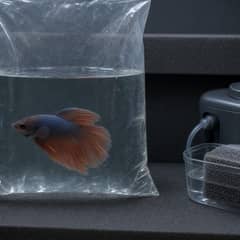
A shipped school spends the trip in a sealed bag, and the water changes on the way: the fishes' breathing and waste push the pH down and the ammonia up. Cold is the cardinal's own risk. In laboratory tolerance tests, half the fish died within 96 hours at about 67°F (19.6°C), only 6 degrees under the bottom of the 73 to 81°F range the species is kept in, and none survived 59°F (15°C).
Ongoing Costs: Food, Conditioner, Test Kit Refills and Power
A micro-pellet food runs roughly $15 to $30 a year and water conditioner $10 to $15 a year, close to what neon tetra costs to run. The test kit bought with the setup gets refilled as each reagent runs out. The heater, filter and light also add to the power bill every month, by an amount that depends on the equipment and the room.
Vet Costs
A fish vet is a real option, and the one worth paying for when a school keeps losing fish and the cause is not clear. The vets who treat fish are listed in professional directories, and a fish disease lab works from live, sick fish and a water sample taken from the tank. Day-to-day health is still mostly water quality, with over-the-counter treatment where the cause is clear. Where it is not, fish are often given one product after another when the first fails, which wastes time and money and usually does more harm than good.
Lifespan
A well-kept cardinal tetra lives about five years in captivity under good, stable conditions. That is dramatically longer than what this species gets in the wild, where it lives about a year in its native blackwater streams and wild fish probably die after spawning, so most don't survive to see a second year. An aquarium with stable water is an easier life than the one this fish evolved for.
Why the School Sets the Bill
Cardinal tetra and neon tetra are both priced per fish, so the schooling requirement sets the total. Budgeting for a full group from the start, rather than starting with two or three and adding more later, is both the more humane approach and the more cost-effective one, since an understocked, stressed school is more prone to health issues, which cost more to correct than simply stocking correctly on day one.
Sources & Further Reading
Last reviewed 14 Sep 2026 · 5 sources
- Chao NL (2001). The Fishery, Diversity, and Conservation of Ornamental Fishes in the Rio Negro Basin, Brazil: A review of Project Piaba (1989-99). Universidade do Amazonas (PDF, downloads)
- FishBase: Paracheirodon axelrodi, Cardinal tetra
- Paracheirodon axelrodi (Cardinal Tetra), Seriously Fish
- Tolerance to temperature, pH, ammonia and nitrite in cardinal tetra, Paracheirodon axelrodi, an amazonian ornamental fish
- University of Florida IFAS Extension: Francis-Floyd R, Yanong RP, Pouder DB. Ichthyophthirius multifiliis (White Spot) Infections in Fish. UF/IFAS Extension CIR920; Klinger R, Francis-Floyd R. Submission of Fish for Diagnostic Evaluation. UF/IFAS Extension FA55

Put these numbers in a budget you can fill in. The Universal Pet Kit has it, among 19 forms for any pet that you can type into or print.
Frequently Asked Questions
How much does a cardinal tetra cost?
About $3.30 to $8 each for tank-bred stock, and the per-fish price drops in bigger packs. You buy a school, not one fish: a school of 10 comes to about $35 to $80 before shipping.
What does a basic cardinal tetra tank setup cost?
Roughly $165 to $335 for a 20-gallon long tank, a heater, a gentle filter, live plants, dark substrate, a water test kit, water conditioner and the first food. Basic decor comes on top.
What are the ongoing costs of keeping cardinal tetras?
Low. A micro-pellet food runs roughly $15 to $30 a year, water conditioner $10 to $15 a year, and a water test kit is a $15 to $40 purchase you'll rely on more than once given how sensitive this species is to nitrite and an incomplete nitrogen cycle.
Why do cardinal tetras cost more than neon tetras?
A meaningful share of the cardinal tetra supply still comes from a wild fishery on Brazil's Rio Negro, since the species is difficult to breed at commercial scale. Neon tetra is widely bred at hatcheries with much less wild collection, and that difference is part of why cardinal prices sit higher in the budget-tetra range.
How long do cardinal tetras live, and how does that affect budgeting?
About five years in captivity under good, stable conditions. Budget for the equipment that keeps water stable over that whole span, not just the initial setup.
Do cardinal tetras need a quarantine tank?
Yes. New fish spend at least 30 days in a bare tank with its own heater and sponge filter before they join the school, and each batch bought later starts its own 30 days.
Are cardinal tetras wild-caught or captive-bred?
Both are on sale, and a significant proportion of the trade is still wild caught. Wild fish cope worse with deteriorating water than commercially bred ones, so a fully cycled tank and the quarantine tank matter even more for them.
Do cardinal tetras ever need a vet?
When fish keep dying and the cause is not clear, yes. Fish vets exist, and working through one over-the-counter medication after another wastes money and usually does more harm than good.
More on the Cardinal Tetra


Recommended Gear
As an Amazon Associate I earn from qualifying purchases through the links above, at no extra cost to you.

Written by Michael Ryan
Mike keeps two rescued bearded dragons, Dex and Cera, and writes the care guides on BeastlyFacts from his own research and mistakes. He is not a veterinarian.
More about Michael Ryan →You May Also Like
Subscribe - it's free
An occasional email when something new is worth your time. No spam.
Deep Dive
Health and More