Cardinal Tetra Tank Setup: Soft Water, Warmer Temps, and a Blackwater Feel
On This Page▾

Cardinal tetras are native to the upper Orinoco basin and the Negro River in the Amazon basin, according to a 2023 phylogeography study of the species, the same kind of soft, dim, tannin-stained blackwater country neon tetra comes from. This species just runs a few degrees warmer and is usually kept in a slightly bigger school.
Tank Size
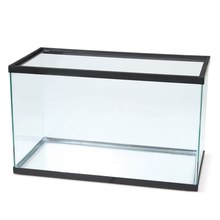
A 10-gallon tank is workable for the bare minimum school of 6. Seriously Fish recommends a base footprint of roughly 60x30cm, close to 24x12 inches, which lines up well with a 20-gallon long tank rather than a standard 10-gallon. If you're stocking the fuller 8 to 10 fish school this species is usually kept in, that's the better practical minimum. Schooling behavior plays out horizontally, so favor a longer tank over a taller one.
A 10-gallon tank covers a school of 6 at minimum. For the more typical 8 to 10 fish school, a 20-gallon long tank is worth the upsize, our handling guide covers why the school size itself matters as much as the tank does.

Temperature
73 to 84°F is the range Seriously Fish gives for this species, while Practical Fishkeeping puts general care closer to 77 to 82°F and notes that cardinal tetra tolerates water reaching 30°C (86°F), warmer than the roughly 25°C (77°F) ceiling neon tetra is comfortable with. A heater is necessary for any tank this size, and keeping the temperature stable matters as much as hitting the right number.

A 2008 laboratory study in Acta Amazonica pushed cardinal tetra to genuine extremes to find its lethal limits: total mortality set in below roughly 15°C (59°F) and above about 35°C (95°F), with the fish's 50% survival thresholds landing near 19.6°C and 33.7°C. That's a useful reminder of the difference between what a fish can survive and what it needs to thrive, the real comfort range keepers should aim for is the much narrower 73 to 84°F band above, not the edges of what the species can technically tolerate.
Water Chemistry
Cardinal tetras want soft, acidic water. Seriously Fish gives a comfortable range of pH 3.5 to 7.5, noting that wild-caught specimens do best toward the more acidic end. In practice, aiming for roughly pH 5.0 to 7.0, toward the lower end where possible, works well, and it's worth testing your source water before assuming your setup is automatically suitable. Ammonia and nitrite both need to read zero before stocking.
Filtration
Keep the flow gentle. Seriously Fish describes this species' native habitat as slow-moving forest streams full of fallen branches and leaf litter, not open water with strong current. A sponge filter is a common, effective choice, and a hang-on-back filter works too if you can baffle or reduce its output.

Substrate
Fine gravel or sand, and a darker color makes cardinal tetra's red and blue stripe stand out more against the background, the same principle that applies to the closely related neon tetra.
Lighting
Dim to moderate. This species comes from shaded, densely vegetated streams, and bright, intense lighting stresses fish built for filtered, dappled light rather than open water.
The Non-Obvious Requirement: Recreate Blackwater Conditions
This is the detail that takes a cardinal tetra tank from adequate to genuinely great. Driftwood and Indian almond leaves release natural tannins that stain the water and lower pH, mimicking the blackwater habitat this species evolved in, the same fallen branches and leaf litter Seriously Fish describes as the defining feature of its native streams.

Pair this with dense midground live plants to dim the light further and give the school somewhere to retreat. Always quarantine new fish before adding them, given the disease risk this species carries, and a bare hospital tank is what that means, not a spare corner of the display tank. Keep them well fed on a proper micro-pellet food sized for their small mouths. Always use a water conditioner on tap water before it goes in the tank, dechlorinating and neutralizing chloramine and heavy metals that are otherwise harmful to fish.
The Cardinal tetra encyclopedia profile has more on the species itself.
Sources & Further Reading
Last reviewed 14 Sep 2026 · 4 sources
- Paracheirodon axelrodi (Cardinal Tetra), Seriously Fish
- Cardinal tetra, Paracheirodon axelrodi - Practical Fishkeeping
- Tolerance to temperature, pH, ammonia and nitrite in cardinal tetra, Paracheirodon axelrodi, an amazonian ornamental fish
- Phylogeography and population genetic structure of the cardinal tetra (Paracheirodon axelrodi) in the Orinoco basin and Negro River (Amazon basin)
❓ Frequently Asked Questions
What size tank does a school of cardinal tetras need?
A 10-gallon tank is workable for the bare minimum school of 6. Seriously Fish's recommended footprint, roughly 24x12 inches of base, lines up closely with a 20-gallon long tank, a better practical minimum for the fuller 8 to 10 fish school most sources recommend for this species.
What temperature do cardinal tetras need?
73 to 84°F is the range Seriously Fish gives for this species, and Practical Fishkeeping puts general care closer to 77 to 82°F. It notes cardinal tetra tolerates water reaching 86°F, against roughly 77°F for neon tetra, so cardinal is the better fit for a warmer community tank.
What water chemistry do cardinal tetras need?
Soft and acidic: roughly pH 5.0 to 7.0, and toward the lower end where possible. Test your source water first rather than assuming it suits the species. Ammonia and nitrite both need to read zero before stocking.
What kind of filtration is best for a cardinal tetra tank?
Keep the flow gentle. This species comes from slow-moving forest streams, and Seriously Fish describes their natural habitat as full of fallen branches and leaf litter rather than open current. A sponge filter is a common, effective choice.
What's the non-obvious detail that makes the biggest difference in a cardinal tetra tank?
Recreating blackwater conditions. Driftwood and Indian almond leaves release natural tannins that stain the water and lower pH, mimicking the shaded, leaf-litter-covered streams this species evolved in. Pair that with dense planting and dim lighting, and color and confidence both improve noticeably.
📰 More on the Cardinal Tetra
📘 Cardinal Tetra care guide
🐠 How Much Does Cardinal Tetra Ownership Really Cost?
🐠 Cardinal Tetras Aren't Handled Either, But the School Size Rule Is Even Stricter
🐠 Common Cardinal Tetra Health Issues (Including a Disease Named After a Different Fish)
🐠 Cardinal Tetra Feeding: Schedule, Diet, and the Rule That Prevents an Outbreak
🐠 Cardinal Tetra Enrichment: Most of Them Are Still Wild
🛒 Recommended Gear
As an Amazon Associate, we earn from qualifying purchases through the links above - at no extra cost to you.
Written by Michael Ryan
Mike keeps two rescued bearded dragons, Dex and Cera, and writes the care guides on BeastlyFacts from his own research and mistakes. He is not a veterinarian.
More about Michael Ryan →Comments
No comments yet - be the first!