How Much Does an Axolotl Cost?
On This Page▾

Axolotls look deceptively simple to keep: a tank of water and a strange, smiling salamander. The cost driver only shows up in the specifics, because keeping the water cold enough is what determines your budget.
The Axolotl Itself: $30 to $100
Standard morphs run $30 to $100, with rarer colors like mosaic or GFP pushing the price higher still. The animal is one of the smaller pieces of the overall cost. The tank and temperature control matter a lot more.
What the Price Tags on Morphs Mean
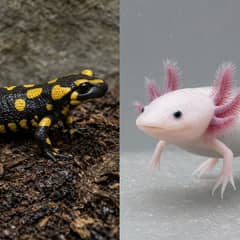
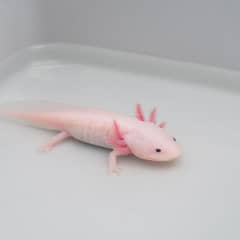
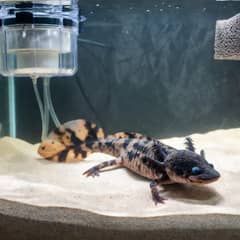
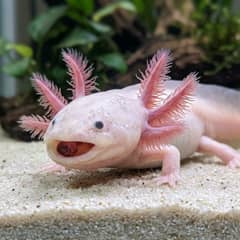
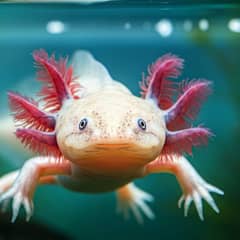
Besides the dark wild type, the common colors (melanistic, leucistic and albino) come from selective breeding in captivity. White (leucistic) and albino are single-gene traits kept as breeding strains, and an albino simply makes no melanin. Breeders can produce these colors reliably, which is why they sit at the low end of the price range.
GFP is a different kind of animal. It carries the gene for green fluorescent protein, first put into axolotls by transgenesis for laboratory research, and under ultraviolet light the whole body glows green. The glow is the only difference: the care, the water and the food are the same as for any other axolotl.
Mosaic and chimera axolotls carry two genetically different cell lines, so each one wears patches of two colors on one body; researchers have made them by fusing white and albino embryos. Each egg or sperm carries only one line's genes, so a mosaic does not breed more mosaics. That rarity is the whole price premium: nothing about its care differs.
The albino gene in pet axolotls did not start as an axolotl mutation. It came from a tiger salamander collected in Minnesota in 1962 and crossed into the laboratory colony.
Source: Woodcock et al. 2017, Scientific Reports
Picking a Healthy Axolotl
Check your state before you buy, because axolotls are banned in a handful of states.
The purchase price stops mattering the moment an axolotl comes home sick, and a few checks at the store prevent most of that.
- Look for a thermometer on the tank, or ask what it reads. An axolotl kept above about 75°F turns sluggish, floats, and becomes open to bacterial and fungal infection, and one kept warm in a store tank carries that home.
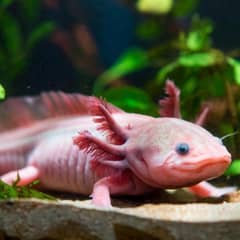
- Look at the gills. Full, feathery gills held out to the sides are what you want. Gills curled forward are a stress sign, often from too much water current.
- Check the skin. White, cotton-like tufts are water mold, the most common fungal infection in the species. Red patches or open sores need a vet, not a purchase.
- Watch it sit. A healthy axolotl rests on the bottom. One floating at the surface, or with a swollen, fluid-filled belly, has a buoyancy or fluid problem.
- Ask to see it eat. Poor appetite is one of the first signs of illness, and a seller with a healthy animal can show it taking food.
- Skip gravel-floored tanks. An axolotl that has lived on pebbles may already have swallowed some.
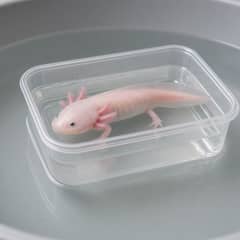
A new axolotl still goes through quarantine in a tub of its own before it shares water with another one, however good it looked in the store.
Buy the tank first and the axolotl last. A new tank needs about 30 to 60 days to cycle before an axolotl can go in, so plan the purchase a month or two after the setup.
Upfront Setup: $235 to $620 or $515 to $1,290 With a Chiller
| Item | Cost Range |
|---|---|
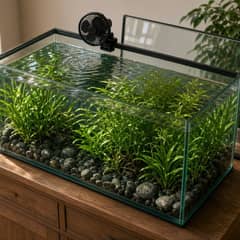
| Tank, 20-gallon long minimum, 40-gallon breeder better (check the dimensions before you buy) | $50 - $150 |
| Hinged glass lid, 30 by 12 in for a 20-gallon long (check the size against your tank; a 40-gallon breeder takes a 36 by 18 in lid; use a mesh lid instead if a fan does the cooling) | $25 - $40 |
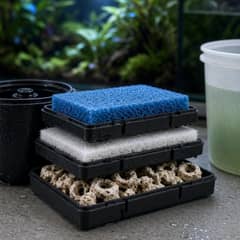
| Filtration, a low-flow sponge filter, or a canister rated for about 30 gallons with the output through a spray bar (check the rating against your tank's volume) | $20 - $160 |
| Substrate: fine sand under 1mm, or bare bottom (check the quantity against your tank's floor) | $10 - $25 |
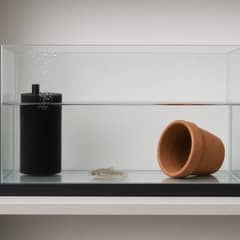
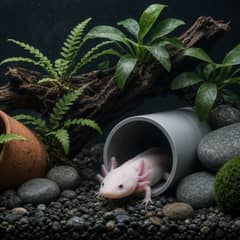
| Two smooth hide caves or lengths of PVC pipe, one a tunnel | $20 - $60 |
| Aquarium cooling fan, for a room that runs only a little warm (check it fits your tank's rim) | $20 - $35 |
| Water conditioner that neutralizes chlorine and chloramine | $5 - $15 |
| Digital aquarium thermometer for the water | $10 - $15 |
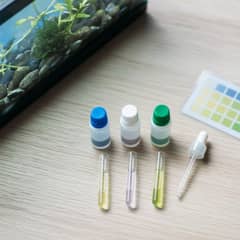
| Liquid water test kit for ammonia, nitrite, nitrate and pH | $25 - $40 |
| First supply of sinking pellets formulated for axolotls | $10 - $20 |
| Small air pump with airline and a check valve, to run the sponge filter | $10 - $15 |
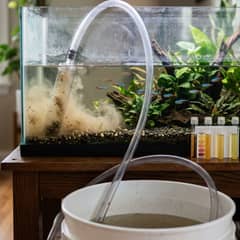
| Gravel vacuum and a bucket kept only for the tank, for the weekly water change | $20 - $25 |
| Long, blunt feeding tongs | $5 - $15 |
| Soft fine-mesh net, or a clean container for moving the axolotl | about $5 |
| Setup total | $235 - $620 |
Typical price ranges across retailers.
Not counting the axolotl itself, the gear comes to $235 to $620 for a basic setup, or $515 to $1,290 once a chiller is factored in. A few items sit outside the table: a sealed container that fits inside a second, rigid one for the trip home (any clean, lidded food container works), bottled ammonia to cycle the new tank, a nitrifying bacteria product for an ammonia spike, powder-free vinyl gloves, and a spare tub for quarantine or emergencies.
If Your Room Runs Warm
| Item | Cost Range |
|---|---|
| Chiller (check its rated volume sits well above your tank and filter water together) | $275 - $650 |
| Plug-in timer, only if you run a tank light | $5 - $20 |
| Total | $280 - $670 |
Typical price ranges across retailers.
Axolotls need water at 60 to 64°F, and most homes run warmer than that for a meaningful part of the year. Skipping the chiller only works in a room that holds the water in that range on its own. The chiller in the table is a 1/3 HP compressor unit rated for about 79 gallons, which covers one 20-gallon long or a 40-gallon breeder with room to spare. Smaller units are sold, but a unit rated near the tank's own volume runs at its limit once the filter water is added.
Cooling plays the part for an axolotl that a heater plays for most aquarium pets. Most are kept warmer than room temperature; axolotls are one of the few common ones that need cooling instead, from a cool room, fans, or a chiller, which is why this single item adds the most to an otherwise modest setup.
Ongoing Costs: $15 to $45 a Month
| Item | Monthly Cost |
|---|---|
| Food: nightcrawlers as the staple, plus pellet top-ups | $5 - $15 |
| Water conditioner top-ups, filter media, and chiller electricity | $10 - $30 |
| Monthly total | $15 - $45 |
An axolotl lives 10 to 15 years in captivity, so that monthly cost runs for a decade or more. The chiller's electricity draw is the cost most first-time owners don't budget for, and it's the one that varies most by climate and season. If you live somewhere warm, running a chiller through summer months adds up in a way a simple filter-and-heater setup for most other aquatic pets wouldn't.
Vet Costs
An axolotl can cost more to see than a reptile or bird, because some exotic hospitals book aquatic animals as a longer, two-part appointment. Tests, medication and any surgery for a swallowed stone come on top of the exam, so keep a few hundred dollars set aside from the first week.
Not every exotic practice sees axolotls, and the time to find one that does is before the first emergency, since warm water or a swallowed stone rarely waits for business hours.
Budget Around the Water Temperature
The axolotl is the cheap part of this pet. Work out whether your room can hold the water cold through its warmest month, and if it can't, count the chiller in from the start. A budget built around the water temperature is the one that holds up once the axolotl is home.
Sources & Further Reading
Last reviewed 18 Jul 2026 · 5 sources
- LafeberVet: Basic Information Sheet, Axolotl
- Insights into pigmentary phenomena provided by grafting and chimera formation in the axolotl, Pigment Cell Research (Houillon and Bagnara, 1996)
- Chicago Exotics Animal Hospital: Axolotl Care
- Axolotl Strains, Ambystoma Genetic Stock Center, University of Kentucky
- Purdue Cooperative Extension Service: Biological Filtration, Design and Operation (CES 240) (PDF, downloads)
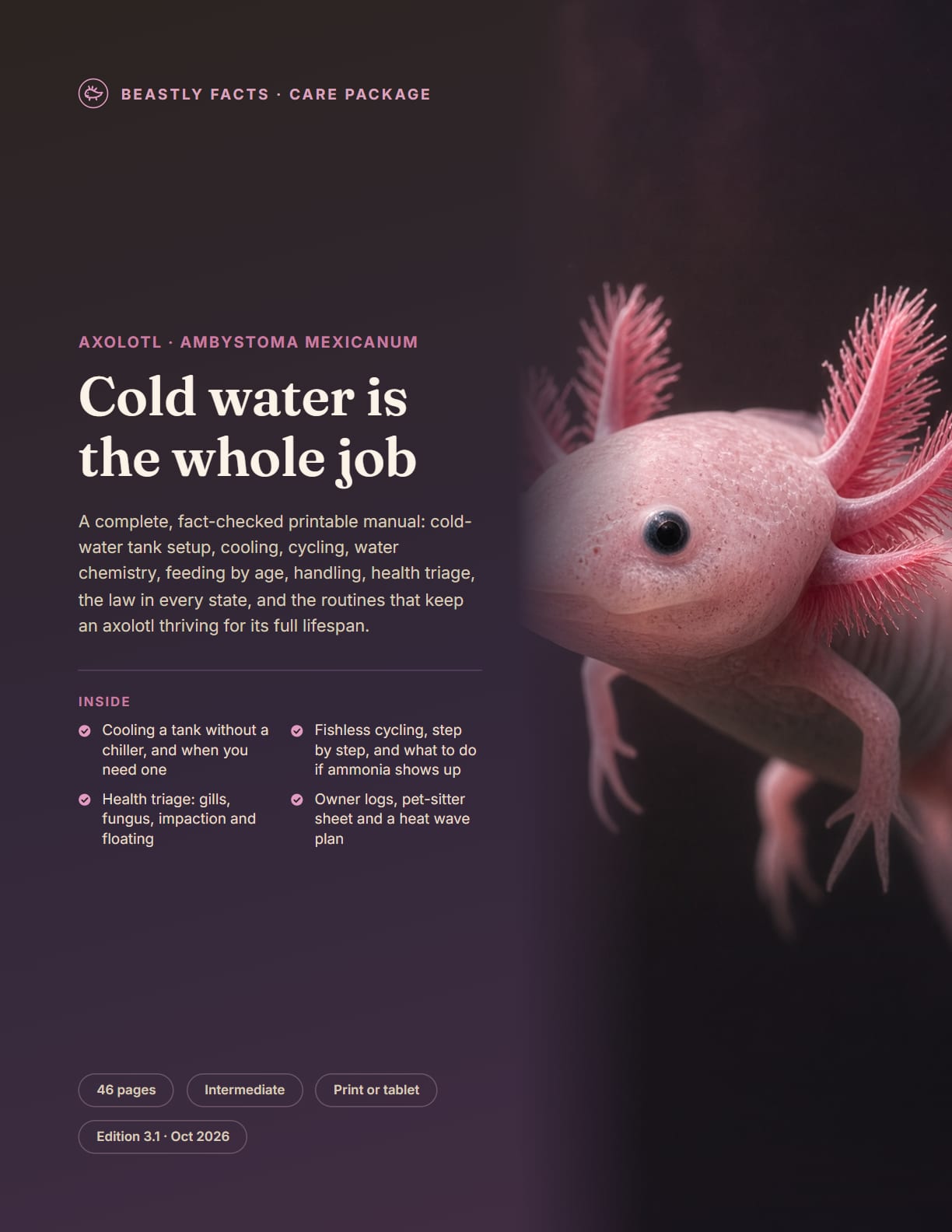
The Axolotl Care Package adds one line to this budget: $8.99 for a 46-page PDF with the setup shopping list, the budget sheet and the whole care guide on paper. Includes the Universal Pet Kit free: a budget and emergency fund you can fill in.
Frequently Asked Questions
How much does an axolotl itself cost?
$30 to $100 for a standard color such as wild type, leucistic or albino. That makes the animal one of the smaller lines in the budget: the tank and the chiller decide most of your total.
What does a full axolotl setup cost, including a chiller?
Plan on $235 to $620 for a basic setup, covering the tank, a secure lid, low-flow filtration with its air pump, fine sand, hides, a cooling fan, water conditioner, a water thermometer, a test kit, a gravel vacuum, feeding tongs, a soft net and the first pellets, or $515 to $1,290 once you factor in a proper chiller. The chiller is the single item that does the most to separate the low and high ends of that range.
What are the ongoing monthly costs for an axolotl?
Around $15 to $45 a month. Nightcrawlers and pellet top-ups account for $5 to $15 of it, and conditioner, filter media and the chiller's power make up the rest.
When does an axolotl need a chiller?
Whenever a cool room and a fan can't hold the water between 60 and 64°F. For a home that runs warm for part of the year, the chiller belongs in the cost of keeping the species responsibly from day one.

Recommended Gear
As an Amazon Associate I earn from qualifying purchases through the links above, at no extra cost to you.

Written by Michael Ryan
Mike keeps two rescued bearded dragons, Dex and Cera, and writes the care guides on BeastlyFacts from his own research and mistakes. He is not a veterinarian.
More about Michael Ryan →You May Also Like

Subscribe - it's free
An occasional email when something new is worth your time. No spam.
Health and More