Parrotlet
Forpus coelestis
On This Page▾
🌍 Overview
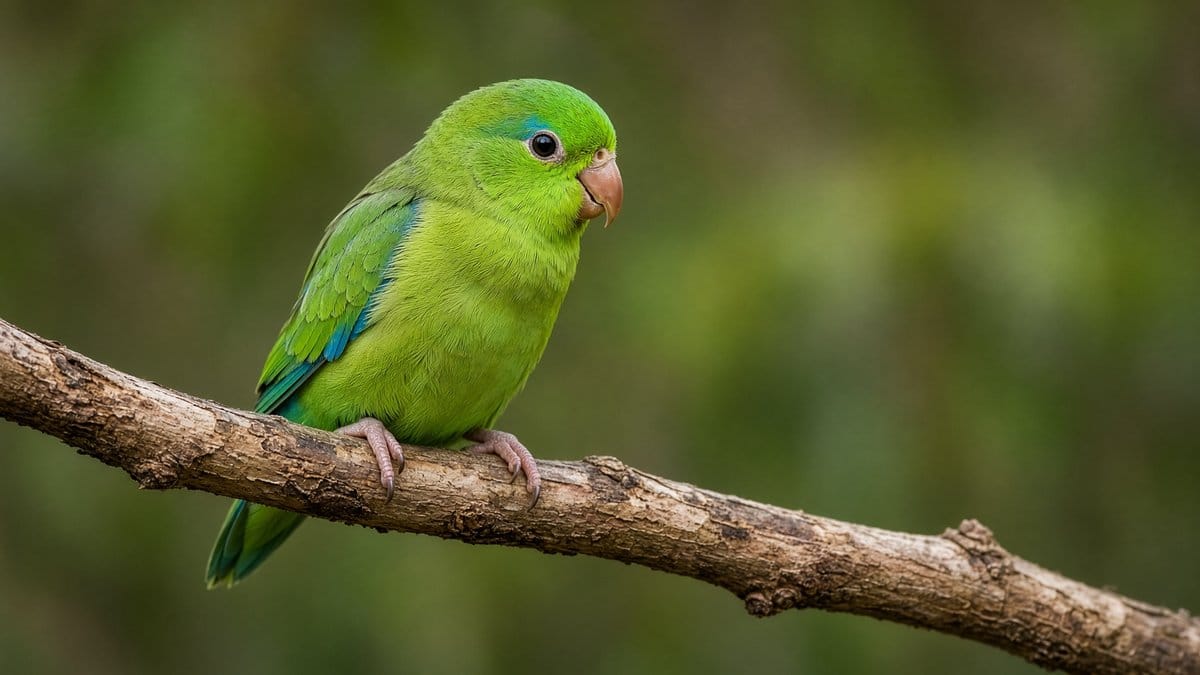
The Pacific parrotlet is the most popular of the nine parrotlet species and, at well under six inches, the smallest true parrot commonly kept as a pet - smaller even than a budgie. What it lacks in size it makes up for in personality: parrotlets are famously bold and feisty, often described as a large parrot's attitude packed into a tiny body. Wild parrotlets are native to the dry forests and scrubland of coastal Ecuador and Peru, where they travel in flocks of 40 to 50 birds. Unlike a zebra finch, a parrotlet can learn to say a handful of words and, when hand-raised and consistently handled, bonds intensely to one person, though an under-socialized bird can turn sharp and nippy well out of proportion to its size.
📋 Quick Facts
Native Range
Western Ecuador and northwestern Peru
Natural Habitat
Arid scrubland, deciduous forest, and cultivated farmland
Adult Size
4.3-5.5 inches (11-14 cm); 1-1.4 oz
Wild Diet
Grass seeds, berries, cactus fruit, and blossoms
Wild Lifespan
Not well documented in the wild; one estimate averages around 10 years (8-12 years is the usual captive average, with individuals reported into their 20s and occasionally their 30s)
Conservation Status
Least Concern (IUCN)
📜 History
Rene Lesson described Forpus coelestis in 1847, but the bird was slow to reach keepers. The United States has held an established captive breeding population since 1930, and even so parrotlets stayed obscure in American aviculture until the mid-1980s; a 1996 article in the AFA Watchbird noted that they had been little known ten years earlier and were only then becoming popular. The Wild Bird Conservation Act, signed on October 23, 1992, ended commercial imports of wild-caught parrots into the United States. The surge in parrotlet keeping that followed therefore ran entirely on birds already in captivity.
⚖️ Compare
Parrotlet
Human
Adult Size
4.3-5.5 inches (11-14 cm); 1-1.4 oz
5-6 feet (150-185 cm); ~135-200 lbs
Wild Lifespan
Not well documented in the wild; one estimate averages around 10 years (8-12 years is the usual captive average, with individuals reported into their 20s and occasionally their 30s)
~73 years (global average)
Wild Diet
Grass seeds, berries, cactus fruit, and blossoms
Omnivorous - eats just about anything
Native Range
Western Ecuador and northwestern Peru
Global - originated in Africa roughly 300,000 years ago
Natural Habitat
Arid scrubland, deciduous forest, and cultivated farmland
Everywhere from arctic tundra to tropical megacities
Conservation Status
Least Concern (IUCN)
Least Concern (8+ billion and counting)
🧠 Test Yourself
What's the Parrotlet's native range?
🤩 Fun Facts
🐦 A Beak Built to Skip the Grit
A parrotlet's upper beak has small ridges that hold a seed in place while the lower beak cracks and removes the hull before the seed is ever swallowed. That's exactly why this species doesn't need dietary grit the way some other birds do, there's no whole hull left over for a gizzard to grind down.
📖 Care Guide
Parrotlet Care Guide
The pocket parrot with a personality several sizes too big for it!
Subscribe - it's free
New animal facts and care guides straight to your inbox. No spam. 🐾
📰 Deep Dive
🐦 How Much Does a Parrotlet Really Cost?
🐦 How to Handle a Parrotlet (Its Bite Is Stronger Than You'd Guess)
🐦 Common Parrotlet Health Issues and What Causes Them
🐦 Parrotlet Cage Setup: Small Bird, Real Space and Enrichment Needs
🐦 Parrotlet Feeding: Diet, Schedule, and Foods to Avoid
🦜 Parrotlet Enrichment: Five Inches of Full-Sized Parrot
🩺 Health and More
⚠️ Household Hazards for Pet Birds: The Complete Safety Checklist
🦠 Avian Gastric Yeast (Megabacteriosis): The Silent Weight-Loss Disease
🚪 Quarantining a New Bird: The Real Timeline and Why It Matters
💩 Reading Bird Droppings: The Daily Health Check Every Owner Should Know
🌙 Photoperiod and Sleep: The Light Schedule That Controls Your Bird's Hormones
🦜 Converting a Seed-Eating Bird to Pellets Without Starving It
✂️ Wing Clipping: Flighted vs. Clipped, Both Sides Explained
🔦 Bird Emergency Plan: Power Outages, Travel, and Transport
⚖️ Sexing, Weight, and Body Condition in Pet Birds: What Actually Works
🥚 Chronic Egg Laying and Egg Binding in Budgies, Cockatiels, and Lovebirds
🪶 Why Is My Bird Losing Feathers? Molt vs. Plucking vs. PBFD vs. Giardia
🦜 Choosing a Pet Bird: What You're Actually Signing Up For
🦠 Avian Polyomavirus: Budgerigar Fledgling Disease and French Molt
🦜 Reading Bird Body Language: Fluffed Content vs. Fluffed Sick
🐦 Colony and Aviary Keeping: Budgies, Canaries, and Finches in Groups
🌫️ Feather Dust, Air Quality, and Bird Fancier's Lung
🎯 Parrot Training: The Behavior Ladder From Budgie to Macaw
🩹 Bird First Aid Kit and Grooming: Nails, Beak, and Blood Feathers
📋 Succession Planning for a Pet That May Outlive You
🕊️ Adopting a Rescue Parrot: The First Months, Honestly
🐦 Two Small Birds, Two Completely Different Pets
🦅 The Ultimate Birdwatching Guide: Best Places, Times, and Tips for Beginners (2026)
🤓 Did You Know?
Despite being smaller than a budgie, the Pacific parrotlet has a noticeably stronger bite and a personality so bold that keepers often describe it as a big parrot's attitude packed into a tiny bird. It genuinely does not seem to know how small it is.
Explore More