Green Iguana
Iguana iguana
On This Page▾
🌍 Overview
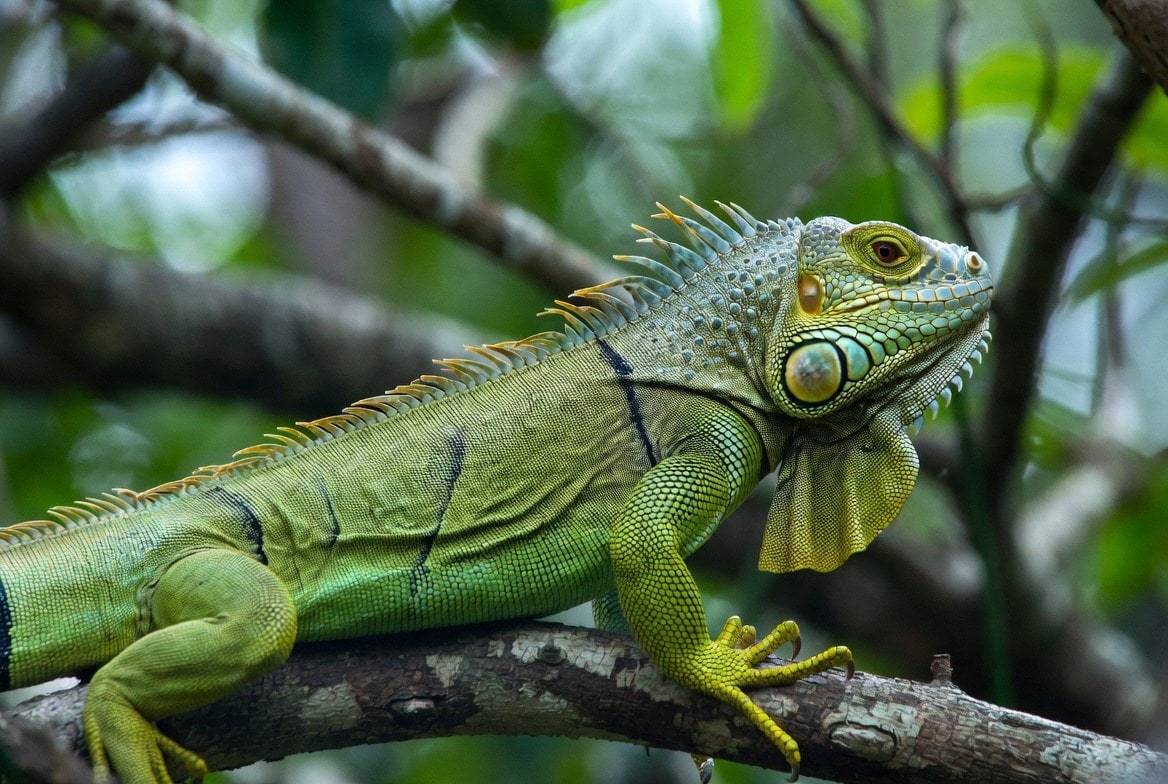
Green iguanas are large arboreal herbivores from Central and South America, and the gap between what they are sold as and what they become is the widest of any pet reptile. A hatchling is six inches and costs very little. An adult reaches six feet or more, weighs up to twenty pounds, needs a custom enclosure the size of a wardrobe, and lives twenty years in captivity. They are strict herbivores whose gut relies on fermenting leafy greens, so the classic mistakes are protein and insufficient calcium, both of which produce metabolic bone disease. Males in breeding condition can become genuinely aggressive. Escaped and released animals have established breeding populations in Florida, Hawaii and Puerto Rico.
📋 Quick Facts
Native Range
Central and South America, from Mexico to Paraguay, plus many introduced populations
Natural Habitat
Rainforest canopy and riverside trees, rarely far from water
Adult Size
6 feet (1.8 m) or more including tail, adult males recorded to 7 feet; 10-20 lbs
Wild Diet
Leaves, flowers and fruit; almost entirely herbivorous
Wild Lifespan
About 8 years in the wild (Animal Diversity Web); the widely quoted 15-20 years is a captive figure
Conservation Status
Least Concern (IUCN), listed on CITES Appendix II
📜 History
The green iguana was placed on CITES Appendix II on February 4, 1977, which means the decades that followed are documented in permit records. Commercial farms in Honduras, El Salvador, Colombia and Panama scaled up through the 1980s and 1990s to supply the American market, and imports peaked at more than 800,000 animals in 1995 and roughly a million the year after. Iguana imports accounted for roughly a third of all reptiles brought into the United States in 1997. Between 1996 and 2012 the species made up close to half of the country's entire live reptile trade, making it the most heavily traded reptile in the world.
⚖️ Compare
Green Iguana
Human
Adult Size
6 feet (1.8 m) or more including tail, adult males recorded to 7 feet; 10-20 lbs
5-6 feet (150-185 cm); ~135-200 lbs
Wild Lifespan
About 8 years in the wild (Animal Diversity Web); the widely quoted 15-20 years is a captive figure
~73 years (global average)
Wild Diet
Leaves, flowers and fruit; almost entirely herbivorous
Omnivorous - eats just about anything
Native Range
Central and South America, from Mexico to Paraguay, plus many introduced populations
Global - originated in Africa roughly 300,000 years ago
Natural Habitat
Rainforest canopy and riverside trees, rarely far from water
Everywhere from arctic tundra to tropical megacities
Conservation Status
Least Concern (IUCN), listed on CITES Appendix II
Least Concern (8+ billion and counting)
🧠 Test Yourself
What's the Green Iguana's native range?
📖 Care Guide
Green Iguana Care Guide
A six foot arboreal herbivore sold as a six inch hatchling!
⚖️ Where it is legal
9 US jurisdictions restrict this species, from outright bans to permits. Every one quotes the rule it comes from.
⚖️ Legal Guide
Subscribe - it's free
New animal facts and care guides straight to your inbox. No spam. 🐾
📰 Deep Dive
🦎 How Much Does a Green Iguana Really Cost?
🦎 How to Handle a Green Iguana (And Why So Many Get Surrendered)
🦎 Common Green Iguana Health Issues
🦎 Green Iguana Enclosure Setup: Plan for a Room, Not a Tank
🦎 Green Iguana Feeding: Building the Salad and the Protein Mistake
🦎 Green Iguana Enrichment: Hatchlings Are Social, Adults Are Not
🩺 Health and More
🎭 Three Pets That Are a Bigger Deal Than They Look
🔌 Reptile Emergency Plan: Power Outages, Travel, and Pet Sitters
💧 Reading Reptile Stool, Urates, and Hydration: A Daily Health Check
🧼 Salmonella and Reptile Hygiene: The Rules That Actually Matter
🌡️ Reptile Heating and Thermostats: Preventing Burns
🧫 Reptile Quarantine: Why New Snakes and Lizards Need Months, Not Weeks
🤓 Did You Know?
Green iguanas have a pale scale on the top of the head called the parietal eye. It is a genuine third eye with a lens and a retina, wired to the pineal gland rather than to vision, and it detects shadow moving overhead. It is an early warning system for birds of prey.
Explore More