Green Anole
Anolis carolinensis
On This Page▾
🌍 Overview
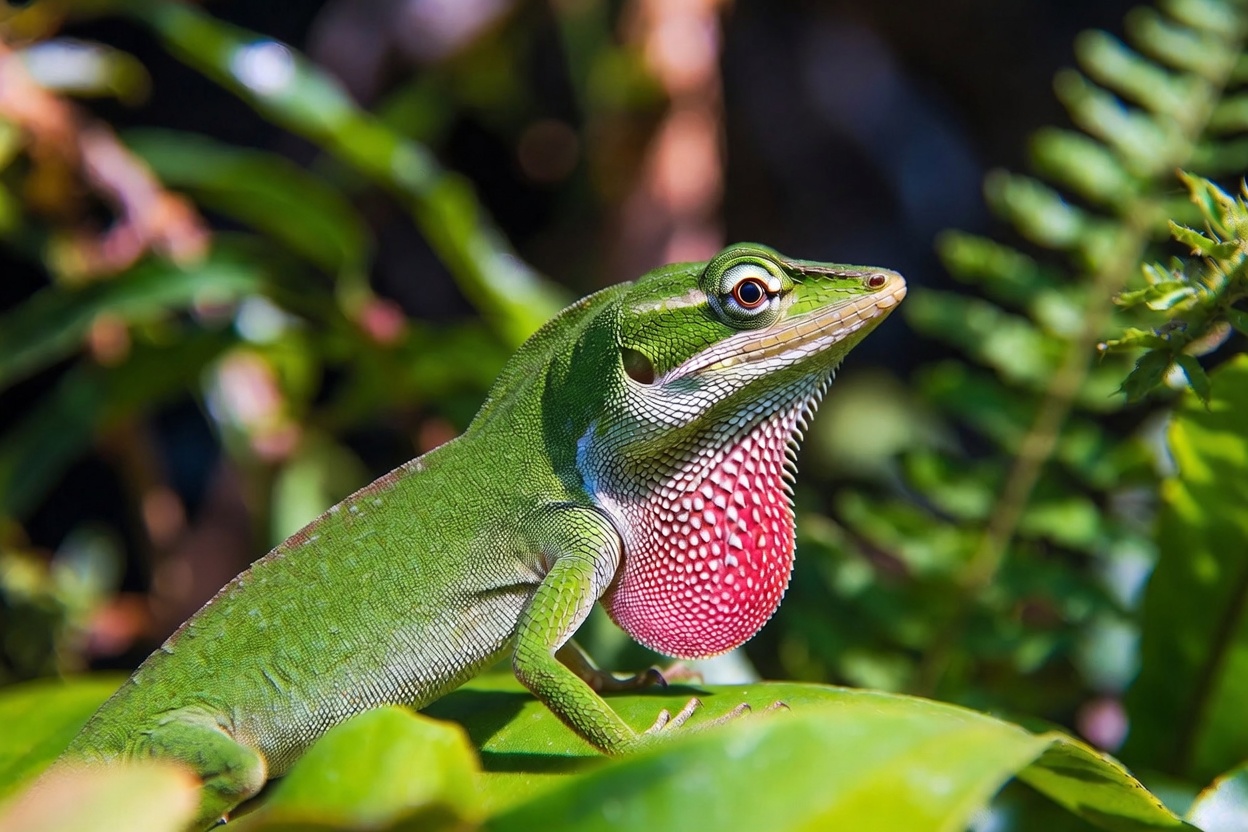
The green anole is North America's only native anole and the most commonly kept anole species in captivity. Found throughout the American Southeast, it inhabits shrubs, trees, and garden vegetation. Males display an expandable pink throat fan (dewlap) in territorial and courtship displays. While capable of limited color change from vivid green to brown, they are not true chameleons - color change reflects mood and temperature rather than camouflage.
📋 Quick Facts
Native Range
Southeastern United States and Caribbean
Natural Habitat
Trees, shrubs, gardens, and forest edges
Adult Size
5-8 inches (13-20 cm) including tail
Wild Diet
Insects, spiders, and small invertebrates
Wild Lifespan
3-7 years
Conservation Status
Least Concern (IUCN)
📜 History
Friedrich Siegmund Voigt gave the species its scientific name in 1832, but its place in science was settled much later. On August 31, 2011 a Broad Institute team with Jessica Alföldi and Federica Di Palma as lead authors published the green anole genome in Nature, the first reptile genome sequenced and assembled: until then the only amniote genomes available came from mammals and three birds. The 1.78 gigabase draft, with roughly 17,472 predicted protein-coding genes, gave researchers a reptile reference point for reading bird and mammal evolution. The anole was chosen because the lizard branch had never been sampled and because anoles carry enough ecological and morphological variety to be interesting without becoming unwieldy.
⚖️ Compare
Green Anole
Human
Adult Size
5-8 inches (13-20 cm) including tail
5-6 feet (150-185 cm); ~135-200 lbs
Wild Lifespan
3-7 years
~73 years (global average)
Wild Diet
Insects, spiders, and small invertebrates
Omnivorous - eats just about anything
Native Range
Southeastern United States and Caribbean
Global - originated in Africa roughly 300,000 years ago
Natural Habitat
Trees, shrubs, gardens, and forest edges
Everywhere from arctic tundra to tropical megacities
Conservation Status
Least Concern (IUCN)
Least Concern (8+ billion and counting)
🧠 Test Yourself
What's the Green Anole's native range?
📖 Care Guide
Green Anole Care Guide
The color-changing little acrobat with a signal flag under its chin!
⚖️ Where it is legal
15 US jurisdictions restrict this species, from outright bans to permits. Every one quotes the rule it comes from.
Subscribe - it's free
New animal facts and care guides straight to your inbox. No spam. 🐾
📰 Deep Dive
🦎 How Much Does a Green Anole Really Cost?
🦎 How to Handle a Green Anole (Carefully, and Rarely)
🦎 Common Green Anole Health Issues
🦎 Green Anole Enclosure Setup
🦎 Green Anole Feeding: Two or Three Insects Smaller Than Its Head, and Water It Can Lap
🦎 Green Anole Enrichment: The Studies Exist, and They Found Nothing
🩺 Health and More
🔌 Reptile Emergency Plan: Power Outages, Travel, and Pet Sitters
💧 Reading Reptile Stool, Urates, and Hydration: A Daily Health Check
🧼 Salmonella and Reptile Hygiene: The Rules That Actually Matter
🌡️ Reptile Heating and Thermostats: Preventing Burns
🧫 Reptile Quarantine: Why New Snakes and Lizards Need Months, Not Weeks
🦎 Understanding Reptile Shedding (Ecdysis)
🤓 Did You Know?
Green anoles change color between green and brown based on temperature, mood, and stress rather than to match their surroundings, which is why the 'American chameleon' nickname is a misnomer. A stressed or cold anole goes brown; a relaxed, warm one goes green.
Explore More