How to Handle a Sugar Glider (It Starts With a Pouch, Not Your Hands)
On This Page▾

Sugar gliders bond through scent. A glider learns its keeper by smell long before it accepts a hand, so taming starts with a pouch.
The Bonding Pouch Is the Starting Point
Direct handling is not where this starts. Gliders rely heavily on scent to recognize the members of their colony, and males carry a scent gland on the top of the head for marking territory. A keeper earns a place in that colony the same way, with the gliders carried against your body in a dedicated bonding pouch until they recognize you as safe.
- Give new gliders a settling-in period of several days before any interactive handling.
- Carry the gliders in a bonding pouch against your body during that time and after it.
- Once bonding is underway, give the gliders attention every day. Socialized gliders often enjoy cuddling, and they form strong bonds with owners who give them regular attention.
Why Single Gliders Are So Much Harder to Handle
A lone glider is more stressed and more defensive than one kept with a companion. Kept alone, sugar gliders can become severely stressed and depressed, to the point of harming themselves. Isolation itself works against the trust you are trying to build. A single glider needs at least 1 to 2 hours of human attention every day to make up for the missing company, which is more than most keepers can give every night. Gliders kept in pairs settle and bond with their keeper more readily, one more reason the two-glider minimum is a welfare need.
What to Expect From an Unbonded or Startled Glider
"Crabbing," a loud buzzing or chattering sound, is the signature defensive response of a frightened glider. Gliders are not easily handled by strangers. They will often bite, vocalize or urinate if forcibly restrained. A frightened glider's bite can be surprisingly deep, because the teeth are built for gouging into wood.
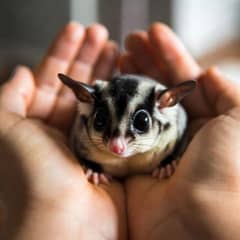
Never grab a glider by the scruff. Vets examining a calm glider wrap it in a small towel and cup it in the palm of the hand, and that grip works at home too when you need to check a glider over.
Picking Up a Bonded Glider
- Handle in the evening or early morning, when gliders are most active. They are nocturnal and sleep through the day, so leave a sleeping or frightened glider alone.
- Hold your hand near the glider and let it climb on. Do not reach in to grab it.
- Support the whole body in a cupped hand once it is there.
- Let it ride on your shoulder or settle back into the pouch if it wants to.
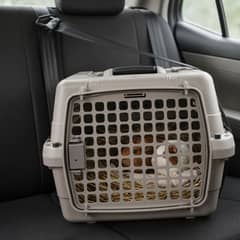
To move a reluctant glider, into a carrier for instance, guide it into a pouch and move the pouch.
Telling Males from Females
Know the sexes before you introduce a second glider. Adult males are the easier sex to spot. A male carries an obvious pendulous scrotum, and once past puberty he develops a scent gland on the top of his head that shows as a bald or thinly furred patch, often a little oily. Females have a pouch on the belly instead, and no bald patch. Both sexes pass waste and reproduce through a single cloacal opening, so that opening is no help in telling them apart. Males reach puberty at around 12 to 14 months and females at 8 to 12 months. Neuter a male in a mixed pair before his first birthday.
Introducing a Second Glider
Glider colonies are closed and territorial, a trait carried over from the wild animal. Dominant males mark the rest of the group with their scent, and a newcomer that lacks it can be attacked. Never drop a new glider into an established cage.
- Quarantine. Keep the newcomer in a separate room for at least 30 days, and have a vet examine both gliders before they meet. Neuter any intact male first.
- Scent swap. Trade sleeping pouches, fleece and toys between the two cages every few days. Keep this up for several days to several weeks, depending on how each glider reacts.
- Closer cages. Start the cages several feet apart and move them together over several days.
- Neutral ground. Run supervised sessions of 10 to 15 minutes in a space neither glider owns, and lengthen them gradually.
- One pouch. Offer a shared sleeping pouch and watch whether they choose to go in together.
- One cage. Move them in together only once they sleep together and interact peacefully. Use a thoroughly cleaned cage, free of either glider's territorial scent, and rearrange the furnishings. Put both gliders in at the same time so neither one arrives as the owner.
Expect some mild dominance behavior in the first several days after the move. Sleeping curled together, grooming each other and sharing food without squabbling mean it has worked.
Watch for the signs that a step went too fast:
- Persistent crabbing or distress calls
- Excessive hiding or fearfulness
- Lunging at the cage bars
- Persistent aggressive chasing
If any of these show up, go back to the previous step. If they ball up and fight, bite hard enough to break skin, or draw any blood, separate them at once and go back further. Moving too quickly is the most common reason introductions fail, and the cost is more than a setback: fights between gliders are a common cause of eye injuries, from scratched corneas to ulcers.
If a Glider Gets Out
Gliders squeeze through the smallest gaps. The best recovery plan is a cage with half-inch bar spacing and latched doors. Proof the room before any out-of-cage time: close it off, cover open water, switch off fans and heat, and shut other pets out. Take out fruit-scented air fresheners, cleaners, candles, and insect and rodent baits, which stay away from gliders altogether. A glider can drown in open water.
When one does escape, work through these steps in order:
- Stay calm and close the doors to keep it in one room.
- Check high spots and curtains, where a glider climbs to hide.
- At dusk, offer the pouch and a treat.
- Sit quietly and let it climb into the pouch on its own. A cornered glider that is grabbed will bite.
First-Timer Mistakes
- Keeping a single glider and expecting it to bond as easily as a pair would.
- Trying to handle before the bonding process has had time to work.
- Chasing or grabbing a glider that is trying to avoid you, which reinforces fear instead of building trust.
- Handling in a cold room. Gliders chill easily, so keep the room at about 75°F or warmer during sessions, the bottom of their comfortable range. In the cold a glider can drop into torpor, a low-energy state that can last up to 16 hours a day. Warm a cold, sluggish glider in its pouch against your body before any handling. If it stays limp or unresponsive once warm, call the vet now.
- Pushing through clear stress signals such as crabbing, tail-shaking or frantic jumping. Back off and try again later.
Letting the Pouch Do the Taming
A sugar glider decides it trusts you by scent, and no amount of reaching in speeds that up. Keep the pair together, carry them in the pouch, and handle only when they are awake and calm. When a glider crabs, take it as a request to stop and try again another evening.
Sources & Further Reading
Last reviewed 15 Nov 2026 · 5 sources
- VCA Animal Hospitals: Sugar Gliders, Owning
- PetMD: Sugar Gliders, A Pet Parent's Guide to Habitats, Food, and Care
- Merck Veterinary Manual: Providing a Home for a Sugar Glider; Sugar Gliders (professional version); Disorders and Diseases of Sugar Gliders
- Tree of Life Exotic Pet Medical Center: Bonding Two Sugar Gliders
- LafeberVet: Sugar Glider Basic Information

A pet profile and a sitter sheet you can fill in, so anyone who helps knows the routine. The Universal Pet Kit has it, among 19 forms for any pet that you can type into or print.
Frequently Asked Questions
How do you bond with a sugar glider?
Carry the gliders in a bonding pouch against your body so they learn your scent. Give new gliders several days to settle in before you try to handle them directly.
Why is a single sugar glider so much harder to handle than a pair?
Isolation stresses a glider and slows its trust, while a pair settles in and accepts its keeper sooner.
What does it mean when a sugar glider is crabbing?
Crabbing is the loud buzzing a frightened glider makes. Forced restraint or a stranger's hands can bring bites, calls or urine, and the bite can be deep.
What are the most common first-timer mistakes with sugar gliders?
Keeping a single glider, reaching in too early, chasing one that avoids you, handling in a cold room, and ignoring crabbing or tail-shaking.
More on the Sugar Glider


Recommended Gear
As an Amazon Associate I earn from qualifying purchases through the links above, at no extra cost to you.

Written by Michael Ryan
Mike keeps two rescued bearded dragons, Dex and Cera, and writes the care guides on BeastlyFacts from his own research and mistakes. He is not a veterinarian.
More about Michael Ryan →You May Also Like

Subscribe - it's free
An occasional email when something new is worth your time. No spam.
Deep Dive
Health and More