What Do Pet Mice Eat? Diet, Portions, and Foods to Avoid
On This Page▾

Mice are opportunistic omnivores that need noticeably more protein than a hamster or gerbil, and because a full-grown mouse weighs about as much as two or three paperclips, portion control matters here in a way it simply doesn't for a bigger rodent.
The Staple Diet
A nutritionally complete pelleted diet, often sold as "nuggets" or a lab block, should make up roughly 75 to 80% of a mouse's diet according to PetMD. The RSPCA is blunt about why pellets beat a loose seed mix: mice pick out their favorite pieces the same way gerbils and hamsters do, so a bag that looks balanced on the label doesn't get eaten that way.
Protein is where mice diverge from hamsters and gerbils. The American Fancy Rat and Mouse Association puts general maintenance crude protein for mice at 20 to 25%, with growing or breeding animals needing even more depending on strain, and notes plainly that "the mouse has similar nutrient requirements as the rat." That's meaningfully higher than the 14 to 16% that's adequate for a gerbil or hamster, which is exactly why a hamster-and-gerbil pellet is the wrong tub to reach for. It's formulated for a lower protein target than a mouse genuinely needs. Look for a product labeled specifically for mice or rats instead.
Feeding Frequency and Portions
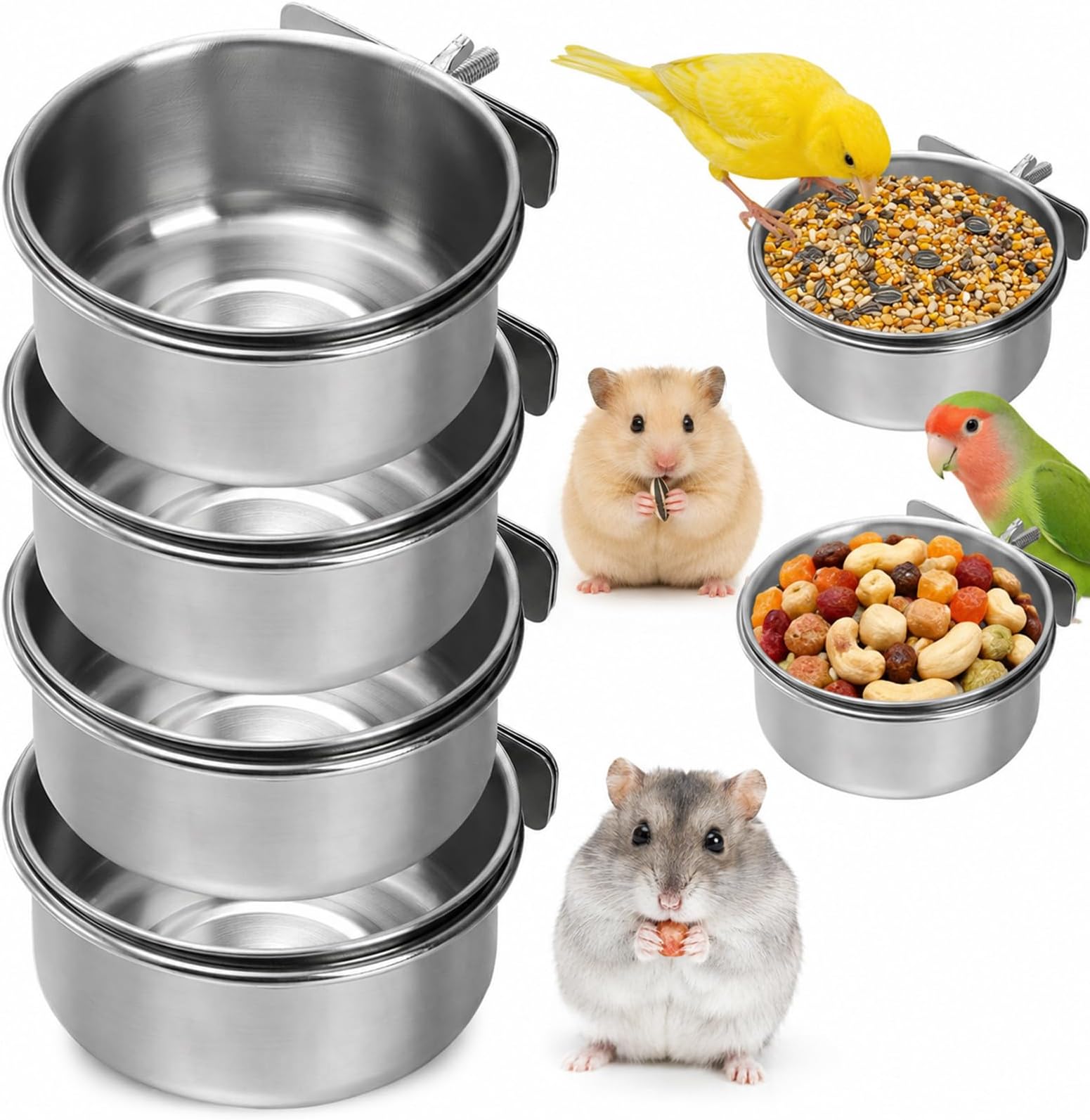
Feed a measured pelleted ration once daily, and lean toward scattering some of that ration around the cage rather than dumping it all in one dish. The RSPCA specifically recommends this to encourage natural foraging behavior. Fresh vegetables like leafy greens, carrot, bell pepper, and broccoli can be added daily in genuinely small amounts, cut small. "Small" means something different for a 1 to 1.6 ounce animal than it does for a hamster, closer to a pea-sized piece than a chunk of carrot. Most fruit is fine occasionally, but skip fruit seeds and pits, and treat sugary items as an occasional extra rather than a daily habit. The dry ration is the part that gets scattered. A shallow, chew-resistant dish is for the fresh vegetables, which do not scatter well and need pulling out before they spoil, and it makes leftovers easy to spot. Where the dry food goes is one of the cheapest welfare changes available for this species.
Foods to Avoid
According to PetMD and the RSPCA, avoid grapes and raisins, rhubarb, citrus fruit, chocolate, caffeine, and alcohol (genuinely toxic, not just unsuitable), plus garlic, onion, raw beans, and raw potato. Lettuce is a specific one worth knowing: it isn't toxic, but the RSPCA notes it causes diarrhea in mice, so it's better left out entirely rather than offered "in moderation."
Water and Supplementation
Fresh water needs to be available constantly. Mice are small enough that going without it for even a short stretch is genuinely dangerous, per the RSPCA. Use a bottle with a metal sipper tube and check it daily, a clogged spout is easy to miss on an animal that doesn't drink much at any one sitting. No vitamin or mineral supplement is needed on top of a complete pelleted diet.
Coprophagy Is Normal, Not a Problem
Mice eat some of their own droppings directly from the cage floor, and it's a genuine nutritional strategy rather than a sign anything's wrong. Research from a series of studies on laboratory mice found the behavior peaks around 13 pellets a day at 5 to 6 weeks old, and gradually declines with age to roughly 2 pellets a day by 18 months. It works because feces are astonishingly concentrated in nutrients a single pass through the gut misses, especially B vitamins.
Coprophagy in mice isn't just a fixed habit, it responds to actual nutrient need. Researchers found mice fed a standard diet ate their own droppings about 9.6 times a day on average, but once the feed was fortified with vitamin B12, that dropped to roughly 4.7 times a day, direct evidence the behavior tracks real nutritional demand rather than instinct alone. The same research found mouse feces run 124 to 197 times higher in vitamin B12 than the diet that produced them, which is part of why the habit never fully disappeared even on the fortified diet.
The Mistakes That Matter
A seed-heavy mix as the staple is the single biggest dietary risk, for the same selective-eating reason it's a problem in gerbils. Overfeeding fresh produce is the second, mice are small enough that what looks like a modest vegetable portion by human standards is actually oversized for the animal. And reaching for a hamster-and-gerbil formulated pellet because it's already in the house is an easy, understandable mismatch that quietly underfeeds protein over time.
The full Mouse encyclopedia profile has the wild diet behind that protein number.
Sources & Further Reading
5 sources
- RSPCA: What To Feed Pet Mice
- PetMD: Pet Mouse Care Sheet
- AFRMA: Mineral & Protein Requirements in Mice
- Ebino, K.Y., Suwa, T., Kuwabara, Y., Saito, T.R., & Takahashi, K.W. (1986). "Analyses of Constituents of Feces and the Effect of a Vitamin B12 Fortified Diet on Coprophagy in the Mouse." Experimental Animals, 35(4), 381-391.
- Ebino, K.Y., Suwa, T., Kuwabara, Y., Saito, T.R., & Takahashi, K.W. (1987). "Lifelong Coprophagy in Male Mice." Experimental Animals, 36(3), 273-280.
❓ Frequently Asked Questions
What is the best staple food for a pet mouse?
A nutritionally complete pelleted diet or lab block, sometimes sold as 'nuggets,' should make up roughly 75 to 80% of a mouse's diet. Look for one formulated specifically for mice or rats rather than the hamster-and-gerbil blends common on pet store shelves, mice need meaningfully more protein than either of those species.
How much protein do mice need?
More than a hamster or gerbil. General maintenance crude protein for a mouse runs 20 to 25%, with breeding or growing mice needing even more depending on strain, well above the 14 to 16% that's adequate for a gerbil.
How much should I feed a mouse each day?
Feed a measured pelleted ration once daily, ideally scattered around the cage to encourage natural foraging. Add small amounts of fresh vegetables daily, cut into pieces closer to pea-sized than the portions appropriate for a hamster, since a full-grown mouse weighs only about 1 to 1.6 ounces.
What foods are toxic to mice?
Grapes and raisins, rhubarb, citrus fruit, chocolate, caffeine, and alcohol are toxic. Garlic, onion, raw beans, and raw potato should also be avoided, and while lettuce isn't toxic, it reliably causes diarrhea in mice, so it's best left out entirely.
Why do mice eat their own droppings?
It's a normal, nutritionally driven behavior called coprophagy, not a sign of illness or poor care. Mouse feces run over a hundred times higher in vitamin B12 than the diet that produced them, and research has found mice do this less often once their food already contains enough B12, direct evidence the behavior tracks real nutrient need rather than habit alone.
📰 More on the Mouse
📘 Mouse care guide
🐭 How Much Does a Pet Mouse Really Cost?
🐭 How to Handle a Pet Mouse (Faster, Jumpier, and Easy to Underestimate)
🐭 Common Pet Mouse Health Issues (Respiratory Disease Moves Fast)
🐭 Mouse Enclosure Setup: Why a Wire Cage Beats a Glass Tank Here
🐭 Mouse Enrichment: Give Them Far More Nesting Material Than You Think
🛒 Recommended Gear
As an Amazon Associate, we earn from qualifying purchases through the links above - at no extra cost to you.
Written by Michael Ryan
Mike keeps two rescued bearded dragons, Dex and Cera, and writes the care guides on BeastlyFacts from his own research and mistakes. He is not a veterinarian.
More about Michael Ryan →Comments
No comments yet - be the first!