Sugar Glider Feeding: Schedule, Diet, and the Calcium Ratio That Prevents Paralysis
On This Page▾

A sugar glider's wild diet of eucalyptus sap, nectar, pollen, and insects is hard to replicate in captivity, and getting the calcium-to-phosphorus balance wrong is the leading cause of illness in this species.
The Staple Diet
Wild sugar gliders eat eucalyptus and acacia sap and gum, nectar, pollen, manna, honeydew, and insects and spiders, with fruit only a minor part. The balanced framework for captivity is roughly one-third nutritionally balanced pelleted kibble, one-third a nectar or sap-based mixture, and one-third a small number of insects offered every other day, a calcium-based multivitamin, and a variety of fresh vegetables and fruits.
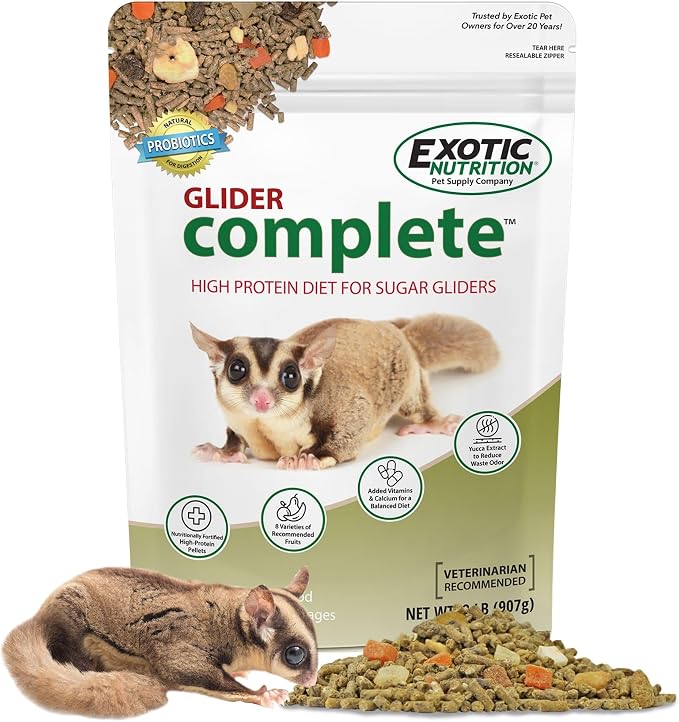
Established, vet-endorsed formulated diets include Leadbeater's mixture, Bourbon's Modified Leadbeater's (BML), High Protein Wombaroo (HPW), Critter Love Complete, and Exotic Nutrition diets. Any of those beats a homemade mix assembled from guesswork.
Feeding Frequency and Portions
Feed roughly 15 to 20% of body weight daily, offered in the evening since gliders are nocturnal. Kibble can stay available at all times, while the fresh, nectar, insect, and produce components are given daily, with insects every other day. Keep fruit to a small portion, gliders will preferentially eat sweets over balanced food given the chance. Adult males typically weigh 100 to 160 grams and adult females 80 to 130 grams.
Foods to Avoid
Chocolate and dairy, canned fruit for its excess sodium and preservatives, and any pesticide-treated produce. Avoid foods high in oxalates that impair calcium absorption, including raspberries, strawberries, blackberries, spinach, carrots, beets, pears, lettuce, figs, and collard greens. Skip yogurt drops, peanut butter, pasta, rice, and human candy entirely, and limit high-phosphorus, low-calcium foods like beef, most seeds, and nuts. Raw corn is fine only very occasionally, it's very sweet.
Supplementation: The Part That Matters Most
This is genuinely the core of keeping this species healthy.
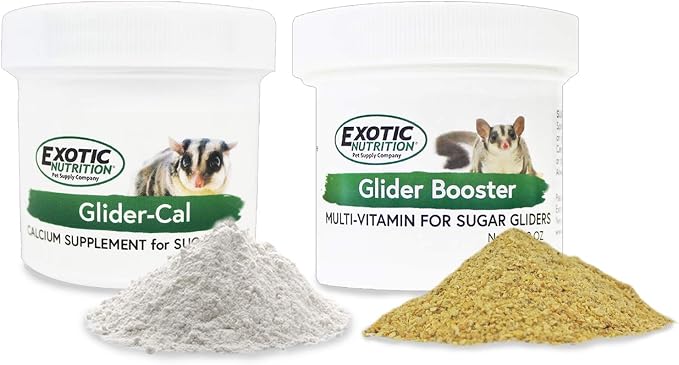
A calcium and vitamin D3 multivitamin made specifically for sugar gliders, not a reptile vitamin, is essential because the typical fruit-and-insect diet runs phosphorus-rich and calcium-poor. Dust or gut-load insects with calcium before feeding, and sprinkle the multivitamin on food. Daily dusting is one workable schedule, and a vitamin A/D3 supplement on insects and produce twice weekly is another. The target dietary calcium-to-phosphorus ratio is roughly 2:1, or a band of 1.5:1 to 2:1.
The Mistakes That Matter
A fruit-only, nectar-syrup, or insect-heavy diet, low in calcium and high in phosphorus, causes nutritional secondary hyperparathyroidism, better known as metabolic bone disease. Per the Merck Veterinary Manual, gliders maintained mainly on fruit with few gut-loaded insects or protein sources are very susceptible, and the condition can progress to posterior weakness, hindlimb paralysis, muscle tremors, pathological fractures, and seizures. The body leaches calcium from the bones to keep blood calcium stable, which is exactly what weakens them.
Feeding too much fruit or sugary treats like yogurt drops is the second major risk, driving obesity, hepatic lipidosis (fatty liver), and dental disease. And an unbalanced homemade or pellet-only diet causes the same underlying deficiencies over time, a diet plan is worth building with an exotic vet rather than assembling from guesswork.
Hind-leg weakness, tremors, or paralysis are emergency signs. They call for immediate diet correction and veterinary care, not a wait-and-see approach.
The Sugar Glider encyclopedia profile has the natural history.
Sources & Further Reading
❓ Frequently Asked Questions
What do sugar gliders eat in captivity?
It splits in thirds: pelleted kibble, a nectar or sap-based mixture, and a small number of insects every other day, alongside a calcium-based multivitamin and fresh vegetables and fruits. Leadbeater's mixture, BML, Wombaroo, Critter Love Complete, and Exotic Nutrition diets are the established formulated options.
How much should I feed a sugar glider daily?
Roughly 15 to 20% of body weight per day, offered in the evening since they're nocturnal. Kibble can stay available at all times, with the fresh, nectar, insect, and produce components offered daily and insects every other day.
Why is calcium supplementation so important for sugar gliders?
Their typical captive diet runs phosphorus-rich and calcium-poor, the opposite of what they need. Left uncorrected, this causes nutritional secondary hyperparathyroidism, better known as metabolic bone disease, where the body leaches calcium from the bones to keep blood calcium stable, and the bones weaken and fracture as a result.
What's the correct calcium-to-phosphorus ratio for sugar gliders?
Roughly 2:1, or a band of 1.5:1 to 2:1. In practice this means dusting or gut-loading insects with calcium before feeding and sprinkling a glider-specific multivitamin with calcium on food, either dusting daily or giving a vitamin A/D3 supplement on insects and produce twice weekly.
What foods should sugar gliders avoid?
Chocolate, dairy, canned fruit, pesticide-treated produce, and high-phosphorus foods like most seeds, nuts, and beef fed in excess. Also limit foods high in oxalates that block calcium absorption, including raspberries, strawberries, spinach, carrots, and beets. Skip yogurt drops, peanut butter, pasta, rice, and human candy entirely.
What are the warning signs of metabolic bone disease in a sugar glider?
Hind-leg weakness, tremors, or paralysis are emergency signs and need immediate veterinary attention along with an immediate diet correction, not a wait-and-see approach. This progresses from posterior weakness to genuine paralysis and pathological fractures if left uncorrected.
📰 More on the Sugar Glider
📘 Sugar Glider care guide
🐿️ How Much Does Sugar Glider Ownership Really Cost?
🐿️ How to Handle a Sugar Glider (It Starts With a Pouch, Not Your Hands)
🐿️ Common Sugar Glider Health Issues (Diet Drives Almost Everything)
🐿️ Sugar Glider Cage Setup: Tall, Not Wide
🐿️ Sugar Glider Enrichment: Company, Height, and an Honest Caveat
🛒 Recommended Gear
As an Amazon Associate, we earn from qualifying purchases through the links above - at no extra cost to you.
Written by Michael Ryan
Mike keeps two rescued bearded dragons, Dex and Cera, and writes the care guides on BeastlyFacts from his own research and mistakes. He is not a veterinarian.
More about Michael Ryan →Comments
No comments yet - be the first!