Rabbit Housing: Why the Old Pet-Store Cage Isn't Enough
On This Page▾

If you've seen a small wire hutch marketed as a "rabbit cage," it's worth knowing upfront: current welfare standards consider that size inadequate. Rabbit housing guidance has shifted substantially, and the space rabbits need is much larger than what's traditionally been sold for them.
How Much Space, Exactly
The House Rabbit Society recommends at least 8 square feet of enclosure space combined with at least 24 square feet of exercise space for one to two rabbits, space where they can run and play for a minimum of 5 hours a day. In practice, this means a large foldable metal exercise pen, 4 feet by 4 feet or bigger, is the realistic standard, not a small cage rabbits are let out of occasionally.
Indoors Is Strongly the Better Choice
Indoor rabbits typically live 8 to 12 years, and the House Rabbit Society notes many reach 14 or even 16. Outdoor rabbits average closer to 3 to 5, due to predators, extreme weather, and health problems that go unnoticed without daily close contact. If you're deciding where a rabbit will live, indoor housing is the option that actually protects it.
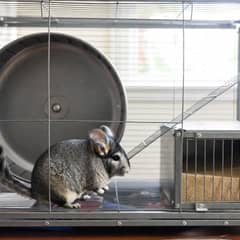
Avoid aquariums or any solid-walled enclosure. Poor ventilation lets ammonia from urine build up, which irritates a rabbit's respiratory tract over time, the same reason mice do badly in a glass tank.
Flooring
Skip wire flooring entirely, it contributes to sore hocks. Vinyl or linoleum over plywood, washable rugs, or fleece all give better traction and are easier on a rabbit's feet. A waterproof tarp underneath the whole setup protects your actual floor from the inevitable accidents.
Litter Training
Rabbits naturally tend to eliminate while they eat, so the trick is putting hay directly in or right over the litter box, this alone does most of the training work. Use a large, cat-litter-box-style container, not the small corner boxes often marketed specifically for rabbits, and fill it with paper-based or compressed wood-pellet litter.
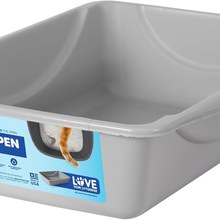
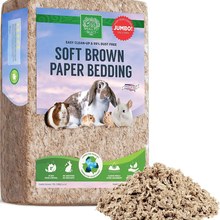
Avoid clumping cat litter and pine or cedar shavings entirely. Clumping litter can cause serious problems if ingested, and pine and cedar release aromatic oils that irritate a rabbit's respiratory system. Spaying or neutering also meaningfully improves litter habits, so if litter training isn't going well with an intact rabbit, that's often the underlying reason.
Rabbits eliminate almost reflexively while eating, which is exactly why placing hay directly over the litter box works so well as a training shortcut. It's less about teaching a new behavior and more about routing an existing one to the right spot.
Diet, in One Line
Hay is the diet: unlimited grass hay first, then measured pellets and greens scaled to body weight, and fruit as a treat rather than a staple. The amounts by life stage, the alfalfa cutoff, and the foods to skip are in the rabbit feeding guide, which is also where a rabbit that stops eating gets explained.

Sources & Further Reading
Last reviewed 13 Jul 2026 · 3 sources
- House Rabbit Society (rabbit.org)
- House Rabbit Society: How Long Do Rabbits Live?
- Wisconsin Humane Society: Litter Box Training Your Rabbit
- FurCalc: Rabbit Feeding Calculator
❓ Frequently Asked Questions
How much space does a rabbit need?
8 square feet of enclosure plus 24 square feet of exercise space for one or two rabbits, with at least 5 hours a day to run in it. In practice that means a foldable metal pen, 4x4 feet or bigger.
Should a rabbit live indoors or outdoors?
Indoors, clearly. Indoor rabbits typically live 8 to 12 years, and some reach 14 or beyond; outdoor ones average about 3 to 5, between predators, weather extremes, and health problems nobody catches without daily close contact.
How do you litter train a rabbit?
Put hay directly in or right over the litter box, since rabbits naturally tend to eliminate while they eat. Use a large, cat-litter-box-style container with paper-based or compressed wood-pellet litter, and avoid clumping cat litter and pine or cedar shavings entirely.
📰 More on the Rabbit
🛒 Recommended Gear
As an Amazon Associate, we earn from qualifying purchases through the links above - at no extra cost to you.
Written by Michael Ryan
Mike looks after his sister’s rabbit, Otis, for weeks at a time.
Mike keeps two rescued bearded dragons, Dex and Cera, and writes the care guides on BeastlyFacts from his own research and mistakes. He is not a veterinarian.
More about Michael Ryan →Comments
No comments yet - be the first!