Common Rabbit Health Issues and Why You Need the Right Vet
On This Page▾

Rabbits need a rabbit-savvy exotic vet, and the time to find one is before the rabbit is sick. A local rabbit rescue can usually name one. Find out too which nearby emergency clinic sees rabbits after hours, and keep both numbers where you can find them. A vet who does not know rabbit physiology can miss or mishandle the conditions below.
GI Stasis: The Most Common Emergency
A rabbit's gut can slow down or stop, letting gas build up, and without quick treatment it kills. It is the condition every rabbit owner needs to know first.
Watch for: not eating, few or no droppings, a hunched posture, loud tooth grinding, a visibly bloated abdomen, and ears that feel cold.
A rabbit that has eaten nothing and passed no droppings for 8 hours needs a call to the vet, and at 12 hours it is an emergency. Stasis usually follows something else, such as dental pain, stress or another illness, so a rabbit with an episode needs a full workup to find the cause. The rabbit GI stasis guide covers the causes and the treatment.
Dental Disease
Rabbit teeth never stop growing: as much as 4 to 5 inches a year, and an incisor that does not meet its partner can grow more than an inch a month. Overgrown teeth or molar spurs cause drooling or a permanently damp chin, dropped food, weight loss, pawing at the mouth, trouble grooming, and mouth sores or abscesses. A diet short of fiber is a main cause, and heredity adds to it, with dwarf and lop-eared breeds overrepresented.
The roots and back teeth cannot be seen from the front, so a vet confirms the problem with skull X-rays. Treatment is trimming the teeth under anesthesia with rotary tools, with checks and trims every 6 to 12 weeks for the rest of the rabbit's life, and extraction in severe cases. The best prevention is a hay-based diet: chewing long-strand hay wears the teeth down in a way pellets cannot.
Once a week, check that the top incisors meet the bottom pair cleanly, with the top just in front. Watch the rabbit eat a piece of hay, which it should take and grind steadily rather than pick up and drop. Never trim a rabbit's teeth yourself. Nail clippers and wire cutters fracture the tooth, which leads to abscesses in the tooth or gum.
Flystrike
Flies lay eggs on soiled or damp fur, most often around the rear, and the eggs hatch into maggots within hours. The maggots can do extensive damage in a day and can kill a rabbit within 24 to 48 hours, so treat it as an emergency. It is most common in warm weather but can happen all year. The rabbits at risk are the ones that cannot keep their rear end clean: a rabbit with diarrhea, tooth pain, arthritis, or obesity, one living in a dirty enclosure, or one with an open wound. Rabbits kept outdoors are a particular risk, as is any rabbit with urine-soaked fur that is not caught and cleaned promptly.
Fly eggs or any maggot in the fur, even a single one, mean an emergency vet appointment right away. Other signs are patches of wet fur and fur loss around the rear, lethargy, eating less, a bad smell, and collapse. Do not treat the rabbit at home. The vet clips the fur, cleans the skin, and removes the maggots, often under anesthesia, then gives pain relief and medication for the rest. In severe cases the damage is too great to save the rabbit.
Prevention is routine. Look at the rear end, fur and skin every day, and twice a day in warm weather. Remove soiled litter and wet bedding every day. Keep the rabbit slim and moving so it can groom itself, have any wound checked, and have the vet look for the hidden cause, since dental pain and arthritis both stop a rabbit grooming. In summer, ask the vet about a fly deterrent.
Respiratory Infection ("Snuffles")
Snuffles is often caused by Pasteurella multocida, a bacterium most adult rabbits carry without trouble, though other bacteria can cause it too. Stress, poor ventilation, or ammonia from a dirty enclosure lets it take hold. Watch for a thin discharge from the nose and eyes that thickens over time, sneezing, wheezing or noisy breathing, loss of appetite, lethargy, and crusty, matted fur on the insides of the front paws, from a rabbit wiping its own nose repeatedly. It is contagious between rabbits, so call the vet promptly. Open-mouth breathing is an emergency at any hour.
A vet should confirm it with a bacterial culture and a sensitivity test rather than treating on the signs alone, because not every strain causes disease and only some antibiotics are safe for a rabbit. Pneumonia cases rise with the ammonia level in the enclosure, so fixing the ventilation and cleaning schedule matters alongside the medication.
Uterine Cancer
Unspayed does carry a high risk. In some strains, 80% develop uterine adenocarcinoma by 3 years of age, and this cancer is the main reason vets spay a doe that will not be bred. Spaying a young doe prevents it.
Other Conditions to Know
- E. cuniculi, a parasite carried by many pet rabbits, often with no signs. When it becomes active it can cause head tilt and contributes to recurrent GI stasis episodes. A head tilt can also come from an inner ear infection, and telling the two apart is the vet's job. Vets often test for it at the first exam. High levels on the test mean an active infection, and the vet starts a 28-day course of fenbendazole then, before any signs appear.
- Sore hocks (pododermatitis), pressure sores on the undersides of the hind feet from wire or hard flooring or thin bedding, made more likely by obesity. They start as fur loss, red skin and swelling, then become ulcers and open sores, and untreated they reach the bone. Treatment is anti-inflammatory medication, foot wraps, and a softer floor with a layer of paper bedding.
- Bladder sludge or stones, caused by too much calcium in the diet, for instance from alfalfa fed to an adult, or from a lot of kale, spinach, or dandelion greens. Signs are decreased appetite, lethargy, weight loss, teeth grinding, and frequent urination, and stones are removed surgically. Grass hay for non-breeding adults is the prevention.
- Antibiotic-triggered enterotoxemia, when a penicillin-family drug or clindamycin wipes out a rabbit's gut bacteria and lets toxin-producing Clostridium take over, often killing within 48 hours of the first signs. Before any prescription, ask the vet whether the drug is on the list that can trigger it.
Spay and Neuter: Timing
Rabbits reach sexual maturity at about 3.5 to 4 months in small breeds such as the Polish Dwarf and the Dutch, 4 to 4.5 months in medium breeds, and 6 to 9 months in giants. Opposite-sex rabbits will breed as soon as they mature, so ask the vet to confirm the sex at the first exam, and keep a young opposite-sex pair apart from about 3 months until both are altered. A buck's testicles descend at about 10 to 12 weeks, and he can be neutered once they have, usually by 16 weeks. Before that, a vet sexes a rabbit by gently pressing the genital area to show a slit-like opening in a female or the penis in a male.
Neutering a male has no health benefit, but it changes behavior: an intact buck mounts other pets and objects and may be aggressive toward other rabbits. For a doe under a year old, the vet can remove just the ovaries; in an older doe the uterus comes out as well, in case cancer has already begun. The usual time to spay is around 6 months, before fat builds up around the uterus, and the vet sets the date for a dwarf or a giant. Both rabbits in a pair are neutered, which also helps litter training and settles chewing. Ask the vet before the surgery what pain relief goes home with the rabbit. Afterward, keep it somewhere quiet and warm. It should start eating within 24 hours and its droppings should be back to normal within a day or two; call the vet if it has not eaten in 24 hours or its droppings slow or stop. After surgery, the vet's instructions take the place of the usual 8 hour clock.
Choosing a Healthy Rabbit and the First Vet Visit
A healthy rabbit has clean, shiny fur with no bald patches or wounds. Wet or matted fur under the chin or around the tail can signal illness. The eyes and nose are clear, the ears are clean and not crusty, and the rabbit is alert, curious, and moves without stiffness or limping. Visit in the early morning or the evening, when rabbits are most active, and look at the place as well as the animal: ask what it has been eating and how it has been handled. Larger rabbits are often calmer and sturdier, and smaller ones more delicate.
Book the first vet visit for the first week. For a rabbit from a rescue, ask when it was last vaccinated. The exam covers weight, body condition, and the mouth: a full dental exam of the back teeth takes sedation, so a rabbit that is eating normally may not need one. Ask about an E. cuniculi test and the vaccine schedule below. A newcomer that will share space with a rabbit already at home waits two weeks in a separate space after its second vaccine dose before they share air or bedding.
RHDV2 and the Vaccine Schedule
Rabbit hemorrhagic disease virus 2 reached the United States in 2018 and has since spread through wild and pet rabbits nationwide. It kills fast: in a vaccine trial, 18 of 19 unvaccinated rabbits exposed to it died within 10 days. The virus travels on food, water and anything else it contaminates, so an indoor rabbit is not out of reach.
The US vaccine can be given from 4 weeks of age:
- First dose, then a second dose 21 days later.
- Protection is full about two weeks after the second dose.
- An annual booster keeps it there. Vaccinated rabbits in a duration study held protective antibody levels for a full 12 months, and a booster at that point raised them sharply.
Side effects are usually limited to a mild fever, some lethargy, or a small swelling where the needle went in. Pairing the yearly booster with one of the twice-yearly wellness exams keeps it from slipping.
What Normal Looks Like
- Droppings: plenty of round, dry, firm pellets every day, about the same size from one day to the next.
- Cecotropes: soft, dark, shiny clusters the rabbit eats straight from its body, usually overnight, so you rarely see them.
- Urine: anywhere from yellow to brown or reddish. The color alone does not mean blood, and a vet can tell the two apart with a quick test.
- Eating: hay through the day and the night, and the greens finished.
- Weight: steady on the weekly weigh-in.
- Behavior: alert and curious when awake, a soft tooth purr when stroked, and long rests in the middle of the day.
When to Call the Vet
Same day, as an emergency. Call the vet now for any of these:
- Nothing eaten and no droppings for 8 hours, and at 12 hours go in whatever the time
- A bloated or tense belly, or a hunched rabbit grinding its teeth hard
- Fly eggs or even one maggot in the fur
- Open-mouth or labored breathing
- Lethargy, hard breathing or collapse after time in the heat
- Cold ears on a rabbit that has stopped eating
- A swallowed object, such as carpet fiber or cloth, in a rabbit that slows down or stops eating
- Drooling or pawing at the mouth in a rabbit that stops eating
- Watery diarrhea, which is not the same as soft cecotropes
- Diarrhea during a course of medicine: stop the medicine and call
- Straining to urinate with little or nothing coming out
- A sudden head tilt, rolling or falling over
- Sudden lethargy or hiding
Within about a day, book the vet:
- Discharge from the nose or eyes, sneezing, or crusty fur on the insides of the front paws
- Droppings that are smaller, misshapen or fewer than usual, from a rabbit still eating normally
- A damp chin, or food picked up and dropped
- Bare, red or swollen skin under the hind feet
- Urine staining around the rear, or blood in the urine
- A change in eating, drinking or litter habits, or a weight that drops two weigh-ins in a row
Watch and write it down: one soft dropping, or a soft cluster of cecotropes (the night droppings a rabbit normally eats straight from its body) left in the box, from a rabbit that is otherwise eating, drinking and pooping normally. Check again over the next few hours, and move it up a tier if it keeps happening.
For anything less urgent, a twice-yearly wellness exam with a rabbit-experienced vet catches most of the above well before it becomes an emergency.
While You Wait for the Vet
- Write down when the rabbit last ate and last passed droppings, and bring a few droppings in a bag.
- Keep hay, greens and water in front of it, but never force food into its mouth or give a medicine the vet has not prescribed.
- Put a rabbit with cold ears in a warm, quiet room, and an overheated one somewhere cool and shaded with moving air.
- Never pick at maggots, bathe the rabbit, or put it in water.
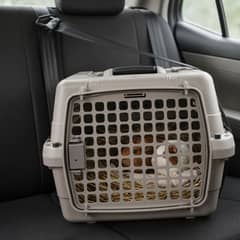
- Travel in a secure, hard-sided carrier with hay inside and its bonded partner along.
Older Rabbits
Rabbits typically live about 8 to 12 years, and they age at different rates. A rabbit does not show pain until it is very ill, so watch an older one closely and have a vet check any change in health or behavior. Do not put it down to old age. Arthritis in particular is often mistaken for normal aging.
- Put food, water and bedding within easy reach.
- Lay rugs over slippery floors and switch to a litter tray with a low entry.
- Keep hay available at all times, and make any diet change gradually with your vet.
- Weigh the rabbit regularly.
- Check often for weight change, dental trouble, sore hocks, long nails and a dirty rear end, which invites flystrike.
Rabbits and Your Health
It is rare for people to catch anything from a pet rabbit. The usual culprits are fur mites, which can cause a mild, itchy rash, and ringworm, which is a fungal skin infection and not a worm.
- Wash your hands after cleaning up urine and droppings.
- Clean any bite or scratch thoroughly with soap and hot water as soon as possible.
Hay and fur are the more common problem. Hay sets off hay fever in some people, and rabbit fur can trigger allergies over time, especially with a house rabbit. If that is you:
- Feed dust-free hay, or kiln-dried grass.
- Keep bedrooms free of rabbits and hay.
- Vacuum regularly with a machine that has a good filter.
- Groom the rabbit often to cut down loose fur.
Small Changes Come First
Most of what is on this page shows first as a small change: a rabbit eating a little less, fewer droppings in the box, a damp chin, a dirty rear. A daily look at the rabbit, the food it leaves and the litter box catches those changes while there is still time to act, and a rabbit-savvy vet already on file makes the first call a short one.
Sources & Further Reading
Last reviewed 3 Oct 2026 · 8 sources
- Rabbit.org: GI Stasis, The Silent Killer by Dana Krempels, PhD, for the twelve-hour emergency line, the pet rabbit care primer, for watery diarrhea, and the spay-neuter and post-surgical aftercare pages
- PetMD: Gastrointestinal (GI) Stasis in Rabbits, by Lauren Jones, VMD, for the eight-hour line and cold ears
- VCA Animal Hospitals: the health problems in rabbits and dental disease in rabbits pages
- Merck Veterinary Manual: the management of rabbits, bacterial and mycotic diseases of rabbits, and nutrition of rabbits pages, and the pet owner page on selecting a rabbit
- Bosco-Lauth AM et al. Vaccination against Rabbit Hemorrhagic Disease Virus 2 (RHDV2) Using a Baculovirus Recombinant Vaccine Provides Durable Immunity in Rabbits. Viruses
- Avian and Exotic Animal Clinic: RHDV2 Vaccine
- RSPCA: Caring for Older Rabbits; Rabbit Health
- Rabbit Welfare Association and Fund: Pet Rabbits and Your Health

A sick rabbit is no time to be scrolling. The Rabbit Care Package puts these red flags, a symptom quick reference and an emergency card on paper, in a 50-page PDF, $8.99. Includes the Universal Pet Kit free: health and medication logs you can fill in.
Frequently Asked Questions
What is the most common rabbit emergency?
GI stasis: the gut slows or stops and gas builds up. Call the vet once a rabbit has gone 8 hours without eating or pooping; by 12 it is an emergency.
Why do rabbits need dental checkups?
Because the teeth never stop growing, and spurs on the back teeth cannot be seen from the front. A checkup finds trouble before the rabbit stops eating, and unlimited hay keeps the teeth worn down between visits.
What is flystrike and why is it an emergency?
Flies lay eggs in dirty or damp fur, and the maggots that hatch can kill a rabbit within 24 to 48 hours. A single egg or maggot means the vet right away.
When should a rabbit get the RHDV2 vaccine?
From 4 weeks of age, as two doses 21 days apart, with full protection about two weeks after the second. After that, one booster a year.
How common is uterine cancer in unspayed female rabbits?
Common: in some strains, up to 80% of unspayed does have it by age 3. Spaying a doe that will not be bred prevents it.





Recommended Gear
As an Amazon Associate I earn from qualifying purchases through the links above, at no extra cost to you.

Written by Michael Ryan
Mike looks after his sister’s rabbit, Otis, for weeks at a time.
Mike keeps two rescued bearded dragons, Dex and Cera, and writes the care guides on BeastlyFacts from his own research and mistakes. He is not a veterinarian.
More about Michael Ryan →You May Also Like



Subscribe - it's free
An occasional email when something new is worth your time. No spam.
Health and More