Pacman Frog Enrichment: An Animal Built to Do Nothing
On This Page▾

Most enrichment advice argues that a still animal usually needs more to do. This is the species where that argument stops.
A pacman frog sitting buried and motionless for days is not under-stimulated, it is hunting. The enrichment that helps this species is substrate it can sink into, water clean enough for permeable skin, and the discipline not to feed an animal that will never say no.
What the Research Says
Nothing on Ceratophrys, and very little on amphibians at all. A 2014 review of the topic found only fourteen relevant primary research papers across the entire class, against hundreds for mammals.
The strongest amphibian result available is the plant-cover work done on White's tree frogs, where providing cover improved body size, growth rate and skin bacterial communities, and the frogs preferred planted areas. An arboreal tree frog is a long way from a horned ambush frog, and the transferable part is narrow: cover is doing real work for amphibians, including physiological work, and not only making the animal feel secure.
Enrichment is a concept borrowed from mammal keeping, where boredom is a real welfare problem. Applying it unchanged to a sit-and-wait predator is how keepers end up rearranging an enclosure to make themselves feel better about an animal that was fine.
Substrate Deep Enough to Sink Into
The item that matters most. A pacman frog buries itself with only the eyes above the surface and waits, and it needs substrate that permits that, not substrate it can press a dent into.
A deep bed of coconut fiber substrate, kept damp enough to hold shape, is the standard answer. Add sphagnum moss on top to hold moisture at the surface where the frog actually sits.
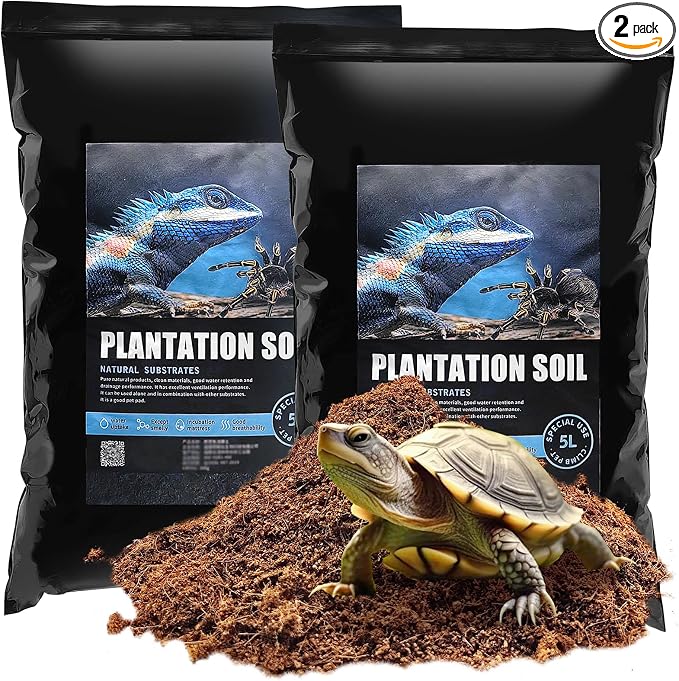
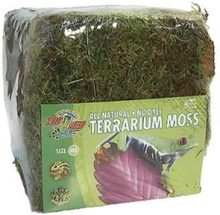
Depth is not decoration here. It is the animal's whole position.
Water Quality, Which Counts as Enrichment Here
Amphibian skin is a respiratory and osmotic surface, so water is not something the animal drinks, it is something the animal is partly made of. A shallow water dish the frog can sit in, with dechlorinated water changed often, does more for this species than any object you could add.
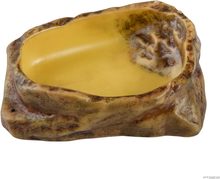
Never use untreated tap water.
Feeding Discipline
The one place a keeper can actively harm this frog with kindness. Pacman frogs strike at anything that fits and will keep eating well past the point of sense, and obesity plus impaction are the two defining captive problems.
Feed on a schedule rather than in response to the frog's interest, because the frog is always interested. Size prey correctly and keep substrate off it, since a bulk feeder on loose bedding is an impaction risk.
Varying prey type is worth doing, and it is a nutrition point more than a behavioral one.
Cover Above the Substrate
Modest, and worth having. Low planting, leaf litter and a shaded corner give the frog somewhere with a different light level to sit, and the tree frog study suggests cover is doing physiological work for amphibians on top of psychological work.
Keep it low and stable. This is not a climbing animal and structure it can fall off is a hazard, never an amenity.
Humidity Without Saturation
High humidity with a substrate that is damp instead of waterlogged, and enough ventilation that the enclosure is not a sealed swamp. Both extremes cause problems: a dry pacman frog will start forming a cocoon, and a permanently wet one gets skin infections.
Priority Order
- Substrate deep and damp enough to bury into completely
- Clean, dechlorinated water in a sittable dish
- Correct humidity with real ventilation
- Controlled, scheduled feeding with correctly sized prey
- Low cover and varied light levels
- Prey variety
- Nothing else, and that is the honest answer
How to Tell It Is Working
The honest answer to "is my frog happy" is that nobody can tell you, and the research says so out loud. A 2023 systematic review by Ethel Cortés Pérez and Ricardo Itzcóatl Maldonado Reséndiz searched eight databases, narrowed 1,568 results down to 19 usable papers, and concluded that the indicators currently in use "only primarily detect negative or compromised welfare states" that show up when an animal is already ill or failing to develop. The tools find suffering. They do not find contentment.
The indicators that review found in common use are survival, life expectancy, reproduction, hibernation and body condition. Not one of them is a mood.
So the useful question is not whether the frog is happy: it is whether anything is going wrong. In this species that check runs backwards from what most keepers expect.
Body Condition, Read Without Touching
Body condition scoring is the one practical index that transfers. The best-developed version in a frog is the five-point scale Stephanie Jayson and colleagues built for the mountain chicken frog, which scores the soft tissue over the sacrum, suprascapulae, ilia and urostyle, and whether the body overall reads angular or rounded. Applied to 98 frogs across five zoos, it correlated moderately to strongly with scaled mass index, an objective measure of energy reserves.
The detail worth stealing is procedural. That scale was built from photographs of frogs at rest in their own enclosures, and images of restrained frogs were thrown out because holding an animal distorts the very landmarks you are trying to read. The validated way to assess a frog's condition is to look at it where it sits, which suits a species you should not be picking up anyway.
For a pacman frog that means round with no angular edges over the hips and shoulders, never visibly bulging. Weighing weekly gives you a number that moves before your eye notices.
Stillness Is Not Torpor Here
The same review defines torpor as abnormal inactivity and loss of interest in surroundings, treats it as a low-welfare indicator, and ties it to an animal's sense of having no control over its environment. Applied without thinking, that indicator condemns every healthy pacman frog alive.
This is the trap the whole guide exists to prevent, and the review names the underlying problem itself: the reduced activity and low metabolic rate of amphibians can mask behavioral signals that would be obvious in a mammal. A sit-and-wait predator hands you very little behavior to read, and what little there is has to be judged against what the species actually does.
The Signal That Points the Other Way
If low activity is not the warning sign here, high activity is. Interaction with transparent boundaries, the pushing and climbing at glass that keepers call glass surfing, is a recognized captivity-stress behavior in reptiles and amphibians. Warwick and colleagues recorded it in 27.5% of 1,533 amphibians and reptiles at pet expos, alongside hyperactivity in 11%, in about as stressful a setting as captive herpetofauna encounter.
A pacman frog working the glass, refusing to burrow, or sitting out in the open day after day is doing the opposite of what it is built for. That is the behavior worth acting on, and it usually points at temperature, humidity or substrate depth rather than boredom.
The summary is unglamorous. A frog buried to the eyes, holding a steady round body condition, striking reliably when fed and leaving the glass alone is a frog whose needs are met. That is the whole of what the evidence supports. As that review puts it, there are no easy to maintain amphibians.
What Not to Do
Do not project boredom onto an ambush predator, which is the specific mistake this guide exists to prevent. Do not use shallow substrate. Do not use untreated tap water on an animal that breathes through its skin. Do not feed every time the frog looks interested, because it always will. Do not house two together at any size. Do not handle for enrichment, since handling an amphibian damages the mucus layer and is not a stimulation activity.
Sources & Further Reading
6 sources
- Borrowed evidence. No enrichment study exists for this genus. The findings below are from other amphibians and are covered in full in our White's Tree Frog enrichment guide.
- Michaels CJ, Antwis RE and Preziosi RF (2014). Impact of Plant Cover on Fitness and Behavioural Traits of Captive Red-Eyed Tree Frogs. PLoS ONE
- The importance of enrichment for advancing amphibian welfare and conservation goals: a review of a neglected topic
- Cortés Pérez E and Maldonado Reséndiz RI (2023). Welfare Indices in Anurans under Human Care. Journal of Zoological and Botanical Gardens 4, 613-622
- Jayson S, Harding L, Michaels CJ et al. (2018). Development of a body condition score for the mountain chicken frog (Leptodactylus fallax). Zoo Biology
- Warwick C, Steedman C, Jessop M and Grant R (2024). Reptile expos: an analysis and recommendations for control. Frontiers in Animal Science 5, 1335982
- Burghardt GM (2013). Environmental enrichment and cognitive complexity in reptiles and amphibians
❓ Frequently Asked Questions
Is there enrichment research on pacman frogs?
No. Nothing has been published on Ceratophrys. The nearest useful evidence is the tree frog plant-cover study, where providing cover improved body size, growth rate and skin bacterial communities, and a 2014 review that found only fourteen primary research papers on amphibian enrichment in total.
Do pacman frogs even need enrichment?
They need good husbandry, and the enrichment framing is a poor fit. This is an ambush predator whose strategy is to sit buried and motionless for long periods. A pacman frog that is not moving much is a pacman frog behaving correctly, not a bored one.
So what does help?
Substrate they can bury into properly, water quality good enough for an animal that absorbs through its skin, correct humidity, and controlled feeding. Those four cover almost everything that affects this species.
How deep should the substrate be?
Deep enough that the frog can bury itself completely with only the eyes showing, which is the posture it spends most of its life in. Substrate it can only press into is not the same as substrate it can sink into.
Why is overfeeding such a problem?
Because they will eat anything presented, indefinitely, with no self-regulation to speak of. Obesity and impaction are the two most common captive problems in this species, and both come from a keeper interpreting an ambush predator's feeding response as hunger.
How do I know if my pacman frog is happy?
You cannot, and the research is blunt about it. A 2023 systematic review of anuran welfare concluded that the indicators in use only detect compromised welfare, the states that show up once an animal is ill or failing. What you can assess is whether needs are met: a round, steady body condition, burrowing to the eyes, a reliable feeding strike, and no interest in the glass. In this species stillness is correct and restlessness is the warning sign.
Can pacman frogs live together?
No. They are cannibalistic and will attempt to eat anything that fits in their mouth, including another pacman frog of similar size. Solo housing is not a preference, it is the only option.
📰 More on the Pacman Frog
📘 Pacman Frog care guide
🐸 How Much Does a Pacman Frog Really Cost?
🐸 Should You Handle a Pacman Frog? Rarely, and Carefully
🐸 Common Pacman Frog Health Issues and What Causes Them
🐸 Pacman Frog Tank Setup: Small Footprint, One Big Rule About Substrate
🐸 Pacman Frog Feeding: Schedule, Diet, and Why They Stop Eating
🛒 Recommended Gear
As an Amazon Associate, we earn from qualifying purchases through the links above - at no extra cost to you.
Written by Michael Ryan
Mike keeps two rescued bearded dragons, Dex and Cera, and writes the care guides on BeastlyFacts from his own research and mistakes. He is not a veterinarian.
More about Michael Ryan →Comments
No comments yet - be the first!