Mouse Enrichment: Give Them Far More Nesting Material Than You Think
On This Page▾

The mouse is the most studied mammal in the world, and the single most useful finding for a pet keeper is about a bag of shredded paper.
A mouse in a room you find comfortable is below its own comfort range. Given enough nesting material it builds its way out of the problem, and the research puts the useful amount at six to ten grams, which is considerably more than most pet cages ever contain.
What the Research Says
Brianna Gaskill's work on laboratory mice is the relevant thread, and it translates directly to a pet cage.
Mice are cold at room temperature. Standard laboratory housing runs at 20 to 24 degrees Celsius. A mouse's lower critical temperature is around 30, and given a free choice mice select 26 to 29 degrees. Your living room is not a neutral environment for them.
Nesting material is how they solve it. Given material, mice shift from seeking out warm spots to building. That switch happens between six and ten grams of material, and the recommendation that came out of the work is no less than six grams, up to ten where the ambient temperature is low.
Nest quality is a readable signal. Nest scoring is used to detect thermal stress, illness, pain and aggression between cage mates. A mouse that suddenly stops building well is telling you something.
The elegant part of this result is that it hands the problem to the animal. Rather than fixing the room at one temperature, you give the mouse the raw material and it constructs the microclimate it wants. That is choice and control, which is what enrichment is supposed to mean.
Nesting Material, Generously
The item with the strongest evidence behind it and the easiest one to get wrong by underdoing it.
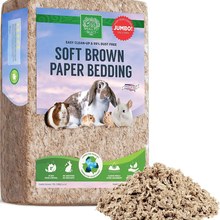
Plain paper bedding plus shreddable plain paper and cardboard gives a mouse enough to build a proper domed nest instead of a scrape. Add more than looks necessary, and let them rearrange it.
Never use fluffy commercial nesting fiber, the cotton wool style product. It is an entanglement and ingestion hazard and it is still widely sold. Plain paper does the job better.
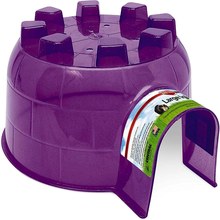
A hideout gives somewhere to build the nest inside, which is better than a nest sitting in the open.
Read the Nest
Free, and genuinely useful. Learn what your mouse's normal nest looks like, then treat a sudden decline as a prompt to check the animal.
That is how laboratories use it, and it works just as well for one mouse in a bedroom.
Climbing and Levels
Mice climb constantly and use vertical space far more than most people expect. Ropes, branches, ladders, multiple levels and things to get on top of turn a floor into a three dimensional space.
Height is only useful if it is filled. An empty tall cage is a floor with wasted air above it.
Foraging Instead of a Bowl
Scatter feeding is the single easiest change. Mice forage, and pouring the day's dry ration into a dish removes all of it. A shallow dish still earns its place for the fresh vegetable portion, which does not scatter and needs removing before it spoils.
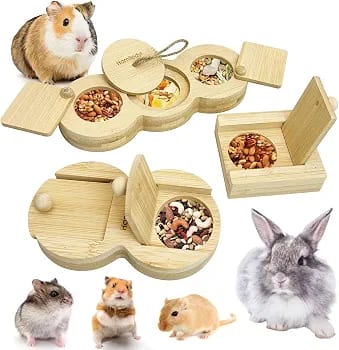
Scatter dry food through the substrate, hide it in cardboard tubes and paper parcels, put part of it behind a wooden foraging puzzle, and vary where it goes. It costs nothing and turns eating from a thirty second event into most of an evening.
Chewing
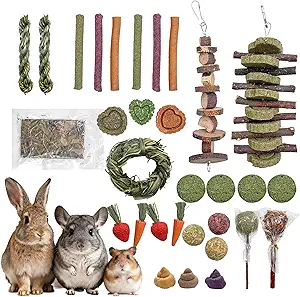
Continuously growing incisors. Chew sticks, untreated wood and cardboard cover it, and cardboard doubles as nest material.
Company, With One Caveat
Female mice are social and should be kept in same-sex groups. They do noticeably better with company and it is not a close call.
Adult males are a different problem. They frequently fight seriously, and solitary housing is the common answer. Gerbils hit the same wall with adult introductions, which is why pairs get raised from young rather than assembled later. That is a genuine welfare compromise rather than a preference, and it is a reason to think carefully before choosing males.
Priority Order
- Six to ten grams of plain, shreddable nesting material
- A hideout to build the nest inside
- Female group housing
- Scatter feeding for the dry ration
- Climbing structure and levels, filled
- Chewing material
- Novelty and rearrangement, last, since a destroyed nest is a cost
What Not to Do
Do not provide a token pinch of bedding when the tested amount is six to ten grams. Do not use fluffy commercial nesting fiber, which is an entanglement risk. Do not house a female alone. Do not assume adult males can be introduced. Do not strip the whole cage at once during cleaning, since removing the nest resets the thermal work the mouse has done and prompts a male to re-mark it more intensely. And do not treat handling itself as enrichment for a prey animal this small.
Sources & Further Reading
4 sources
- Gaskill BN et al. Working with what you've got: changes in thermal preference and behavior in mice with or without nesting material. Journal of Thermal Biology
- Gaskill BN et al. Heat or insulation: behavioral titration of mouse preference for warmth or access to a nest. PLoS ONE
- Preferences for nesting material as environmental enrichment for laboratory mice
- Assessing nest-building performance in mice: a multifactorial study of strain, age, sex, and environmental factors
❓ Frequently Asked Questions
Is there enrichment research on mice?
More than on almost any other pet, because mice are the most-used laboratory animal in the world. The most useful thread for a pet keeper is Brianna Gaskill's work on nesting material and thermal comfort.
What did the nesting material research find?
Mice housed at typical room temperatures of 20 to 24 degrees Celsius are below their lower critical temperature, which sits near 30. Given a choice they prefer 26 to 29 degrees. Provided with nesting material they build their way toward that instead, and the shift from seeking warmth to building a nest happens between six and ten grams of material.
How much nesting material should I give?
No less than six grams, and up to ten if the room is cool. That is a lot more than a pinch of shredded paper, and it is one of the cheapest welfare improvements available for this species.
Can the nest tell me anything about my mouse?
Yes. Nest quality is used as a welfare indicator in laboratories, and a sudden drop in nest building can flag illness, pain, thermal stress or aggression between cage mates. A mouse that stops building is worth a closer look.
Should I just heat the room instead?
No. Giving the animal the material to solve its own thermal problem is better than fixing the temperature at one value, because it leaves the mouse with the choice. Nest building is also a behavior worth having in its own right.
Can mice live alone?
Females should not. They are social and do well in same-sex female groups. Adult males frequently fight badly enough that solitary housing is the usual answer for them, which is a real welfare compromise rather than a preference.
📰 More on the Mouse
📘 Mouse care guide
🐭 How Much Does a Pet Mouse Really Cost?
🐭 How to Handle a Pet Mouse (Faster, Jumpier, and Easy to Underestimate)
🐭 Common Pet Mouse Health Issues (Respiratory Disease Moves Fast)
🐭 Mouse Enclosure Setup: Why a Wire Cage Beats a Glass Tank Here
🐭 What Do Pet Mice Eat? Diet, Portions, and Foods to Avoid
🛒 Recommended Gear
As an Amazon Associate, we earn from qualifying purchases through the links above - at no extra cost to you.

Written by Michael Ryan
Mike keeps two rescued bearded dragons, Dex and Cera, and writes the care guides on BeastlyFacts from his own research and mistakes. He is not a veterinarian.
More about Michael Ryan →Comments
No comments yet - be the first!