Corydoras Enrichment: Sand for the Sifting, Not for the Barbels
On This Page▾

The most repeated piece of corydoras advice is right about the conclusion and probably wrong about the reason.
No controlled study pins down what causes barbel erosion, but substrate of any kind is a documented reservoir for pathogenic bacteria, which makes keeping it clean a better lever than arguing about grain shape. Sand is still the better substrate, because corydoras are social foragers that root through it with their barbels, and fine grains are what let them do it without hurting themselves. The right answer, for a different reason than everyone gives.
What the Research Says
There is no controlled corydoras enrichment study, and no peer-reviewed account that settles what barbel erosion actually is. Here is what can be said with a source behind it.
The substrate is a bacterial reservoir, whatever it is made of. No controlled study establishes what causes barbel erosion, so treat any confident mechanism, mechanical or bacterial, with suspicion. What is documented is the reservoir. Vanderzwalmen et al. (2022), Animals found that "one of the major drawbacks to the use of substrate" is "the potential for pathogenic bacteria and fungi to grow on the increased surface area," and recorded more samples testing positive for Pseudomonas in tanks containing gravel and sand than in bare control tanks. That is an argument for keeping the substrate clean rather than for picking a particular grain shape.
Sharp substrate is a secondary factor. Not ideal, and not the primary cause. Long-term keepers have raised healthy corydoras on smooth gravel for decades, which is difficult to square with the abrasion story.
Sand still wins on behavior. In the wild, corydoras are social foragers that live and feed in groups, rooting through the substrate with their barbels to find food, according to Riley et al. (2019), Royal Society Open Science. Fine sand is the grain size that lets them forage this way without hurting the barbels. Gravel does not, and a corydoras on gravel is a corydoras that cannot do its characteristic behavior.
The abrasion explanation persisted because it is intuitive and because the recommendation it produces happens to be correct. Sand is the right answer. It is just worth knowing that a cory on spotless gravel is at less risk than a cory on filthy sand.
Fine Sand
The enrichment item, and the reason is the sifting. A bed of fine aquarium sand lets the whole group forage the way they are built to, and other colors and sizes are available.
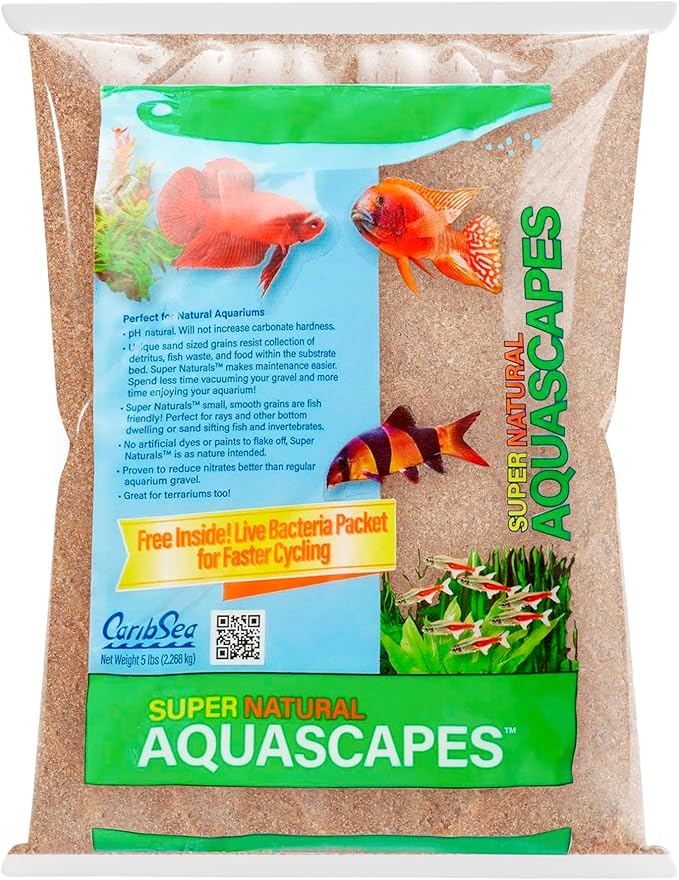
Watch what happens when you switch. A group of corydoras on sand buries its snouts and works the bottom continuously. The same group on gravel picks at the surface. That difference is the enrichment.
Keep it clean. Vacuum the surface layer regularly, keep nitrate low, and never let uneaten food rot into it.
A Group of Six or More
Social bottom-dwellers that shoal, forage and rest in contact with each other. Two or three corydoras is a nervous, inactive version of the same fish.
Six minimum, more if the footprint allows, and one species of eight beats two species of four. A long tank is the right shape, because for a bottom-dweller the floor area is the tank.
The same principle shows up in the group size study our Neon Tetra enrichment guide covers, where larger single-species groups meant lower aggression and faster feeding.
Feed Them Deliberately
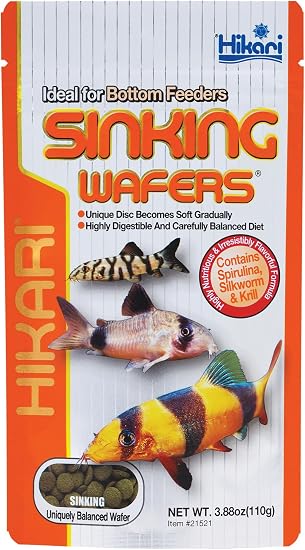
The myth that quietly starves them. Corydoras are not a cleanup crew and will not thrive on whatever falls past the other fish.
Sinking wafers fed for them. If faster tankmates take everything, feed after lights out. Add frozen bloodworm and similar, which they hunt through the sand for, and that is feeding and enrichment at once. Our feeding guide covers it.
Cover and Shade
Nocturnal-leaning fish that spend the day under things. Wood, broad-leaved plants and caves give somewhere to rest out of the light, and a group will often pile into one spot together.
Leave open sand as well. They need both foraging ground and somewhere to retreat to.
Let Them Reach the Surface
Corydoras are documented intestinal air breathers, gulping air at the surface and absorbing oxygen through the back half of the gut before exhaling through the anus, per Nelson (2014), Journal of Fish Biology. So an unobstructed route to the surface is not optional. Floating plants should not cover the whole surface.
Occasional dashes up are normal. Constant ones mean the water is short of oxygen or fouled, and that is the point at which to test rather than to watch.
Priority Order
- Fine sand, kept clean
- A group of six or more of one species
- Floor area over height
- Sinking food fed for them, after lights out if needed
- Wood, plants and caves for daytime shade
- Clear access to the surface
- Frozen and live foods to hunt through the sand
What Not to Do
Do not treat corydoras as a cleanup crew. Do not keep two or three. Do not let the substrate get dirty, which is the actual barbel risk. Do not cover the entire surface with floating plants. Do not keep them in a tall tank with a small footprint. And take real care netting one, since the pectoral spines lock and tangle in mesh.
Sources & Further Reading
4 sources
- Vanderzwalmen M et al. (2022). The effect of substrate on water quality in ornamental fish tanks. Animals
- Nelson, J.A. (2014). Breaking wind to survive: fishes that breathe air with their gut. Journal of Fish Biology
- Riley RJ et al. (2019). Coping with strangers: how familiarity and active interactions shape group coordination in Corydoras aeneus. Royal Society Open Science
- Saxby A et al. (2010). The effect of group size on the behaviour and welfare of four fish species commonly kept in home aquaria. Applied Animal Behaviour Science
❓ Frequently Asked Questions
Does gravel wear down corydoras barbels?
That is the standard explanation, and no controlled study establishes it, or any competing mechanism. What is documented is that substrate of any kind harbors pathogenic bacteria, so a clean substrate matters more than its grain shape, and plenty of keepers have raised healthy corydoras on smooth gravel for decades.
So should I use gravel?
Sand is still the better choice, for a different reason: corydoras are social foragers that root through the substrate with their barbels to find food, and fine sand is what lets them do it without hurting themselves. The behavioral argument for sand is stronger than the barbel argument ever was.
What prevents barbel erosion?
Keeping the bottom clean. Regular substrate vacuuming, low nitrate, no uneaten food left to rot. Sharp substrate is not ideal and is a secondary factor next to what is living in a dirty one.
How many corydoras should I keep?
Six at absolute minimum and more is better. They are social bottom-dwellers that shoal, forage and rest together, and a group of two or three is a visibly less active, more nervous set of fish.
Why do they dash to the surface?
Corydoras can gulp air and absorb oxygen through the gut, which is normal behavior rather than a symptom. It becomes a warning sign when it happens constantly, which usually means the water is low in oxygen or fouled.
Do they eat leftovers?
This is the myth that starves them. Corydoras are not a cleanup crew and will not thrive on whatever the other fish miss. They need sinking food fed for them, after lights out if faster tankmates are taking it.
📰 More on the Corydoras Catfish
📘 Corydoras Catfish care guide
🐠 How Much Does Corydoras Catfish Ownership Really Cost?
🐠 Corydoras Catfish Aren't Handled, and They're Not Solo Fish Either
🐠 Common Corydoras Catfish Health Issues
🐠 Corydoras Catfish Tank Setup: Substrate Is the Detail That Actually Matters
🐠 Corydoras Catfish Feeding: Schedule, Diet, and Why They Stop Eating
🛒 Recommended Gear
As an Amazon Associate, we earn from qualifying purchases through the links above - at no extra cost to you.
Written by Michael Ryan
Mike keeps two rescued bearded dragons, Dex and Cera, and writes the care guides on BeastlyFacts from his own research and mistakes. He is not a veterinarian.
More about Michael Ryan →Comments
No comments yet - be the first!