Hedgehog Enclosure Setup: Get the Temperature Right First
On This Page▾

A hedgehog enclosure is simple to build: a wide solid floor, a heater on a thermostat, bedding, a hide and a wheel. The one part with no room for error is temperature, so the heat goes in first and runs before the hedgehog comes home.
Enclosure Size
- Floor: at least 2 by 3 feet, which is six square feet. Bigger is fine.
- Base: solid, never wire. Wire floors injure feet and catch legs.
- Type: a large plastic bin or tank with good ventilation, a C&C cage, or a solid-bottom guinea pig cage all work.
- Layout: long and wide beats tall. Fill about three-quarters of the floor with hides and things to explore, because hedgehogs are prey animals and do not settle in a bare open space.
Six square feet also clears half a square meter. In one survey of hedgehog owners, about two-thirds kept their animals in less than that.
Temperature
| Reading | What it means |
|---|---|
| 75 to 85°F | The target. Hold the enclosure here. |
| 72 to 90°F | The workable range. Outside it, fix the setup. |
| Below about 68°F | Torpor risk. A cold hedgehog turns sluggish and stops responding. |
Too cold or far too hot can both send a hedgehog into torpor, which is unhealthy for a pet. Few homes hold 75°F around the clock, so nearly every keeper needs a heater.
- Mount a ceramic heat emitter above one end of the enclosure, out of the hedgehog's reach. It gives heat with no light. Use a ceramic socket fixture rated for the emitter's wattage, set it over a mesh opening in the lid, and keep it clear of plastic, bedding and fabric.
- Plug it into a thermostat and put the probe at hedgehog level.
- Place a digital thermometer at each end. Two readings show whether the whole floor is in range, not only the spot under the heater.
- Run the setup for a full day and night before the hedgehog arrives, and adjust until both thermometers stay in the target range.
Skip heat bulbs that give off light. Hedgehogs are nocturnal and prefer a dim, quiet home, and a glowing bulb breaks their day and night cycle.
Keep a spare emitter in a drawer. Heaters fail without warning. If your hedgehog is ever cold and slow to respond, move it to a quiet, warm room and call an exotic vet immediately.
Where the Enclosure Goes
- In a quiet room, away from the television and from other pets
- Away from windows, outside doors and drafts
- Out of direct sunlight, which can overheat a closed bin or tank
- Somewhere you can leave dim in the evening, when the hedgehog wakes
Humidity
Keep it low, under 40%. In a very dry house a hedgehog can get itchy, flaky skin, and a room humidifier that brings the air up toward 40% is enough to ease it. A thermometer that also reads humidity covers both jobs.
Bedding
Use:
- Recycled paper bedding
- Aspen shavings
- Fleece liners, checked often for loose threads. A thread or hair can wrap around a toe and cut off its blood supply.
Lay the bedding 3 to 4 inches deep wherever the hedgehog can burrow.
Avoid:
- Cedar and other scented wood shavings, which irritate the lungs
- Dusty bedding of any kind
- Anything rough, or fabric with frayed edges
Lighting
Give the hedgehog 12 hours of light and 12 of dark, and keep the light dim. A room with ordinary daylight and a lamp on a timer does it. Bright light left on all night works against a nocturnal animal.
The Wheel
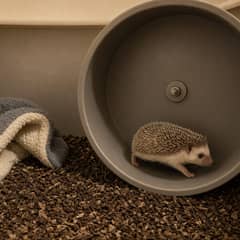
A wild hedgehog can cover up to several miles in a single night looking for food. A pet hedgehog has six square feet, and the wheel is how it makes up the difference.
A wheel is a necessity for this animal.
- Surface: solid metal or plastic. Hedgehog legs get trapped in wire and mesh wheels, and the injuries include broken legs.
- Size: 10.5 to 12 inches across, such as an axle-free 12 inch wheel.
- Cleaning: wipe it down daily. Hedgehogs relieve themselves as they run.
Hide, Food and Water
- A hideout or nest box for daytime sleep
- A heavy food dish that cannot be tipped
- Water in a bottle or a shallow bowl, available at all times
Setting It Up, in Order
- Choose the spot.
- Build the enclosure and check the lid or sides for gaps.
- Install the heat emitter, thermostat and both thermometers.
- Run the heat for 24 hours and adjust it.
- Add the bedding, hide, wheel, food dish and water.
- Check the temperatures once more with everything in place, before the hedgehog comes home.
After that, the routine is short. Each morning, remove uneaten food, refresh the water and wipe the wheel. Spot-clean soiled bedding every day. Once a week, change all of it and wash the enclosure. Read both thermometers every time you walk past.
Heat First, Then Everything Else
Nothing in a hedgehog enclosure is expensive or complicated. What matters is the order. A heater that has been running and checked for a day, a floor with room to walk, and a solid wheel cover nearly everything this animal needs from its home.
Sources & Further Reading
Last reviewed 16 Nov 2026 · 6 sources
- Merck Veterinary Manual: Management of Hedgehogs; Diseases of Four-Toed (African Pygmy) Hedgehogs
- LafeberVet: Basic Information Sheet: African Pygmy Hedgehog
- University of Illinois College of Veterinary Medicine: How to Care for Your Hedgehog
- University of Florida Small Animal Hospital: How to Care for Your Pet Hedgehog
- Royal Veterinary College: African Pygmy Hedgehog Care (PDF, downloads)
- Vucinic M and others (2024). Assessment of owner investment in African pygmy hedgehog welfare. Journal of Veterinary Behavior

A routine chart and equipment log you can fill in for your own setup. The Universal Pet Kit has it, among 19 forms for any pet that you can type into or print.
Frequently Asked Questions
What size enclosure does a hedgehog need?
A solid floor of at least 2 by 3 feet. Width and length count for more than height, and a wire floor is never safe.
What temperature does a hedgehog enclosure need to stay at?
Aim for 75 to 85°F and do not let it leave 72 to 90°F. Under about 68°F a hedgehog can go torpid, so the heater runs on a thermostat all year.
What humidity level is right for a hedgehog?
Under 40%. If the house air is so dry that the skin flakes, a humidifier that lifts the room toward 40% helps.
Does a hedgehog need an exercise wheel?
Yes. It needs a solid-surface wheel 10.5 to 12 inches across, because a wild hedgehog walks for miles each night and wire wheels break legs.
What bedding is safe for a hedgehog enclosure?
Recycled paper, aspen shavings or fleece liners with no loose threads. Avoid cedar, anything scented and anything dusty.




Recommended Gear
As an Amazon Associate I earn from qualifying purchases through the links above, at no extra cost to you.

Written by Michael Ryan
Mike keeps two rescued bearded dragons, Dex and Cera, and writes the care guides on BeastlyFacts from his own research and mistakes. He is not a veterinarian.
More about Michael Ryan →You May Also Like



Subscribe - it's free
An occasional email when something new is worth your time. No spam.
Health and More