Rat Enclosure Setup: Multi-Level, and Never a Tank
On This Page▾

The single most important decision in rat housing isn't size, it's cage type: a glass tank traps exactly the ammonia buildup that drives the respiratory disease affecting nearly every pet rat.
Why a Wire Cage, Not a Tank
It's tempting to reach for the same glass aquarium setup used for other small pets, but rats are a specific exception, and the reason ties directly to their single biggest health risk. VCA Animal Hospitals is direct about the underlying mechanism: a major cause of respiratory disease in pet rodents is poor environmental ventilation, which lets ammonia from urine build up and irritate the airways. A glass tank, even a large one, traps that ammonia far more effectively than an open wire cage does, and rats are unusually prone to exactly the chronic respiratory disease that kind of buildup drives. A well-built wire cage with a solid, sealed base solves this the way a tank simply can't: airflow that keeps ammonia from concentrating in the space a rat actually breathes.
The link between cage type and respiratory disease isn't a loose correlation, it's a documented mechanism. Ammonia from urine builds up fastest in an enclosed space with poor airflow, and VCA Animal Hospitals specifically names that buildup as a major cause of respiratory disease in pet rodents. For a species where one survey found 95% of pet ratteries already carrying the bacterium behind chronic respiratory disease, the cage you choose is doing real preventive work before a rat ever gets sick.
Enclosure Size
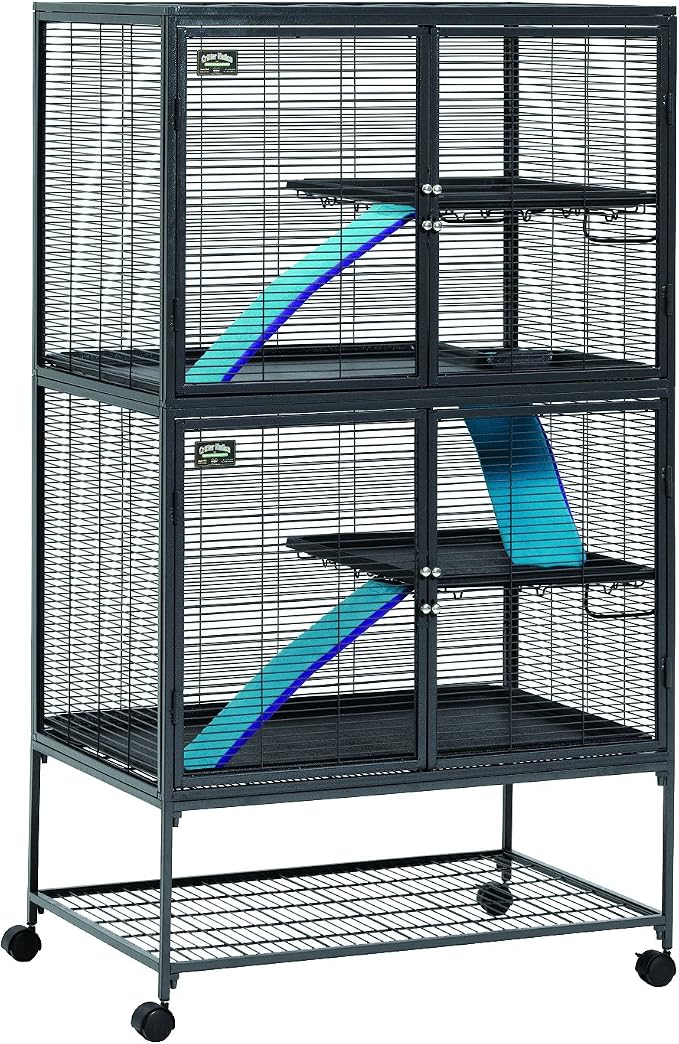
PetMD lists 24x24x24 inches as the minimum for a single rat and recommends the largest habitat possible beyond that. Because rats must be kept in pairs or small groups, not alone, that minimum is a starting point rather than a target, and PDSA's practical shorthand is worth repeating: cages built for ferrets or chinchillas are usually the right size for rats too. That's exactly why a Critter Nation double-unit cage, literally the same MidWest cage line sold under different branding for ferrets, works so well for rats: multiple full levels connected by ramps, solid shelving instead of wire mesh flooring, and genuinely large floor space at every level, all before adding a second or third rat to the group.
Bar Spacing
Keep bar spacing to about half an inch (1.3 cm) or less. The American Fancy Rat and Mouse Association is specific about why: spacing around 3/4 inch is wide enough that even an adult rat can get its head stuck trying to push through, a real injury risk rather than just an escape risk. RSPCA guidance frames the same target slightly differently but lands in the same place: spacing needs to be small enough that a rat can't poke its head through the bars at all. Cages marketed broadly for "small animals" sometimes ship with wider spacing that's fine for a guinea pig but genuinely unsafe for a rat, worth checking specifically rather than assuming.
Temperature
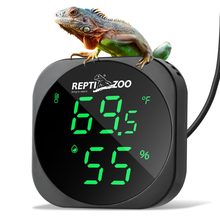
RSPCA guidance puts the ideal range at 19 to 23°C, roughly 66 to 73°F, and rats generally do fine across a somewhat broader 64 to 79°F band. Rats can't sweat or pant, and they regulate body heat largely through their tails, which makes them more heat-sensitive than that broader range might suggest, heat stress becomes a real risk above about 86°F. The first signs are rapid or open-mouth breathing, then drooling, then weakness and reluctance to move, and the first of those three is the point to act, not the last. A digital thermometer makes it easy to confirm the room is actually staying in range rather than guessing.
Bedding
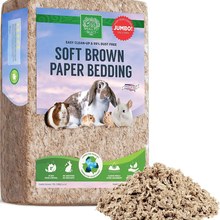
Paper-based or cellulose bedding is the safest, most widely recommended choice. Avoid dusty bedding and, per RSPCA guidance, sawdust specifically, along with cedar and pine, whose aromatic oils irritate a rat's already respiratory-sensitive system. Paper-based bedding changed at least twice a week keeps ammonia from accumulating between cleanings, which matters more for this species than almost any other.
The Wheel
A solid-surface exercise wheel with no wire rungs is essential, the same rule that applies across every small rodent. Size matters more here than it does for hamsters or gerbils: at least 12 inches in diameter, with many experienced keepers and rescues recommending 14 to 16 inches for adult rats, especially males, since a wheel that's too small forces a hunched, arched running posture that isn't good for the spine over time. This runs meaningfully larger than the wheels typically sold for hamsters and gerbils, worth checking the actual diameter rather than assuming a "small pet" wheel will fit.
Enrichment Tied to Intelligence
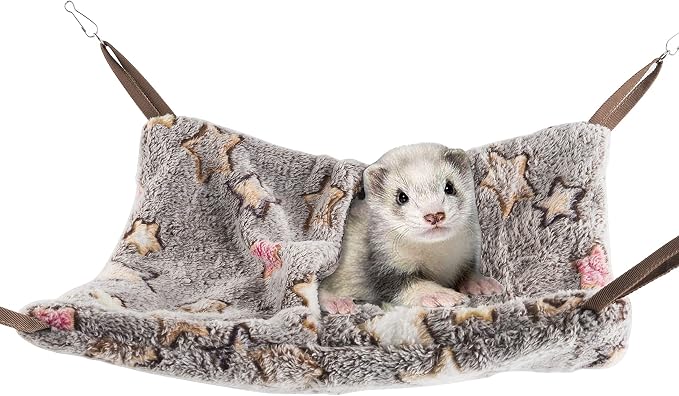
Rats are widely considered among the most intelligent commonly kept small mammals, and RSPCA behavior guidance backs that up directly, describing rats as animals that dig, climb, and learn routes and pathways quickly. A cage with just a wheel and a hideout under-serves that. RSPCA housing guidance specifically calls for objects like tunnels and toys, materials like wood and paper to shred, and structures like ladders and shelters, all rotated regularly since rats investigate novelty quickly and get less out of the same unchanged layout over time. Rats also, genuinely, sleep in hammocks, and RSPCA guidance recommends at least one hiding spot per rat, more if you can manage it, spread across different levels of the cage rather than clustered in one spot. Add chew items for their continuously growing teeth, and scatter-feeding a portion of daily pellets turns mealtime into foraging enrichment rather than a passive bowl refill.

Rounding Out the Enclosure
Once cage type, size, and bar spacing are right, the rest of rat housing is about layering in enough vertical space and enrichment to match how genuinely active and intelligent this species is. If you're weighing housing for a smaller, faster-moving rodent instead, the Mouse encyclopedia profile covers a species that needs even tighter bar spacing than a rat does.
The Rat encyclopedia profile has its wild background.
Sources & Further Reading
❓ Frequently Asked Questions
Can rats live in a glass tank or aquarium?
No, not as a primary home. VCA Animal Hospitals notes that poor ventilation is a major cause of respiratory disease in pet rodents because it lets ammonia from urine build up and irritate the airways, and a glass tank traps that ammonia far more than an open wire cage does. A proper wire cage is the right choice for rats specifically because of their high susceptibility to chronic respiratory disease.
What size cage does a rat need?
24x24x24 inches is the minimum for a single rat, with the largest habitat possible better still, and since rats must be kept in pairs or small groups that minimum applies before adding a second or third rat, not after. Cages built for ferrets or chinchillas are usually a good size.
How wide can the bar spacing be on a rat cage?
About half an inch (1 to 1.5 cm) or less. The American Fancy Rat and Mouse Association recommends half-inch spacing and specifically warns that wider gaps around 3/4 inch let even an adult rat get its head stuck, a real injury risk, not just an escape risk. RSPCA guidance frames the same target slightly differently: spacing needs to be small enough that a rat can't poke its head through at all.
What temperature should a rat's room be?
RSPCA guidance puts the ideal range at 19 to 23°C, roughly 66 to 73°F, and rats generally tolerate a broader 64 to 79°F band without issue. Because rats can't sweat or pant and regulate heat mainly through their tails, heat stress becomes a real risk above about 86°F, so a stable, moderate room matters more for this species than for many others.
Do rats need a big wheel and lots of enrichment?
Yes, more than most small pets. Rats are widely considered among the most intelligent commonly kept small mammals, and an under-stimulated rat is an under-served one. A solid exercise wheel at least 12 inches across, ideally 14 to 16 inches for an adult, plus rotating tunnels, climbing structures, and foraging opportunities all matter here in a way they don't for a less cognitively demanding pet.
📰 More on the Rat
📘 Rat care guide
🐀 How Much Does a Pet Rat Really Cost?
🐀 How to Handle a Rat (And Why It's the Least Likely Small Pet to Bite)
🐀 Common Rat Health Issues (Respiratory Disease Is the One to Know)
🐀 Rat Feeding: Diet, Portions, and Why Hamster Food Isn't Rat Food
🐀 Rat Enrichment: It Is the Number of Types That Matters
🛒 Recommended Gear
As an Amazon Associate, we earn from qualifying purchases through the links above - at no extra cost to you.

Written by Michael Ryan
Mike keeps two rescued bearded dragons, Dex and Cera, and writes the care guides on BeastlyFacts from his own research and mistakes. He is not a veterinarian.
More about Michael Ryan →Comments
No comments yet - be the first!