Cockatiel Enrichment: Two Studies, Five Years Apart
On This Page▾

Parrot enrichment research has mostly gone to large and endangered species, which left one of the most-kept birds in the world with almost nothing. That changed recently.
A 2025 study concludes that environmental enrichment improves behavior and welfare in captive cockatiels, particularly by reducing feather-damaging behaviors. A 2020 paper looked at enrichment and cockatiel behavior in aviaries. Two studies is not many, and it is two more than this species had.
What the Two Cockatiel Studies Found
The 2020 paper examined the effects of environmental enrichment on the behavior of cockatiels in aviaries. The 2025 paper concludes that environmental enrichment improves behavior and welfare in captive cockatiels, with reduced feather-damaging behavior singled out.
The broader psittacine picture supports both. Foraging enrichment has documented welfare benefits in parrots: birds use it for significant parts of the day, it reduces oral repetitive behaviors, and it reduces sleeping. In conventional captive environments food is offered in a regular bowl, producing foraging times of less than an hour, which leaves most of the day unoccupied. The clearest single result sits in African greys, where pipe feeders were tested against bowls in feather-plucking birds.
The gap in the literature is itself worth mentioning. Most enrichment studies concentrate on larger or more endangered psittacines, which is why a bird kept in millions of homes was studied later than parrots almost nobody owns.
Move the Food Out of the Bowl
The single highest-value change. A variety pack of small-parrot foraging toys lets you deliver part of the ration through things that have to be worked at rather than eaten from.
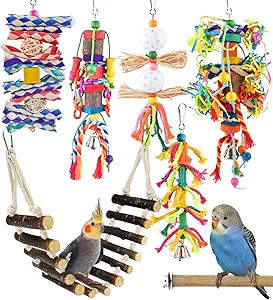
Start easy. A bird that has only ever been bowl-fed does not know food is inside a device, so the first stage is often food left in plain sight on top of a toy. Increase difficulty as competence grows and keep an eye on intake.
Rotate. A solved puzzle left up for a month is furniture.
Perches Worth Standing On
A cage furnished with identical dowels puts the same pressure on the same points of the foot continuously. A set of perches in varied diameters and materials is a foot health intervention and a choice intervention at once.
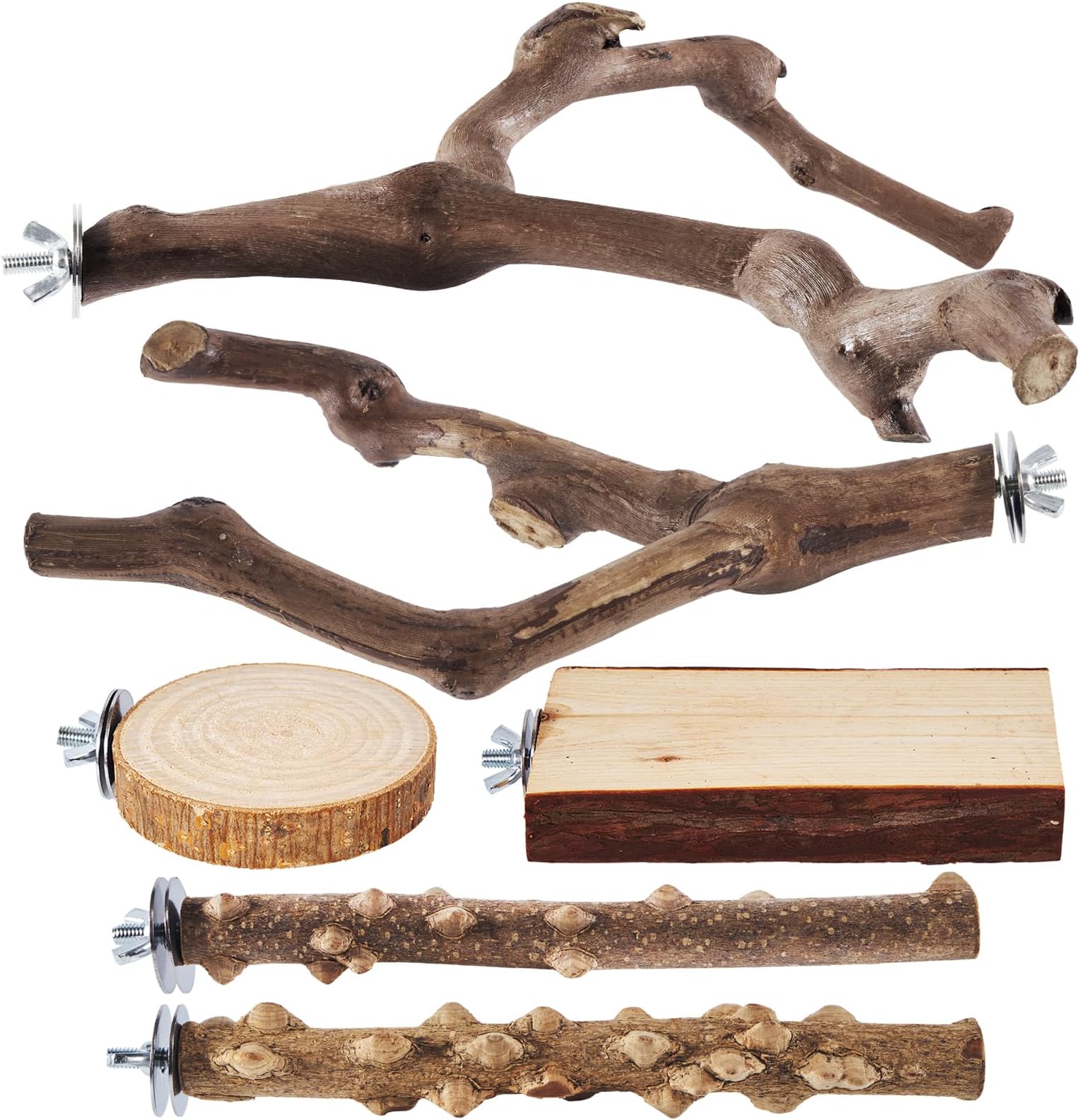
Place them at different heights and distances, so crossing the cage takes more than one hop.
Shredding and Chewing
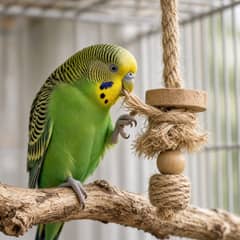
For a parrot, destructible material is closer to foraging than to play. Paper, softwood, palm and untreated natural fiber all give a cockatiel something to dismantle, though rope-based toys are worth checking often for frayed strands, since cockatiels are known for swallowing rope fiber. A cuttlebone covers beak maintenance and calcium at the same time.
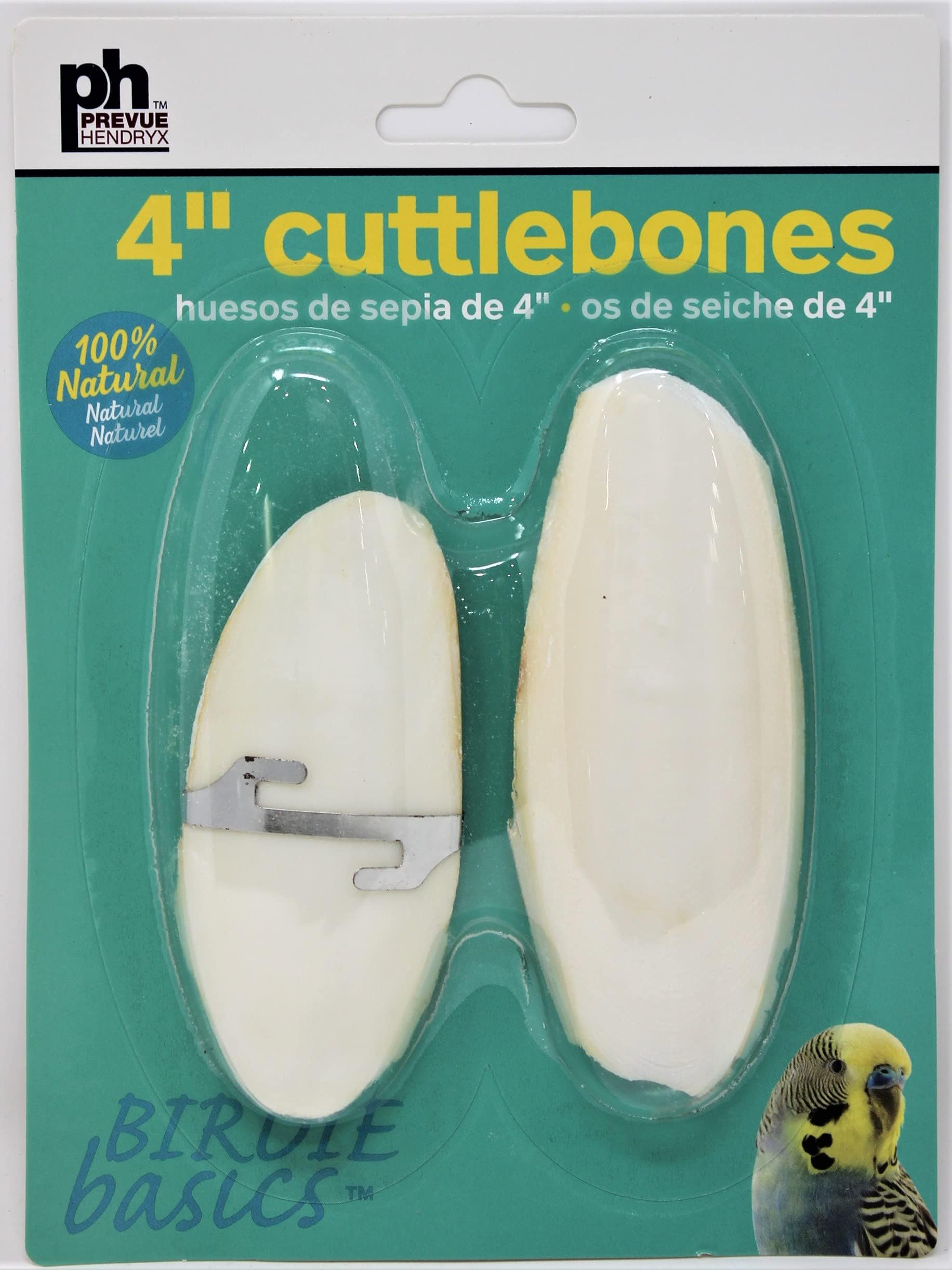
Material that survives the week has not done its job.
Company and Time
Cockatiels are flock birds. A single bird with excellent toys and no company is still a single bird, and the daily time commitment for a solo cockatiel is substantial. This is a case where the enrichment is partly you.
Priority Order
- Food delivered through foraging rather than a bowl
- Company, whether a compatible bird or a real daily routine with you
- Varied perch diameters and materials
- Shreddable, destructible material, rotated
- Bathing opportunity
- Out-of-cage time in a safe space
- Novel objects, last
What Not to Do
Do not assume plucking is behavioral before an avian vet has ruled out medical causes, or before ruling out a normal molt. Do not make the first foraging toy hard, since a bird that cannot solve it eats less. Do not leave the same toys up indefinitely and count that as enrichment. Do not use sandpaper perch covers, which damage feet. And do not treat cage size as a substitute for occupation, because a large cage with a food bowl in it still produces a bird with nothing to do.
Sources & Further Reading
4 sources
- Environmental enrichment improves behavior and welfare in captive cockatiels. Applied Animal Behaviour Science (2025)
- The effects of environmental enrichment on the behaviour of cockatiels (Nymphicus hollandicus) in aviaries. Applied Animal Behaviour Science (2020)
- Meehan CL, Millam JR and Mench JA (2003). Foraging opportunity and increased physical complexity both prevent and reduce psychogenic feather picking by young Amazon parrots
- LafeberVet. Fascinating facts on foraging and enrichment
❓ Frequently Asked Questions
Is there cockatiel-specific enrichment research?
Two papers now. A 2020 study looked at the effects of environmental enrichment on the behavior of cockatiels in aviaries, and a 2025 study concludes that environmental enrichment improves behavior and welfare in captive cockatiels, particularly by reducing feather-damaging behaviors. Most parrot enrichment research has concentrated on larger or more endangered psittacines, so this is recent.
Why is foraging the centrepiece?
Because bowl feeding removes the activity a parrot is built around. In conventional captive settings food offered in a regular bowl results in foraging times of well under an hour a day, and abnormal repetitive behaviors including oral stereotypies and feather destruction fill the remaining time.
Do cockatiels pluck like larger parrots?
They can, and the 2025 study specifically identifies reduced feather-damaging behavior as an enrichment outcome in this species. Any established plucking should be seen by an avian vet before it is assumed to be behavioral.
How many perches does a cockatiel need, and what kind?
Several, at varied diameters and heights. A cage of identical dowels loads the same points of the foot all day and gives the bird no reason to move between locations. Natural branch and rope beat plastic.
Are cockatiels social enough to need a companion?
They are flock birds, and a single cockatiel needs a substantial daily time commitment from you to fill that role. A companion or a serious interaction routine is not an optional extra for this species.
What about night frights?
Cockatiels are prone to thrashing panics in the dark, which is a housing and lighting question rather than an enrichment one. A dim night light and a cage placed away from sudden movement outside are the usual answers, and it is worth solving before adding anything else.
📰 More on the Cockatiel
🛒 Recommended Gear
As an Amazon Associate, we earn from qualifying purchases through the links above - at no extra cost to you.
Written by Michael Ryan
Mike keeps two rescued bearded dragons, Dex and Cera, and writes the care guides on BeastlyFacts from his own research and mistakes. He is not a veterinarian.
More about Michael Ryan →Comments
No comments yet - be the first!