Box Turtle Enrichment: Substrate and a Hide Box Changed Their Bloodwork
On This Page▾

Reptile enrichment evidence is usually behavioral, which leaves room to argue about interpretation. The box turtle study measured something in the blood, and that is harder to wave away.
Thirty-eight eastern box turtles were randomized to barren enclosures (flat newspaper) or enriched ones (cypress mulch, shredded paper, a hide box) for a month. The enriched group finished with a significantly lower heterophil to lymphocyte ratio, a physiological stress measure, and spent significantly less time trying to escape.
What the Box Turtle Study Found
Case, Lewbart and Doerr examined the physiological and behavioral impact of, and preference for, an enriched environment in eastern box turtles (Terrapene carolina carolina).
Thirty-eight turtles were randomized for one month. The barren condition was flat newspaper substrate. The enriched condition was cypress mulch substrate, shredded paper and a hide box. At the end, turtles in enriched enclosures had a significantly lower heterophil to lymphocyte ratio, and enriched-housed turtles spent significantly less time engaged in escape behavior.
Escape behavior is the measure worth carrying into your own keeping. A turtle pushing at the glass and climbing the corners reads as an active, curious animal. In this study it was a number that went down when the enclosure improved.
The enrichment was not elaborate. Mulch instead of newspaper, some shredded paper, a box to get under. That is the entire intervention, and it moved both a behavioral measure and a physiological one.
Substrate That Can Be Pushed Through
The single biggest difference between the two conditions was the floor. Box turtles burrow, wedge themselves under things and push through leaf litter, and newspaper removes all of it.
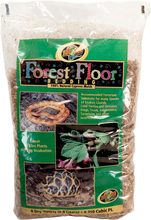
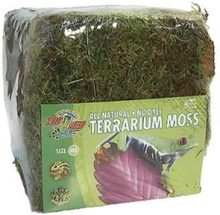
Give them cypress mulch deep enough to disappear into, with sphagnum moss worked in for humidity and leaf litter over the top. A depth the turtle can actually get under takes more mulch than one small bag holds.
Somewhere to Get Under
The enriched enclosures had a hide box, and it is worth taking literally. Multiple large hides, plus cork and dense planting, mean a turtle can be concealed anywhere in the enclosure rather than only at one end.
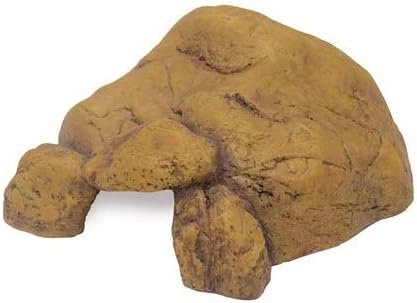
Cover and substrate work together here: a turtle that can wedge under a log and then bury into mulch has two ways to feel unexposed, which is what the study's enriched side offered and the newspaper side did not.
Browse, Scattered
Box turtles are omnivorous foragers that cover ground looking for food. A single dish compresses a day's activity into a couple of minutes.
Scatter a varied diet across the substrate and under cover. Vary what appears and where. Food-based enrichment was what raised activity in this species' relatives, and it is the cheapest thing on this list.
Space and Outdoor Time
Escape behavior dropping tells you something about how the animal experiences its boundaries. Floor area matters for a species that walks, and a secure outdoor enclosure in suitable weather is the highest-quality enrichment available for a box turtle: real substrate, real weather, real UV and genuinely varied terrain, which is as close as a captive turtle gets to the habitat the species evolved in.
Priority Order
- Deep substrate that can be burrowed and pushed through
- Multiple hides and cover throughout
- Floor space, and outdoor time where climate and security allow
- Scattered, varied browse
- Humidity gradient with damp and dry zones
- Target training and food puzzles
- Novel objects, last
What Not to Do
Do not keep a box turtle on newspaper or bare liner, since that is exactly the condition that produced the higher stress ratio. Do not read perimeter pacing as exploration. Do not use a shallow scattering of substrate and call it deep, because the behavior depends on being able to get under it. And do not handle for enrichment, since box turtles are easily stressed by it.
Substrate depth and humidity are the build. Everything else on this list is something to put on top of a floor the turtle can get into.
Sources & Further Reading
4 sources
- Case BC, Lewbart GA and Doerr PD. The physiological and behavioural impacts of and preference for an enriched environment in the eastern box turtle. Applied Animal Behaviour Science
- Interest in coloured objects and behavioural budgets in chelonians. Journal of Zoo and Aquarium Research
- Burghardt GM (2013). Environmental enrichment and cognitive complexity in reptiles and amphibians. Applied Animal Behaviour Science, 147, 286-298
- Touchscreen performance and knowledge transfer in the red-footed tortoise
❓ Frequently Asked Questions
What did the box turtle enrichment study find?
Case, Lewbart and Doerr randomized 38 eastern box turtles to either barren enclosures with flat newspaper substrate or enriched ones with cypress mulch, shredded paper and a hide box, for a one month period. Turtles in enriched enclosures ended with a significantly lower heterophil to lymphocyte ratio, and spent significantly less time engaged in escape behavior.
What is a heterophil to lymphocyte ratio?
It is a blood measure used as a physiological stress indicator in reptiles and birds, comparable to how cortisol is used elsewhere. A lower ratio in the enriched group means the effect showed up in the animals' physiology, not just in what they were seen doing.
What counts as escape behavior in a turtle?
Pacing the perimeter, pushing at walls, climbing at corners. It is easy to read as an active, curious turtle exploring, and the study treats it as the opposite: a measure that went down when the enclosure got better.
Was the enrichment complicated?
Not at all, which is what makes the result useful. The enriched condition was cypress mulch instead of newspaper, some shredded paper, and a hide box. Three inexpensive changes produced both a physiological and a behavioral difference.
Do box turtles need browse and varied food?
It suits them. Box turtles are omnivorous foragers that cover ground searching for food, so scattering a varied diet across substrate rather than presenting it in one dish extends feeding into foraging. Chelonian cognition research also supports treating them as animals that can solve food problems.
Can box turtles be target trained?
Related chelonians can. Red-footed tortoises have been trained to use touchscreens and solve spatial tasks, which makes target and station training a defensible enrichment approach across the group rather than an anthropomorphic one.
📰 More on the Box Turtle
🛒 Recommended Gear
As an Amazon Associate, we earn from qualifying purchases through the links above - at no extra cost to you.
Written by Michael Ryan
Mike keeps two rescued bearded dragons, Dex and Cera, and writes the care guides on BeastlyFacts from his own research and mistakes. He is not a veterinarian.
More about Michael Ryan →Comments
No comments yet - be the first!