Common Betta Fish Health Issues (And Why Water Quality Comes First)
On This Page▾

Almost every common betta illness traces back to one of two things: water quality or water temperature. That's genuinely good news for owners, because it means the first response to a sick betta is almost always the same starting point, before anything else.
Fin Rot
A bacterial infection that shows up as frayed, ragged, or discolored fins. Treat mild cases with clean water and aquarium salt, adding antibiotics if it's more advanced or not improving.
The complication is that a ragged fin is a symptom with several possible causes. Welfare assessments of farmed fish list the causes of fin erosion together, and infection is only one of them: poor water quality, abrasion against unsuitable surfaces in the tank, disease, and rough handling all produce the same frayed margin. Fin erosion is also documented as a secondary consequence of bacterial and fungal disease as well as a primary one, which means damage that began as a torn fin can end up infected later. In a single betta tank the list is short: sharp decor, a filter intake, and water left too long between changes.
Because the appearance overlaps, the reliable test is direction of travel. Photograph the fish from the side in good light, then compare the same view a week later. Damage that is holding still, or slowly filling back in, is wear. Damage that has moved further toward the body is active and needs treating. One picture cannot tell those apart, which is why fin rot gets diagnosed so often in fish that do not have it.
New Growth Looks Like Damage
Fins regrow, and the new tissue arrives without its color. Regeneration has been measured most precisely in zebrafish, where new tissue appears beyond the injury within a day or two of it happening and stays whitish for several days. Color returns from the base of the fin outward as the tissue matures, and the size and shape of the fin are restored after roughly three weeks. The clear or pale band sits at the outer edge the whole time, in exactly the place an owner has been told to watch for rot.
A thin translucent margin on an otherwise clean fin is usually the fish repairing itself. Treating it as an infection, and dosing medication on the strength of it, works against the thing that actually closes the gap.
Age Changes the Timeline
Regenerative capacity falls off as a fish gets older. In turquoise killifish, a species kept as a laboratory model for aging, young fish regrew 98% of an amputated caudal fin within four weeks. Middle-aged fish managed 78%, old fish 57%, and the oldest group 46% of the original fin size, with the difference in growth rate showing up as early as three days after the injury.
Bettas live roughly 2 to 4 years, so a fish past its second birthday is genuinely old. Split and thinning fins in a betta that eats well, swims normally, and holds its color are consistent with age, and the same damage that closed over in two weeks at one year old may never fully close at three. Clean water still helps. It just stops being a cure.
What Clamped Fins Look Like
Clamped fins are a posture, not damage to the fin. The fins are held shut and pressed in against the body instead of spread and moving, and the sign travels with others that affect the whole fish: lethargy and darkened coloration sit alongside it in the clinical picture for ich.
The distinction decides where to look next. A fish with torn fins holding them fully open is showing wear on the tissue. A fish with undamaged fins holding them clamped is showing distress, and the water is the first place to check for a cause.
Ich (White Spot Disease)
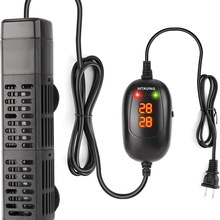
Caused by the parasite Ichthyophthirius multifiliis. Look for small white grains across the body and fins, along with scratching against tank decor. Treatment involves gradually raising the tank temperature, an adjustable aquarium heater makes this easy to control precisely, and using a copper or formalin-based medication.
Velvet
Caused by Piscinoodinium, the freshwater counterpart of the marine Oodinium the older aquarium books name, and the genus the Merck Veterinary Manual gives for freshwater fish. It is a parasite that gives the fish a fine gold or rust-colored dusty sheen. This one moves fast and can be fatal quickly, Merck notes freshwater Piscinoodinium infections can cause high mortality once established, so early treatment matters. Darkening the tank and using an antiparasitic or copper treatment are the standard response.
Columnaris
A bacterial infection caused by Flavobacterium columnare, notable for being highly contagious between fish if you keep more than one tank. It shows up as pale or greyish saddle-shaped patches over the back, ragged white edges on the fins and mouth, and sometimes a cottony fuzz that gets it mistaken for a fungus. The Merck Veterinary Manual notes that strains range from low to high virulence, that mortality can be acute, and that by the time it is visible the outbreak may already be hard to control, so it is one to act on the same day you see it rather than watch for a week.
The thing to know if you have already treated ich is that the temperature move is the opposite one. Ich is normally managed by warming the tank, because the parasite runs its life cycle faster in warm water, UF/IFAS puts the full cycle at about 3 to 6 days at 75 to 79°F and longer as the water cools, so warming brings it sooner to the free-swimming stage medication can actually reach. Columnaris runs the other way. Declercq and colleagues, reviewing the disease in Veterinary Research, report mortality rising steeply with water temperature: none at 9.4°C, 4 to 20 percent at 12.2°C, and up to 100 percent in some species at 20.5°C, with the bacterium's adhesion to gill tissue enhanced as the water warms. Reaching for the heater because that is what worked on the white spots last time is the single worst thing you can do to a betta with columnaris. Cooling toward the low end of a betta's safe range, not below about 76°F, is what aquarists do instead, and it is a way of buying time for the antibacterial treatment rather than a cure on its own.
Because a betta is a tropical fish with a narrow comfortable band, there is less room to move the temperature in either direction than there is for a goldfish, which is why getting the direction right matters more here than it does in a coldwater tank.
Swim Bladder Disorder
Usually caused by overfeeding, constipation, or infection, and it shows up as buoyancy problems, floating, sinking, or swimming at odd angles. Fasting the fish for 2 to 3 days often resolves mild cases, and offering a single cooked, de-shelled pea afterward can help things move along.
Dropsy
Raised, pinecone-like scales are the telltale sign. This isn't really a single disease, it's a visible symptom of organ failure, and it's usually a poor prognosis rather than something to actively treat.
Dropsy's pinecone look isn't the disease itself, it's what happens to a fish's scales when fluid builds up inside from organ failure. By the time that visual sign shows up, the underlying problem is usually already advanced, which is part of why the prognosis is so often poor.
Mycobacteriosis (Fish Tuberculosis)
Rare, but worth knowing about because it's zoonotic, transmissible to people through contact with infected water, especially through broken skin. Use gloves if you have any open cuts and are doing tank maintenance on a tank you suspect might be affected.
The First Move, Almost Always
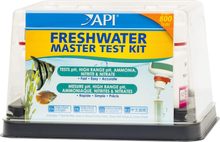
Before reaching for medication, test and correct water quality and temperature against the numbers this species needs. A water test kit and a fresh dose of water conditioner during water changes cover most of this. A huge share of betta illness resolves, or never happens in the first place, simply from keeping the tank properly heated, filtered, and on a consistent water-change schedule. Aquatic veterinarians exist for genuinely serious or unclear cases, but they're the exception rather than the norm in betta care.
Good husbandry prevents most of what shows up on this list, so it rarely becomes something you treat repeatedly.
The Betta Fish encyclopedia profile has more on the species.
Sources & Further Reading
Last reviewed 14 Sep 2026 · 8 sources
- Tropic Flow: Common Betta Fish Diseases
- Merck Veterinary Manual: Parasitic Diseases of Fish
- Merck Veterinary Manual: Bacterial Diseases of Fish
- Annelies M. Declercq, Freddy Haesebrouck, Wim Van den Broeck, Peter Bossier and Annemie Decostere, Veterinary Research 44:27 (2013): Columnaris disease in fish, a review with emphasis on bacterium-host interactions
- Ruth Francis-Floyd, Roy P. E. Yanong and Deborah B. Pouder, UF/IFAS Extension CIR920/FA006: Ichthyophthirius multifiliis (White Spot) Infections in Fish
- Ana Silvia Pedrazzani, Murilo Henrique Quintiliano, Frederico Bolfe, Luisa Silva de Sousa and Antonio Ostrensky, Frontiers in Veterinary Science 7:606388 (2020): Tilapia On-Farm Welfare Assessment Protocol for Semi-intensive Production Systems
- Catherine Pfefferli and Anna Jazwinska, Regeneration 2(2):72-83 (2015): The art of fin regeneration in zebrafish
- Stefanie Wendler, Nils Hartmann, Beate Hoppe and Christoph Englert, Aging Cell 14(5):857-866 (2015): Age-dependent decline in fin regenerative capacity in the short-lived fish Nothobranchius furzeri
❓ Frequently Asked Questions
What is fin rot and how do I treat it?
A bacterial infection that shows up as frayed, ragged, or discolored fins. Mild cases respond to clean water and aquarium salt, more advanced cases or ones that aren't improving need antibiotics.
How do I know if my betta has ich or velvet?
Ich shows up as small white grains across the body and fins, along with scratching against decor, and is treated by gradually raising tank temperature along with a copper or formalin-based medication. Velvet gives the fish a fine gold or rust-colored dusty sheen, moves fast, and needs a darkened tank plus an antiparasitic or copper treatment started early.
What causes swim bladder disorder in bettas?
Overfeeding, constipation, or infection, usually. The fish floats, sinks, or swims at odd angles. A 2 to 3 day fast often clears mild cases, and a single cooked, de-shelled pea afterward can help things move along.
What should I do before reaching for medication?
Test and correct water quality and temperature first. A heated, filtered tank on a consistent water-change schedule is what makes a huge share of betta illness resolve or never start. Most cases never need an aquatic vet, though one is worth finding for a serious or unclear illness.
🛒 Recommended Gear
As an Amazon Associate, we earn from qualifying purchases through the links above - at no extra cost to you.
Written by Michael Ryan
Mike keeps two rescued bearded dragons, Dex and Cera, and writes the care guides on BeastlyFacts from his own research and mistakes. He is not a veterinarian.
More about Michael Ryan →Comments
No comments yet - be the first!