Corydoras Catfish Feeding: Schedule, Diet, and Why They Stop Eating
On This Page▾

Corydoras have a reputation as an algae-eating cleanup crew that isn't accurate, and believing it is one of the easiest ways to accidentally starve a fish that otherwise asks very little of you.
Feeding Schedule
Feed once or twice a day, offering only what your cories can finish in about 2 to 3 minutes. A practical starting point is roughly one sinking wafer per 3 to 4 fish, or 2 to 3 small sinking pellets per cory, adjusted based on what gets eaten. If food is still visible after 20 to 30 minutes, scale back next time. Feeding in the evening, when this species is naturally most active, and scattering food across a few spots in the tank helps make sure shyer individuals in the group actually get their share.
What Corydoras Catfish Eat
Cories need dedicated sinking food, they're bottom-dwelling omnivores that will eat almost anything small enough to fit their mouths, but only if it actually reaches the bottom of the tank. Build the diet around sinking pellets or wafers formulated for bottom feeders or catfish, roughly 30 to 40% protein. Add worms regularly, live blackworms, frozen bloodworms, or a product like Hikari Vibra Bites, alongside occasional sinking gel foods. Blanched vegetables can round things out but shouldn't be the main event.
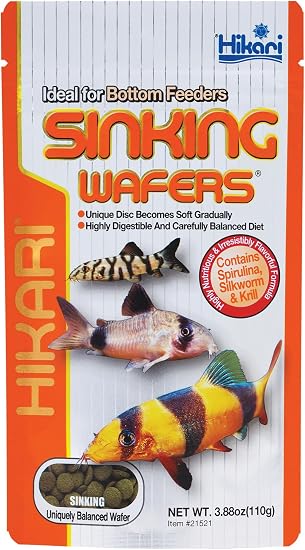
Corydoras don't need vitamin or mineral supplements the way land animals do, a varied diet covers their nutritional needs on its own. Rotate your sinking pellet staple with protein sources like frozen bloodworms, brine shrimp, or daphnia a few times a week rather than feeding the exact same thing every day.
Foods to Avoid
Don't rely on floating flakes as your cories' food source, they feed on the bottom, and flakes get eaten by mid and upper-tank fish long before they sink far enough to matter. This connects directly to the biggest misconception about this species, and the single most common and most damaging feeding mistake: cories are genuinely not effective algae eaters, and treating them as a self-sufficient cleanup crew that lives off leftovers and algae film is a real path to slow starvation, especially if they're sharing a tank with faster, more aggressive eaters. They need to be fed on purpose, every time.
Also avoid overfeeding generally, uneaten food fouls water quality quickly in a tank with bottom-dwellers picking through it, and the resulting water-quality decline is itself a common cause of stress and appetite loss.
Why Corydoras Catfish Stop Eating
- Still settling in. A new cory may take several days to a week before it eats normally, and that window is ordinary.
- Kept alone or in too small a group. Corydoras are a genuinely social species, and a cory kept solo or in a group smaller than recommended can become bored or stressed enough to go off food.
- Bullying. A peaceful bottom-dweller housed with an aggressive species hides and refuses food. The quieter version is a tank of faster eaters that take everything before it reaches the bottom.
- Water quality. Dirty water, or ammonia, nitrite, nitrate or pH out of range, is a repeatedly cited cause of appetite loss here. Test it.
- Overcrowding. Too many fish in too little water is its own stressor, separate from the water chemistry it eventually produces.
- Illness. Sluggishness alongside the appetite loss points at the fish, once the tank checks out.
- Boredom with the food. These are omnivores, and a monotonous diet gets refused. Rotating sinking wafers with frozen or live foods usually restarts a fish that has simply stopped being interested.
When to Worry
Test water parameters immediately if appetite loss shows up alongside lethargy, hiding, labored breathing, or any visible sign of illness, since poor water quality is one of the most common and most fixable causes on this list. If water quality checks out and the group size and tankmates are appropriate, ordinary acclimation stress after a recent change is the next most likely explanation, and it typically resolves within a few days on its own.
Assuming cories will live off algae and other fish's leftovers is the single most common and most damaging mistake with this species, it leads to gradual wasting that's easy to miss until it's fairly advanced, especially in a busy community tank. Relying exclusively on floating flake food creates the same problem in disguise, worth checking that food is genuinely reaching the substrate, not just landing in the water column above it.
This species is also part of a four-way comparison, see Jackson's Chameleon, Canary, Giant Millipede & Corydoras Catfish compared.
Check the Corydoras Catfish encyclopedia profile for more.
Sources & Further Reading
Last reviewed 15 Sep 2026 · 2 sources
- Aquarium Co-Op: Care Guide for Cory Catfish
- Practical Fishkeeping: Substrate and Barbel Health in Corydoras
- Avid Aquarist: Why Is My Cory Catfish Not Eating? (7 Common Causes)
❓ Frequently Asked Questions
Do corydoras catfish eat algae?
Not effectively. Left to live off leftovers and algae film as a self-sufficient cleanup crew, a cory can slowly starve, especially alongside faster, more aggressive eaters. They need dedicated sinking food, offered on purpose every time.
What should I feed corydoras catfish?
A sinking pellet or wafer made for bottom feeders or catfish, around 30 to 40% protein, does the staple work. Worms belong in the rotation regularly: live blackworms, frozen bloodworms, or Hikari Vibra Bites, plus occasional sinking gel foods. Blanched vegetables are a side, not the main event.
How much and how often should I feed corydoras?
Once or twice daily, and only what the group clears in 2 to 3 minutes. Start at about one sinking wafer per 3 to 4 fish, or 2 to 3 small pellets each, then adjust to what gets eaten. Food still sitting there after 20 to 30 minutes means cut back next time.
Why shouldn't I rely on floating flakes for corydoras?
Because they feed on the bottom. Flakes get eaten by mid and upper-tank fish long before they sink far enough to matter, so a tank fed exclusively with flakes can leave cories functionally unfed even though food goes in daily.
Why has my corydoras catfish stopped eating?
Stress is the most common cause, including from being kept alone or in too small a group, poor water quality, especially ammonia buildup, disease, and the ordinary acclimation period after a move or a new tank are all documented causes.
How can I tell if poor water quality is why my cory stopped eating?
Test ammonia and nitrite directly rather than guessing, elevated levels are a repeatedly cited cause of both appetite loss and lethargy in this species. Bad water conditions cause real stress, and correcting water quality often resolves the appetite issue on its own.
📰 More on the Corydoras Catfish
📘 Corydoras Catfish care guide
🐠 How Much Does Corydoras Catfish Ownership Really Cost?
🐠 Corydoras Catfish Aren't Handled, and They're Not Solo Fish Either
🐠 Common Corydoras Catfish Health Issues
🐠 Corydoras Catfish Tank Setup: Substrate Is the Detail That Actually Matters
🐟 Corydoras Enrichment: Sand for the Sifting, Not for the Barbels
🛒 Recommended Gear
As an Amazon Associate, we earn from qualifying purchases through the links above - at no extra cost to you.
Written by Michael Ryan
Mike keeps two rescued bearded dragons, Dex and Cera, and writes the care guides on BeastlyFacts from his own research and mistakes. He is not a veterinarian.
More about Michael Ryan →Comments
No comments yet - be the first!