Common Amano Shrimp Health Issues (And Why 'Disease' Usually Isn't the Right Word)
On This Page▾

Most amano shrimp health problems aren't infections at all, they're water chemistry problems wearing a disease costume.
Failed and Interrupted Molts
Sometimes called the White Ring of Death, this is what happens when a shrimp's old shell splits all the way around its body instead of opening cleanly at the head, leaving it stuck between two disconnected shells it can't fully shed. Shrimp Science traces most molting failures back to two causes: unstable water parameters, particularly swings in general hardness (GH) and carbonate hardness (KH) around a water change, and a diet that hasn't supplied enough calcium to build the new shell properly.
There's no direct medical treatment once a molt starts failing. The real fix is prevention: stable mineral content and a calcium-inclusive diet.
Copper Sensitivity (This One Isn't Hobby Folklore)
Shrimp carry copper-based hemocyanin in their blood rather than iron-based hemoglobin, the molecule that actually carries oxygen through their body. That's exactly why free copper is so disproportionately dangerous to them: it interferes with the same metal their blood depends on to function at all, in a way vertebrate blood chemistry simply isn't exposed to.
A 2025 study in the Journal of Crustacean Biology measured this directly in Caridina multidentata, putting the acute lethal copper threshold at 1.15 mg/L. The more useful finding for a home tank is what happened below that lethal line: shrimp pre-exposed to low, sublethal copper concentrations lost their normal ability to detect food odors, real functional harm well before outright death. Copper toxicity research summarized by Build Massive Aquarium puts that in practical context: common copper-based fish medications and some plant fertilizers are formulated around roughly 0.15 to 0.20 mg/L of free copper, a level considered safe for treating fish parasites but squarely inside the range where shrimp show measurable harm. Check labels on any medication or fertilizer before it goes anywhere near an amano shrimp tank.
Copper plays the same role in a shrimp's blood that iron plays in ours, it's the metal at the center of the pigment that carries oxygen. In shrimp that pigment is hemocyanin rather than hemoglobin, and it's blue rather than red. The catch is that free copper dissolved in the water interacts directly with that same pigment, which is exactly why a dose of copper too small to bother a fish can disrupt a shrimp's ability to carry oxygen at all.
Water-Quality Die-Offs: The Answer to "What Disease Is This?"
When a whole group of amano shrimp dies suddenly with no obvious warning signs, the honest first question isn't "what disease is this," it's "what changed in the water." A 2021 editorial in Frontiers in Immunology on aquatic invertebrate immunity lays out why: invertebrates lack the adaptive immune system vertebrates rely on, and depend instead on more basic, innate defenses. In practice, that means a healthy shrimp doesn't usually just catch an illness out of nowhere the way a fish might; a sudden colony-wide crash points much more often toward an acute chemical or parameter problem, a copper exposure, an ammonia or pH swing, a rushed water change, than toward a pathogen sweeping through otherwise healthy animals.
That's not to say infections and parasites never happen, they do, but stress from poor water quality is usually what opens the door for them rather than a healthy, stable shrimp simply getting unlucky. Test your water first when something goes wrong.
Eggs That Never Hatch: Normal, Not a Health Problem
This is one of the most common "is my shrimp sick" questions with this species, and the answer is reassuring. A female amano shrimp mates and carries fertilized eggs under her abdomen completely normally, and those eggs do hatch into free-swimming larvae right on schedule. What doesn't happen is the next step: those larvae need to reach brackish or marine water within their earliest stages to survive and keep developing, something a standard freshwater display simply can't provide. In a freshwater tank, the larvae die within days, and the whole cycle starts over with the next clutch of eggs.
Nothing about that reflects poor health or bad husbandry. It's the direct, expected result of this species' amphidromous life cycle, and it's the core reason almost every amano shrimp in the trade is a wild-caught adult rather than something bred at home.
The Pattern Worth Remembering
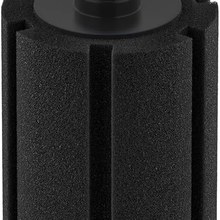
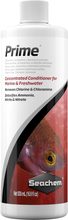
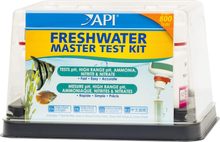
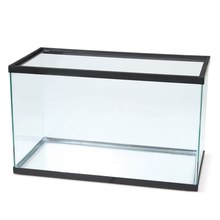
Nearly everything on this list traces back to water chemistry and minerals rather than pathogens. A stable setup built around a gentle sponge filter and a proper water conditioner for every water change prevents far more than any treatment does after the fact, and a water test kit is what tells you whether GH, KH, ammonia, or nitrite is the real culprit before you start guessing. A modest separate tank for quarantining new arrivals rounds out the setup that prevents most of these problems in the first place.
The Amano shrimp encyclopedia profile has the full natural history.
Sources & Further Reading
Last reviewed 17 Sep 2026 · 6 sources
- Molting and Common Problems - Shrimp Science
- Habitat selection and copper toxicity in the freshwater amphidromous shrimp Caridina multidentata (Ravaux et al., 2025, Journal of Crustacean Biology)
- Copper Toxicity Levels for Shrimp vs Fish in Aquarium - Build Massive Aquarium
- Editorial: Aquatic Invertebrate Immunity Against Infectious Diseases (Perazzolo, Li & Somboonwiwat, 2021, Frontiers in Immunology)
- Caridina multidentata - Wikipedia
- Care Guide for Amano Shrimp: Nature's Amazing Algae Eater - Aquarium Co-Op
❓ Frequently Asked Questions
Why is my amano shrimp carrying eggs that never hatch?
Because this species cannot complete its life cycle in freshwater. A female mates and carries fertilized eggs normally, and they even hatch into free-swimming larvae, but those larvae need brackish to marine water within their earliest stages to survive and develop. In a standard freshwater tank they die within days, and the whole cycle repeats with the next batch of eggs. It's completely normal, not a sign anything is wrong with your shrimp.
What is a failed or interrupted molt, and can it be treated?
Sometimes called the White Ring of Death, this is when a shrimp's old shell splits all the way around its body instead of opening cleanly at the head, leaving it trapped between two disconnected shells. Shrimp Science traces most molting failures to unstable water parameters, particularly swings in general and carbonate hardness, or a diet that's short on calcium. There's no direct medical treatment once a molt fails; stabilizing water chemistry and improving diet is prevention, not a cure.
How sensitive are amano shrimp to copper?
Very sensitive, and it's backed by real research, not just hobby folklore. A 2025 study in the Journal of Crustacean Biology put the acute lethal copper threshold for this species at 1.15 mg/L, but found measurable sublethal harm, including a reduced ability to detect food odors, at concentrations well below that. Common copper-based fish medications and some plant fertilizers are formulated around roughly 0.15 to 0.20 mg/L, a level considered safe for treating fish parasites but squarely inside the range where shrimp show real harm.
Why did all my amano shrimp die suddenly with no warning signs?
Water chemistry is the most likely explanation, more likely than disease. Invertebrates like shrimp lack the adaptive immune system vertebrates have and rely only on more basic, innate defenses, so a sudden colony-wide die-off usually points to an acute chemical or parameter problem, copper exposure, an ammonia or pH swing, a botched water change, rather than a pathogen sweeping through a healthy group. Test your water before assuming illness.
Do amano shrimp get parasites or infections the way fish do?
It happens, but it's less common and less often the explanation than keepers assume. Because invertebrates rely on innate rather than adaptive immunity, stress from poor water quality is usually what allows an opportunistic infection to take hold in the first place, rather than a healthy shrimp simply catching something. Quarantining new wild-caught arrivals is still the most useful prevention available.
📰 More on the Amano Shrimp
📘 Amano Shrimp care guide
🦐 How Much Does Amano Shrimp Ownership Really Cost?
🦐 How to Handle Amano Shrimp (Minimal Contact, Careful Acclimation)
🦐 Amano Shrimp Tank Setup: Minimal Bioload, Real Current, and a Lid That Actually Seals
🦐 Amano Shrimp Feeding: The Hobby's Best Algae Eater, With Real Limits
🦐 Amano Shrimp Enrichment: The Algae Runs Out and Nobody Notices
🛒 Recommended Gear
As an Amazon Associate, we earn from qualifying purchases through the links above - at no extra cost to you.
Written by Michael Ryan
Mike keeps two rescued bearded dragons, Dex and Cera, and writes the care guides on BeastlyFacts from his own research and mistakes. He is not a veterinarian.
More about Michael Ryan →Comments
No comments yet - be the first!