Red-Eared Slider
Trachemys scripta elegans
On This Page▾
🌍 Overview
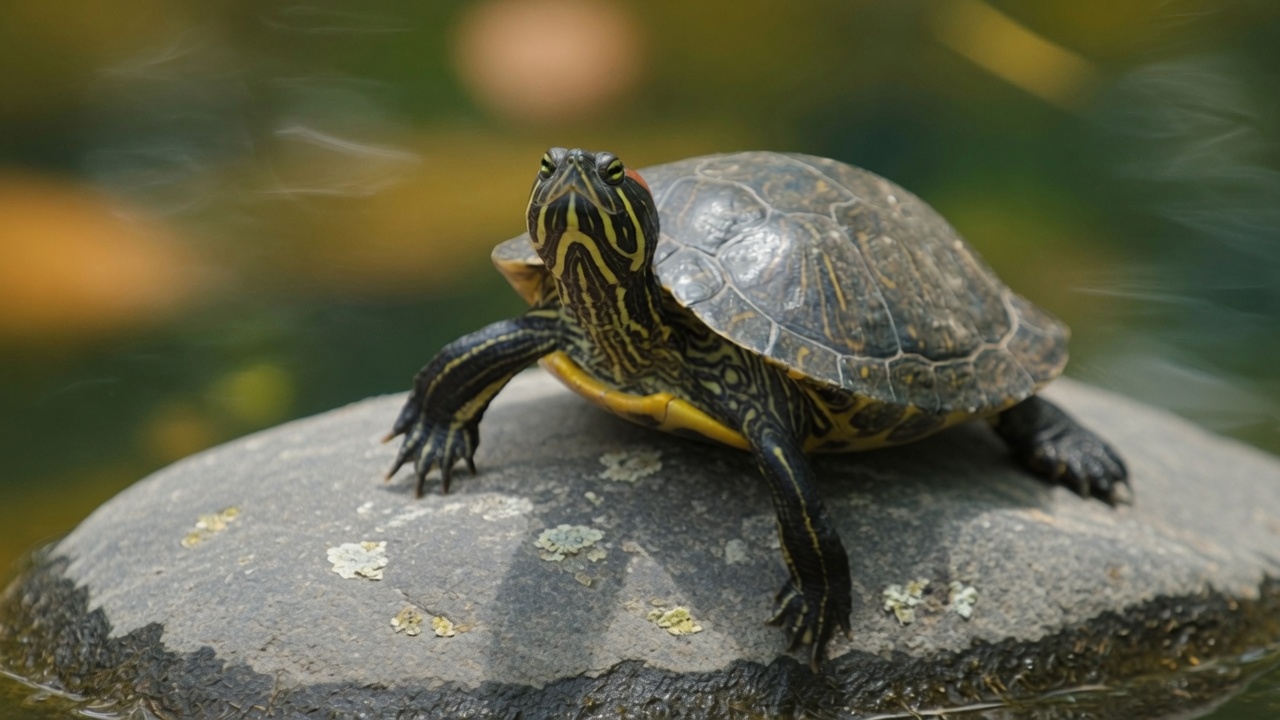
The red-eared slider is one of the world's most widely recognized freshwater turtles, named for the distinctive red stripe behind each eye. Native to the Mississippi River valley, they have become one of the most invasive reptile species globally - released or escaped pets have established populations on every continent except Antarctica. In the wild they bask in large groups on logs and rocks, maintaining a clear social hierarchy.
📋 Quick Facts
Native Range
Mississippi River valley and Gulf Coast (United States)
Natural Habitat
Slow-moving freshwater - ponds, lakes, marshes, and rivers
Adult Size
5-12 inches (13-30 cm); females significantly larger
Wild Diet
Omnivore - aquatic plants, fish, insects, and carrion
Wild Lifespan
Up to 30 years (Animal Diversity Web, University of Michigan, which puts captive sliders at up to 41.3 years and notes average longevity is not well documented for either)
Conservation Status
Least Concern (IUCN); invasive outside native range
📜 History
Baby red-eared sliders were a dime-store staple in the 1960s, sold cheap and small on the promise that they were easy, and mass collected from ponds across the South. The public health cost was measured: pet turtles were once linked to roughly 280,000 Salmonella infections a year in the United States, and in 1975 the FDA banned the sale of turtles with a shell under four inches, on the reasoning that a larger turtle will not fit in a small child's mouth. That rule does not touch exports, so the farms that had supplied the domestic dime-store trade turned to shipping hatchlings overseas instead. The species is now established as an invasive on every continent except Antarctica.
⚖️ Compare
Red-Eared Slider
Human
Adult Size
5-12 inches (13-30 cm); females significantly larger
5-6 feet (150-185 cm); ~135-200 lbs
Wild Lifespan
Up to 30 years (Animal Diversity Web, University of Michigan, which puts captive sliders at up to 41.3 years and notes average longevity is not well documented for either)
~73 years (global average)
Wild Diet
Omnivore - aquatic plants, fish, insects, and carrion
Omnivorous - eats just about anything
Native Range
Mississippi River valley and Gulf Coast (United States)
Global - originated in Africa roughly 300,000 years ago
Natural Habitat
Slow-moving freshwater - ponds, lakes, marshes, and rivers
Everywhere from arctic tundra to tropical megacities
Conservation Status
Least Concern (IUCN); invasive outside native range
Least Concern (8+ billion and counting)
🧠 Test Yourself
What's the Red-Eared Slider's native range?
⚖️ Where it is legal
26 US jurisdictions restrict this species, from outright bans to permits. Every one quotes the rule it comes from.
⚖️ Legal Guide
Subscribe - it's free
New animal facts and care guides straight to your inbox. No spam. 🐾
📰 Deep Dive
🐢 How Much Does a Red-Eared Slider Really Cost?
🐢 How to Handle a Red-Eared Slider
🐢 Common Red-Eared Slider Health Issues and What Causes Them
🐢 Red-Eared Slider Tank Setup: Plan for the Adult, Not the Hatchling
🐢 Red-Eared Slider Feeding: Schedule, Diet, and Why They Stop Eating
🐢 Red-Eared Slider Enrichment: Escape Behavior Is the Measurement
🩺 Health and More
🔌 Reptile Emergency Plan: Power Outages, Travel, and Pet Sitters
💧 Reading Reptile Stool, Urates, and Hydration: A Daily Health Check
🧼 Salmonella and Reptile Hygiene: The Rules That Actually Matter
🌡️ Reptile Heating and Thermostats: Preventing Burns
🐢 Tortoise Brumation: Which Species, and How to Do It Right
🐢 Tortoise Sexing, Eggs, and Egg Binding
🤓 Did You Know?
Red-eared sliders are one of the world's most invasive species. Released or escaped pets have established populations on every continent except Antarctica!
Explore More