Betta Fish
Betta splendens
On This Page▾
🌍 Overview
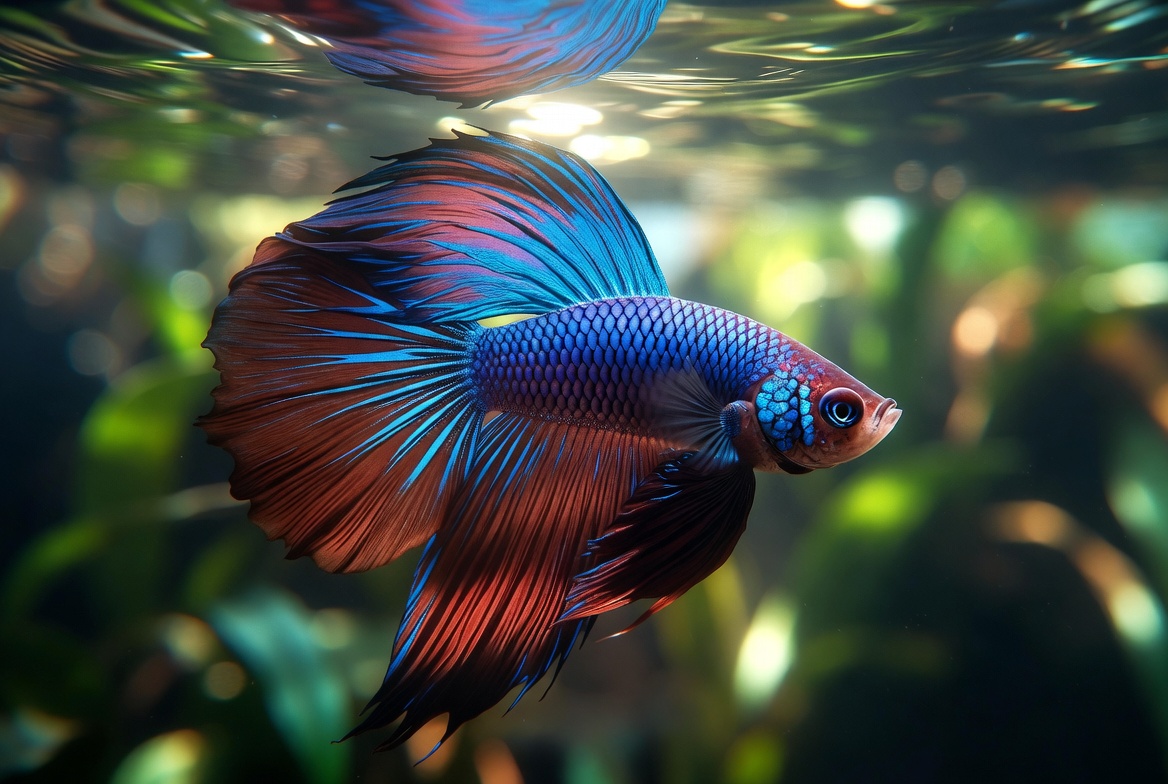
The betta fish, or Siamese fighting fish, is native to the shallow rice paddies, floodplains, and slow-moving waters of Southeast Asia. Males are famous for their flowing fins and vivid colors, developed through centuries of selective breeding, and for their intense aggression toward other male bettas - a trait that led to organized fighting matches in Thailand centuries ago and to their modern common name. In the wild, low-oxygen water pushed bettas to evolve a labyrinth organ that lets them breathe air directly from the surface.
📋 Quick Facts
Native Range
Southeast Asia (Thailand, Cambodia, Vietnam)
Natural Habitat
Shallow rice paddies, floodplains, and slow-moving streams
Adult Size
2.5-3 inches (6-7.5 cm)
Wild Diet
Small insects and insect larvae taken from the water's surface
Wild Lifespan
Not separately documented in the wild; 2 to 4 years in an aquarium, up to 5 with excellent care
Conservation Status
Vulnerable (IUCN, wild populations)
📜 History
The fish entered Western science as a diplomatic gift. In 1840 the king of Siam handed breeding stock to Theodore Edward Cantor, a Danish physician, and nine years later Cantor published the first scientific account of them under the name Macropodus pugnax. That name was already taken, and in 1909 the ichthyologist Charles Tate Regan corrected it to Betta splendens, the binomial still in use. The hobby spread on its own track: Pierre Carbonnier was importing and breeding them in France by 1874, Paul Matte brought the first specimens into Germany from Moscow in 1896, and importers in California appear to have received them around 1910.
⚖️ Compare
Betta Fish
Human
Adult Size
2.5-3 inches (6-7.5 cm)
5-6 feet (150-185 cm); ~135-200 lbs
Wild Lifespan
Not separately documented in the wild; 2 to 4 years in an aquarium, up to 5 with excellent care
~73 years (global average)
Wild Diet
Small insects and insect larvae taken from the water's surface
Omnivorous - eats just about anything
Native Range
Southeast Asia (Thailand, Cambodia, Vietnam)
Global - originated in Africa roughly 300,000 years ago
Natural Habitat
Shallow rice paddies, floodplains, and slow-moving streams
Everywhere from arctic tundra to tropical megacities
Conservation Status
Vulnerable (IUCN, wild populations)
Least Concern (8+ billion and counting)
🧠 Test Yourself
What's the Betta Fish's native range?
Subscribe - it's free
New animal facts and care guides straight to your inbox. No spam. 🐾
📰 Deep Dive
🐠 How Much Does a Betta Fish Really Cost?
🐠 How to Handle a Betta Fish (Hint: You Mostly Don't)
🐠 Common Betta Fish Health Issues (And Why Water Quality Comes First)
🐠 Betta Fish Tank Setup: Bigger, Warmer, and Cycled
🐠 Betta Fish Feeding: Schedule, Diet, and Why They Stop Eating
🐠 Betta Enrichment: Three Studies, and a Mirror Is Not a Toy
🩺 Health and More
🐠 Aquarium Power Outages, Transport, and Moving Your Fish: The Complete Plan
🦠 How to Cycle a Fish Tank, Start to Finish: Fishless and Fish-In
🧽 Aquarium Filtration: How It Actually Works and How to Maintain It
🪣 Aquarium Water Changes: How Much, How Often, and What the Number Is For
🐟 Aquarium Stocking and Tankmates: How Many Fish, and Which Ones Go Together
🧪 Freshwater pH, GH, and KH: Why Chasing a Number Backfires
🩺 Fish Quarantine and Treatment: The Hospital Tank Guide
🩹 Treating Ich: Heat, Salt or Medication, and the Temperature Ceiling That Decides
🩺 How to Tell If Your Fish Is Sick: Waste, Behavior, and Body Signs
🧊 Cooling an Aquarium Without a Chiller
⚖️ Four Pets You Only Really Understand by Comparison
🔑 Four Pets With One Rule Each Worth Knowing First
🐠 Betta Fish vs. Goldfish: Which Beginner Fish Fits You Better
🤓 Did You Know?
Wild betta fish live in shallow rice paddies and slow-moving water that can run low on oxygen, so they evolved a labyrinth organ that lets them gulp air directly from the surface. Males also build floating bubble nests out of saliva-coated air bubbles to hold their eggs - a behavior captive males will still perform even without a female present.
Explore More