Rat Feeding: Diet, Portions, and Why Hamster Food Is Not Rat Food
On This Page▾

The brown rat is an omnivore, and wild rats choose meat when they can get it. In the wild, brown rats eat insects, small vertebrates and carrion alongside grain, seeds and plant matter. A pet rat needs a diet built for that kind of animal, and the bags sold for hamsters and gerbils are not it.
| What | How Much |
|---|---|
| Rat pellets or lab blocks | About 1/2 ounce (2 tablespoons) per rat per day |
| Meals | Two: morning and evening |
| Vegetables, fruit, grains, seeds and treats | Under about 10% of the diet, combined |
| Water | At least two bottles, checked daily |
The Staple Diet
A nutritionally complete, rat-specific pelleted diet or lab block should be the base of every meal. Pellets made for rabbits, guinea pigs, hamsters and other plant eaters are not a stand-in, because they are short on nutrients a rat needs.
The labels show why. One widely sold adult rat food guarantees a minimum 15% crude protein, 4% crude fat, and a fiber range of 2 to 5%. The same maker's hamster and gerbil food runs 10 to 15% fiber alongside 16% protein, a formula built for a more plant-eating gut than a rat has.
How Much to Feed, and When
- Weigh out about half an ounce (15 grams) of dry food per rat per day, roughly two tablespoons. A kitchen scale makes it exact.
- Split it into two meals, one in the morning and one in the evening.
- Size the meals so the rats finish what is offered and hold a steady weight. An always-full bowl is how a rat gets fat.
- Add a small amount of fresh vegetables each day, and offer fruit, grains and seeds more sparingly.
- Take out uneaten fresh food within about 10 hours.
Keep all the supplemental food under about 10% of the total diet. That covers vegetables, fruit, grains, seeds and treats together.
Fresh Foods and Treats
- Vegetables: peas, broccoli, carrot, celery and kale
- Fruit: banana, pear, melon and strawberry, in small pieces
- Protein treats: cooked lean meat, cooked egg or cooked legumes, a couple of times a week
- Training rewards: sugary and high-fat foods are for training only, in tiny pieces
Scatter Feeding Comes Out of the Ration
Scatter feeding is a way of serving the daily ration, not an extra meal on top of it.
- Weigh out the usual amount.
- Throw it across the cage, or mix some into fresh bedding at cleaning time.
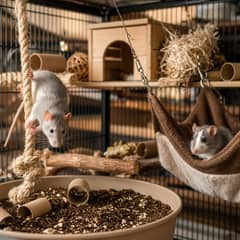
- Hide part of it in cardboard tubes or a dig box, or leave a cooled boiled egg in its shell to be broken into.
- Pick out uneaten food afterward, scattered or not.
Seeds and nuts given for the fun of handling them come out of the 10% share for extras. That is how a rat can forage every day without drifting toward obesity.
Foods to Avoid
Never feed: onion, garlic, citrus fruit, walnuts, rhubarb, grapes, raisins and chocolate.
Also unsafe: caffeine, alcohol, raw beans, unripe tomato, green or raw potato, and fruit seeds and pits.
Keep out of the bowl: anything salty, sugary or heavily processed.
Rats cannot vomit, so a harmful food stays in once it is swallowed. Call a vet immediately if a rat eats something on the first two lists.
Water
- Use bottles, which stay cleaner than an open bowl.
- Fit at least two per cage. A clogged spout or one pushy cage-mate then never leaves a rat dry.
- Check the spouts for blockages every day and refill with fresh water.
A rat on a complete diet still eats about a tenth of its own droppings. It is normal behavior and no sign of a poor diet.
Mistakes to Avoid
- Using another animal's pellets. Hamster, gerbil and rabbit foods are built for a different gut, and the mismatch shows up over time as poor coat condition.
- Free-feeding. Obesity is common in pet rats. Restricting calories without compromising nutrition is one of the few things shown to extend a rat's life.
- Rich extras. A high-calorie diet also raises the risk of the pituitary tumors older rats develop.
Two Measured Meals
A rat fed a complete rat pellet in two weighed meals, with a little fresh food inside the same allowance, has most of its diet right. Keep the extras small and the water bottles working. The scale matters most, because the amount in the bowl affects a rat's weight, its tumor risk and how long it lives.
Sources & Further Reading
Last reviewed 16 Nov 2026 · 6 sources
- RSPCA: What to Feed Pet Rats
- Merck Veterinary Manual: Mice and Rats as Pets
- PetMD: Rat Care Sheet; Common Cancers and Tumors in Rats
- Wood Green: Rat Care Guide (PDF, downloads)
- Animal Diversity Web: Rattus norvegicus
- Oxbow Animal Health: Essentials Adult Rat Food; Garden Select Hamster & Gerbil Food
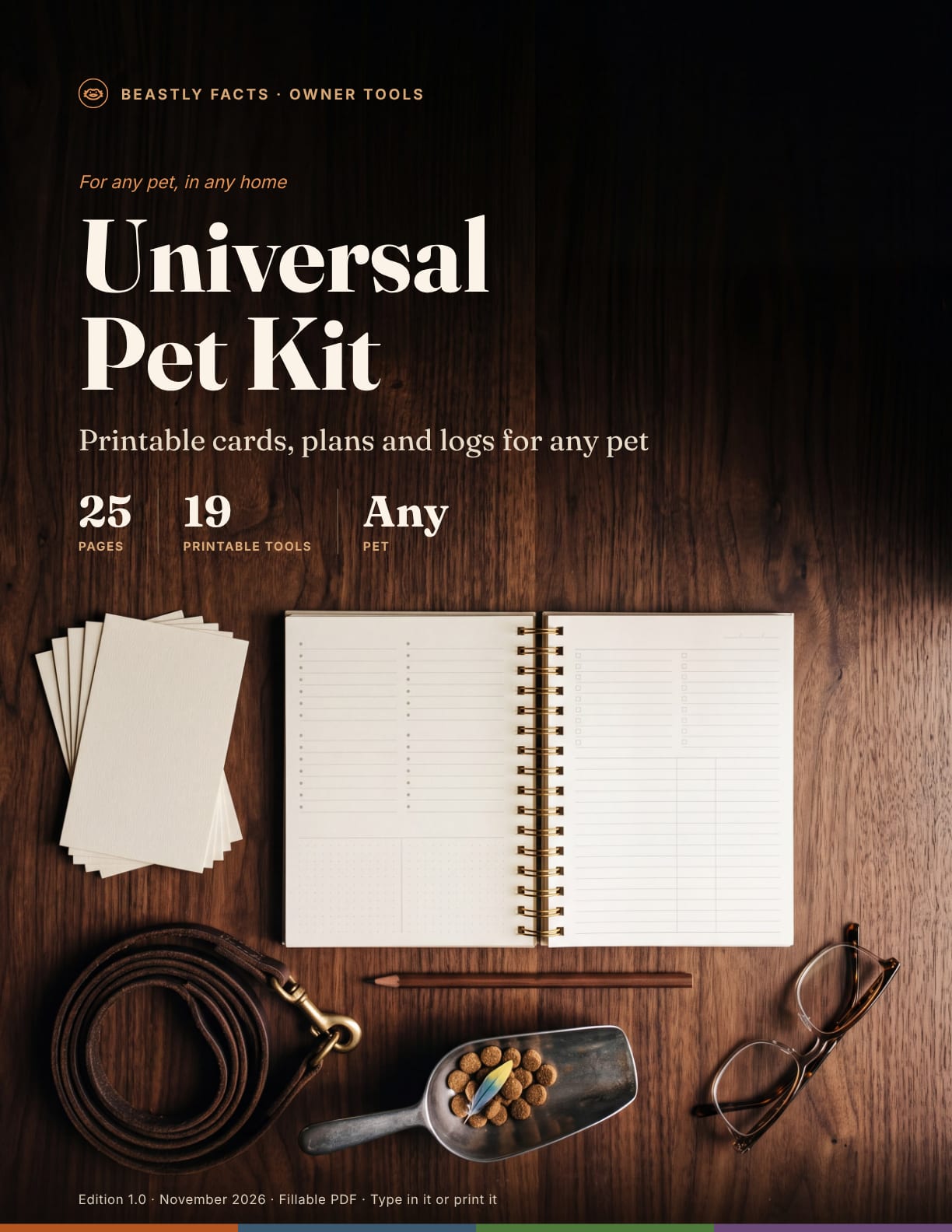
A routine chart and equipment log you can fill in for your own setup. The Universal Pet Kit has it, among 19 forms for any pet that you can type into or print.
Frequently Asked Questions
What is the best staple food for a rat?
A nutritionally complete pellet or lab block made for rats. Pellets sold for rabbits, guinea pigs, hamsters and other plant eaters do not meet a rat's needs.
How much should I feed a rat each day?
About half an ounce of dry food per rat, roughly two tablespoons, split between a morning and an evening meal. Fresh food and treats stay under about 10% of the diet.
What foods are toxic to rats?
Keep out onion, garlic, citrus fruit, walnuts, rhubarb, grapes, raisins, chocolate, caffeine and alcohol. Raw beans, unripe tomato and green or raw potato are unsafe too.
Are rats prone to obesity?
Yes, and an always-full bowl is the usual cause. Measuring the ration is worth the effort, because cutting calories while keeping the diet complete is one of the few things shown to lengthen a rat's life.
Can rats eat meat?
Yes. Rats are omnivores, and a pet rat can have a little cooked lean meat or egg a couple of times a week as part of its treat allowance.
Should rats drink from a bowl or a bottle?
Bottles, which stay cleaner than an open bowl. Fit at least two and check the spouts for blockages every day.
Recommended Gear
As an Amazon Associate I earn from qualifying purchases through the links above, at no extra cost to you.

Written by Michael Ryan
Mike keeps two rescued bearded dragons, Dex and Cera, and writes the care guides on BeastlyFacts from his own research and mistakes. He is not a veterinarian.
More about Michael Ryan →You May Also Like



Subscribe - it's free
An occasional email when something new is worth your time. No spam.
Health and More