Leaf-Tailed Gecko Feeding: As Much as It Eats in a Night, and the Insects Come Out by Morning
On This Page▾

A leaf-tailed gecko spends the day being a piece of bark and the night being a predator, and its feeding routine follows that split exactly. Here is what to offer, how much, when it goes in, when it comes out, and how to read a Uroplatus that stops taking food.
Feeding Schedule by Age
| Age | How often | How much |
|---|---|---|
| Juvenile | Daily | As much as it will eat in one night |
| Adult | Every other day | As much as it will eat in one night |
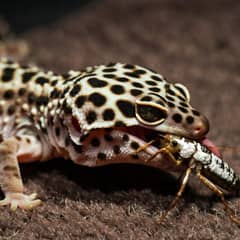
The portion is the night. Insects go in as the enclosure goes dark, when the gecko is waking and starting to hunt, and the gecko eats what it wants of them. What is still loose by morning comes out: live insects wandering an enclosure disturb a resting gecko, and a cricket left with a freshly shed or unwell animal will chew on it.
What Leaf-Tailed Geckos Eat
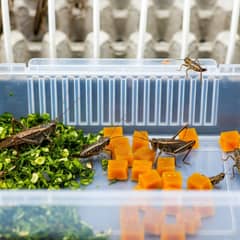
Strictly insects, and a wide range of them. Dubia, discoid and red runner roaches, crickets, grasshoppers, hornworms, silkworms, mealworm and superworm beetles, and captive-bred snails all work, and variety across that list is the closest thing an insectivore gets to a balanced diet.
Size the feeder to the species. The genus runs from the giant leaf-tail, which takes an adult dubia without effort, to the satanic and lined leaf-tails, which need feeders a fraction of that size. The same rule as for any gecko holds: nothing wider than the animal's head, and for the small species that means small crickets and roach nymphs rather than adults. The gargoyle gecko feeding guide covers the sizing rule for the arboreal geckos that also take a fruit diet; a Uroplatus takes none and lives on the insect list alone.
Gut-load first. Feeders are fed well for two or three days before they go in, so the nutrition the gecko gets is the nutrition the insect ate. The gut-loading guide covers what to feed them and why a cricket from the shop tub is mostly shell.
Dust lightly, every time. A single all-in-one calcium-plus-vitamin powder, lightly dusted on all feeder insects, is the whole supplement schedule. Occasionally skipping a dusting is fine; skipping it as a habit is not. Metabolic bone disease in reptiles comes from a low calcium-to-phosphorus ratio or missing vitamin D3 in the diet, and from a lack of UVB, and a Uroplatus kept without either is the case. The UVB lighting guide covers the low-output bulb this shade-dwelling genus does well under.
Water arrives as mist. A leaf-tailed gecko gets most of its drinking water from the daily mistings, licked from leaves and bark, and a wall-mounted dish changed daily is the backup. Mist once or twice a day and watch the gecko drink; a dish alone is not enough for this genus.
Foods to Avoid
Wild-caught insects from anywhere that may have been sprayed, and fireflies, which are toxic. Anything wider than the head. Fruit and the powdered fruit diets sold for crested and gargoyle geckos, which a Uroplatus does not eat. Waxworms as a staple, which are fat and little else. And any insect left in the enclosure past morning.
Why Leaf-Tailed Geckos Stop Eating
It is too warm. This is a montane, shade-dwelling genus that lives at 68 to 75°F and stops eating well before it shows other signs of heat stress. A room that runs warm in summer is the first check, and the setup guide's warning that a basking source can be dangerous for this species is the reason.
It is dry. A Uroplatus that is not being misted stops eating before anything else changes, and low humidity is the biggest single threat to the species. The mist resumes and so does the appetite.
It is in shed. A day or two off food, and a gecko that eats its own shed, which is normal.
It is being watched. These are shy, nocturnal ambush hunters. A gecko that is disturbed at dusk, or whose enclosure sits in a bright, busy room, may not hunt. Feed at lights-out and leave.
It is wild-caught. A wild-caught leaf-tail arrives dehydrated, stressed and often carrying parasites, and a refusal in a new import is as likely to be the parasites as the settling in. The reptile quarantine guide covers the fecal screen that sorts them.
It is gravid. A female carrying eggs slows down for a few days before she lays.
When to Worry
A few nights off food in a cool, misted enclosure is nothing. A refusal that runs past a week, or one with sunken eyes, a kinked tail, trembling limbs or visible weight loss along the spine, is the point to see a reptile vet, and the reptile emergency plan guide sorts those signs by urgency. Weigh the gecko monthly on a gram scale, since a Uroplatus hides weight loss under its own camouflage.
Insects in at dusk, out at dawn, lightly dusted, and the mist twice a day. A leaf-tailed gecko fed that way is a lizard that spends its days invisible and its nights hunting, which is the whole point of keeping one.
Sources & Further Reading
❓ Frequently Asked Questions
How often should I feed a leaf-tailed gecko?
Juveniles daily and adults every other day, offering as much as the gecko will eat in one night. The portion is the night, not a count: put the insects in as the lights go off, and whatever is still loose at dawn comes out.
What insects can a leaf-tailed gecko eat?
Dubia, discoid and red runner roaches, crickets, grasshoppers, hornworms, silkworms, mealworm and superworm beetles, and captive-bred snails. Size the prey to the species: a giant leaf-tail takes an adult roach, a satanic leaf-tail needs feeders a fraction of that size.
Do I need to dust the insects?
Yes, lightly, with a single all-in-one calcium and vitamin powder on every feeder. Skipping a dusting now and then is fine; skipping it as a habit is how a fast-growing gecko ends up with metabolic bone disease.
Why will my gecko not drink from its dish?
Because it drinks the mist. Most of a leaf-tailed gecko's water comes from the daily misting, licked off leaves, bark and its own face. Keep a wall-mounted dish changed daily as a backup, and treat the misting, once or twice a day, as the water supply.
📰 More on the Leaf Tailed Gecko
📘 Leaf Tailed Gecko care guide
🦎 How Much Does a Leaf-Tailed Gecko Really Cost?
🦎 Should You Handle a Leaf-Tailed Gecko? Almost Never
🦎 Common Leaf-Tailed Gecko Health Issues
🦎 Leaf-Tailed Gecko Enclosure Setup: Cool, Genuinely Humid, and Precisely Misted
🦎 Leaf-Tailed Gecko Enrichment: Camouflage Only Works With Something to Match
🛒 Recommended Gear
As an Amazon Associate, we earn from qualifying purchases through the links above - at no extra cost to you.
Written by Michael Ryan
Mike keeps two rescued bearded dragons, Dex and Cera, and writes the care guides on BeastlyFacts from his own research and mistakes. He is not a veterinarian.
More about Michael Ryan →Comments
No comments yet - be the first!