Giant Millipede Enrichment: The Substrate Is the Food and the Home
On This Page▾

Almost every guide in this series eventually says the substrate matters. For a millipede it is very nearly the entire enclosure.
A giant millipede eats its own substrate. Deep decaying leaf litter and rotting hardwood is the burrow, the humidity buffer and the bulk of the diet at the same time, which makes substrate the one decision that carries nearly all the weight in this enclosure.
What the Research Says
Nothing on millipedes. The borrow is from the tarantula housing study, covered in full in our Tarantula enrichment guide.
Tarantulas in an enclosure roughly six times larger with six times as much structure used 77 percent larger home ranges and showed 150 percent greater odds of being active in a novel environment, while being no more active overall and showing no preference between the two.
A detritivorous myriapod and an ambush-hunting spider have almost nothing in common. What carries over is the caution: an invertebrate that spends its time buried and slow is not obviously suffering from a lack of stimulation, and the useful work here is husbandry, not novelty.
A millipede in good conditions slowly converts its own enclosure into more of itself. The substrate breaks down, gets eaten, gets replaced, and the animal grows. Very few pets have a setup that doubles as the food bowl.
Deep, Decaying Substrate
The whole guide in one section. Millipede substrate mix is the convenient version. A large enclosure takes considerably more than one pack.
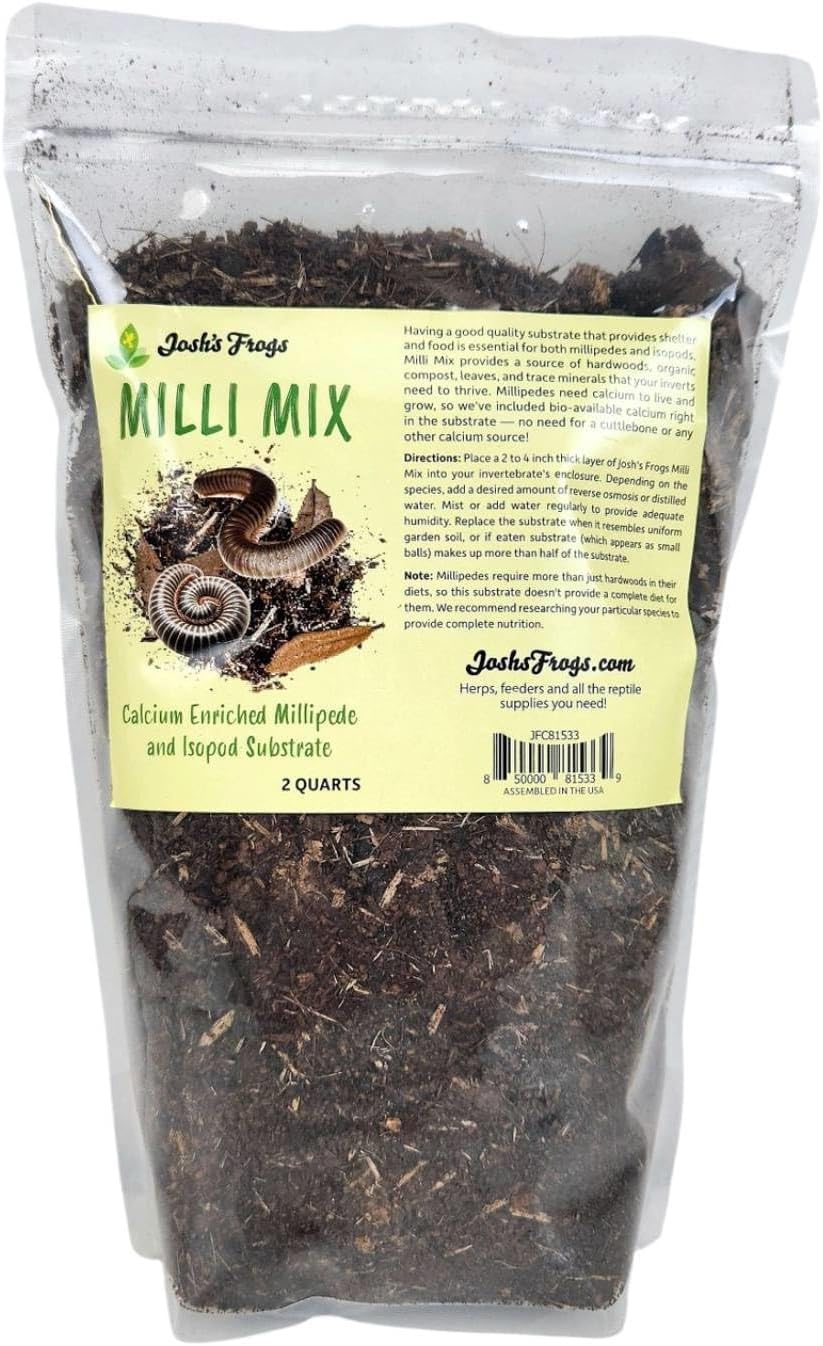
Add rotting hardwood and pesticide-free leaf litter on top of it. Rotting is the key word: fresh wood has no food value to a detritivore, and this is not decoration on top of a base, it is the diet.
Deep enough to bury completely. They burrow to molt and spend much of their time under the surface, and shallow substrate removes most of what a millipede does.
Never garden soil, which may carry pesticides, fertilizer or parasites.
Humidity Held in the Substrate
Consistently damp and never wet, with the substrate itself doing most of the buffering. A fine mist spray bottle tops it up, and deep substrate holds it far better than misting a shallow layer ever will.
Ventilation still matters. Stagnant damp brings mold and mites, and clearing a mite bloom out of a millipede enclosure is a genuine nuisance.
Calcium
Easy to skip and it shows up at the worst moment. Millipedes need calcium for the exoskeleton, and deficiency surfaces during molts, when the animal is already at its most vulnerable.
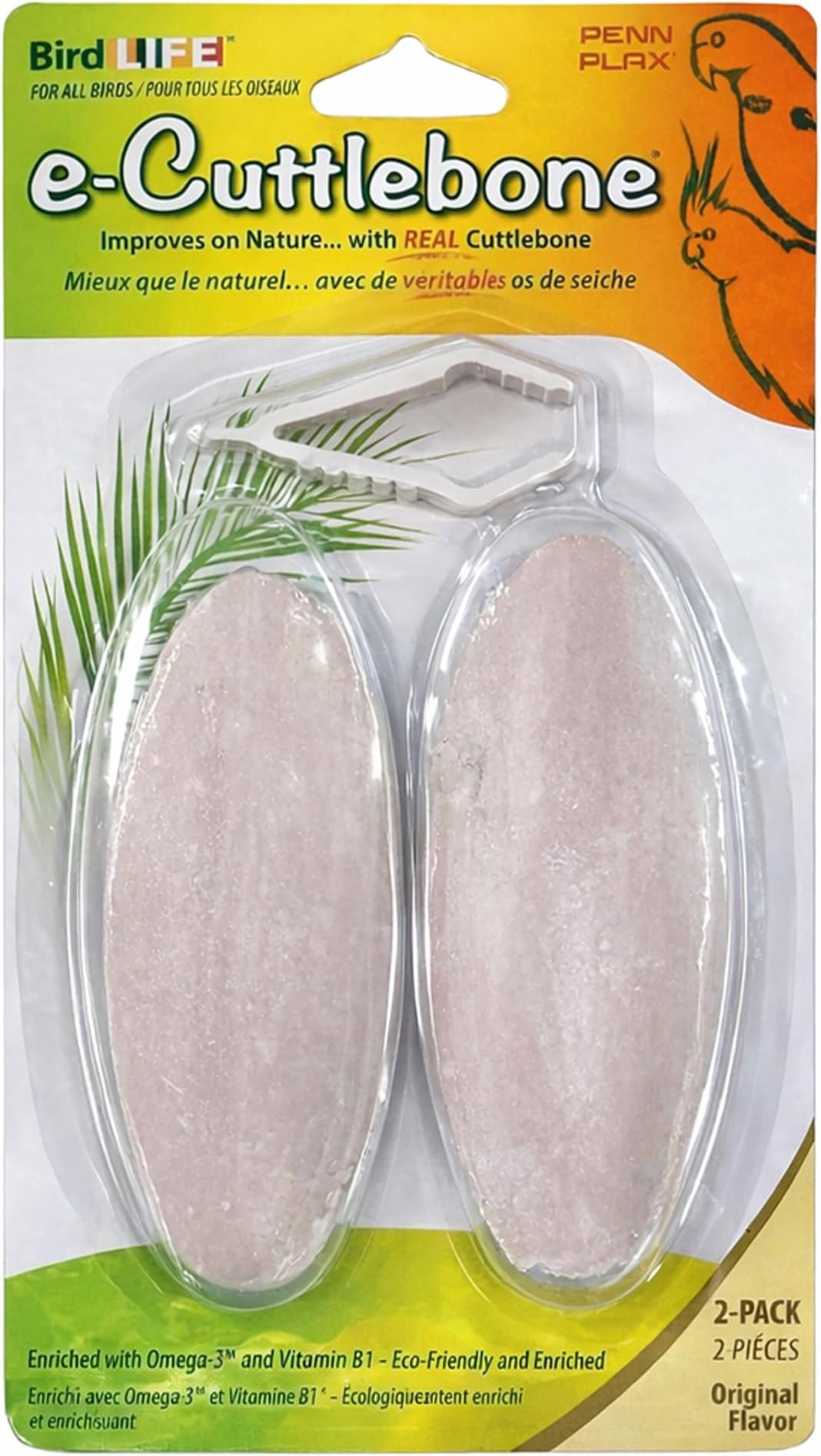
A cuttlebone left on the substrate is the standard method. Crushed eggshell works as well. What a failed molt looks like across pet invertebrates is the shape the deficiency eventually takes.
Food Variety, Modestly
Substrate does the bulk of it. Beyond that, small amounts of fresh vegetables and fruit scattered on the surface give variety and a reason to come up.
Scatter it instead of piling it in one place, and remove what is not taken before it molds. Keep it a supplement: a millipede fed mostly on fruit rather than decaying wood is being fed the interesting part instead of the nutritious part.
A Group
They are not predatory or territorial and are commonly kept in groups. Space and substrate volume are the only real constraints.
Avoid mixing species, which is a mite and parasite transfer question and not a compatibility one.
Leave Them Buried
Worth listing. Millipedes molt underground and a disturbed molt is a dangerous one. Resist digging to check on an animal that has gone quiet, and give it weeks rather than days.
Priority Order
- Deep substrate of decaying hardwood and leaf litter
- Consistent damp held in the substrate, with ventilation
- A permanent calcium source
- Enclosure floor area over height
- Occasional scattered fresh produce as a supplement
- A group, if you want one
- Not digging them up
What Not to Do
Do not use shallow substrate. Do not use fresh wood, which a detritivore cannot use. Do not use garden soil. Do not seal the enclosure to hold humidity. Do not feed mostly fruit. Do not dig up a buried millipede that may be molting. And wash your hands afterwards, since many species secrete defensive chemicals that stain skin and irritate eyes.
Sources & Further Reading
2 sources
- Borrowed evidence. No enrichment study exists for millipedes. The housing findings below are from tarantulas and are covered in full in our Tarantula enrichment guide.
- Stalter L et al. (2024). Tarantula welfare may be improved with greater environmental complexity. PLoS ONE 19(12): e0314501
- Tarantulas in captivity: raising and breeding. Springer
❓ Frequently Asked Questions
Is there enrichment research on millipedes?
No. Nothing has been published on millipede enrichment. The nearest evidence is the 2024 tarantula housing study, where a larger and more complex enclosure produced larger home ranges and a bolder response to novelty, without changing overall activity or producing a preference.
Why does substrate matter so much for this animal?
Because a millipede eats it. They are detritivores that consume decaying leaf litter and rotting hardwood, so the substrate is simultaneously the burrow, the humidity buffer and the bulk of the diet. Nothing else in the enclosure comes close.
How deep should it be?
Deep enough to bury completely, which for a large species means several inches and more is better. They burrow to molt and spend a great deal of time under the surface, and shallow substrate removes most of what the animal does.
Do they need calcium?
Yes, and it is easy to overlook. Millipedes need calcium for the exoskeleton, and a cuttlebone left on the substrate is the standard way to provide it. Deficiency shows up at molts, which is when this species is most vulnerable.
Can millipedes be kept together?
Yes. They are not predatory or territorial and are commonly kept in groups, with space and substrate volume the only real limits. Mixing species is discouraged because of parasite and mite transfer rather than aggression.
Why should I not use fresh wood or garden soil?
Fresh wood has no nutritional value to a detritivore and garden soil may carry pesticides, fertilizer or parasites. Rotting hardwood and pesticide-free leaf litter are what they eat, and getting this wrong is the commonest reason a millipede slowly declines.
📰 More on the Giant Millipede
📘 Giant Millipede care guide
🪱 How Much Does a Giant Millipede Really Cost? (And a Supply Note Worth Knowing)
🪱 How to Handle a Giant Millipede (Gentle Giant, Brittle Shell)
🪱 Common Giant Millipede Health Issues
🪱 Giant Millipede Enclosure Setup
🐛 Is It Legal to Own a Giant African Millipede? State-by-State Guide
🛒 Recommended Gear
As an Amazon Associate, we earn from qualifying purchases through the links above - at no extra cost to you.
Written by Michael Ryan
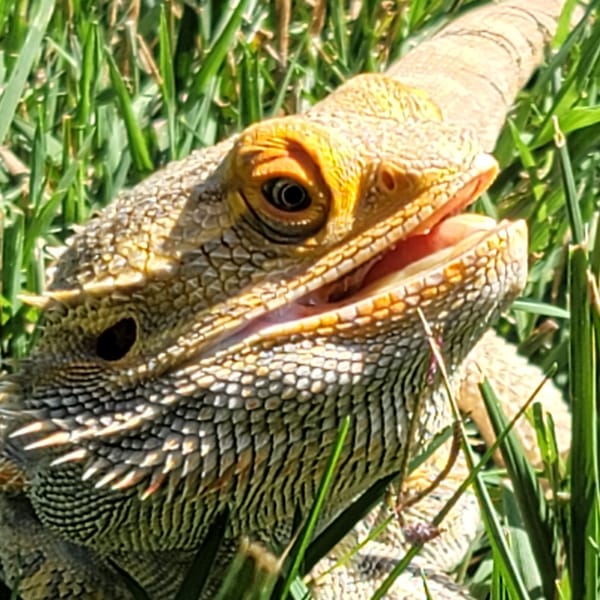
Mike keeps two rescued bearded dragons, Dex and Cera, and writes the care guides on BeastlyFacts from his own research and mistakes. He is not a veterinarian.
More about Michael Ryan →Comments
No comments yet - be the first!