Corydoras Catfish
Osteogaster aenea (formerly Corydoras aeneus)
On This Page▾
🌍 Overview
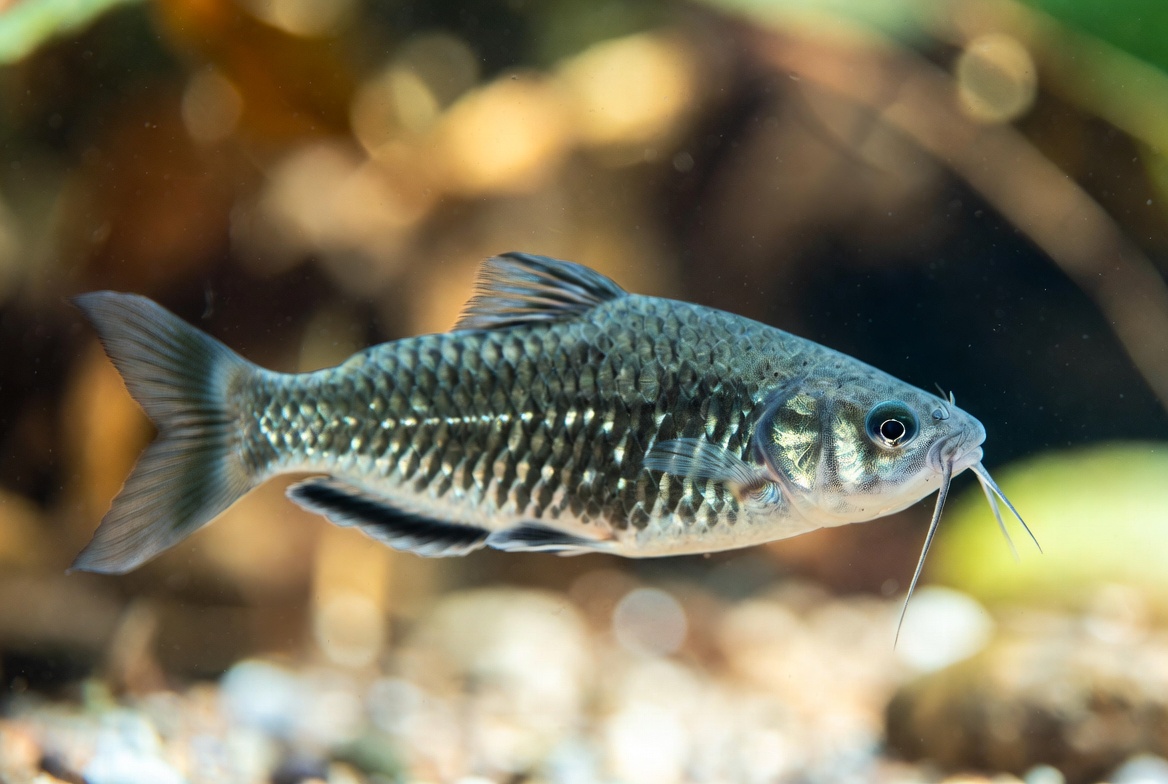
Corydoras catfish are small, armored, bottom-dwelling fish native to the rivers and streams of South America. They are obligate shoaling fish, meaning they need the company of their own species to feel secure and behave naturally, and they spend much of the day actively foraging through soft substrate with sensitive barbels around their mouth. A unique adaptation lets them gulp air at the surface and absorb oxygen through their intestine, a backup system for the low-oxygen waters they evolved in.
📋 Quick Facts
Native Range
South America (Amazon Basin and surrounding river systems)
Natural Habitat
Slow-moving rivers, streams, and flooded forest with soft sediment
Adult Size
1-3 inches (2.5-7.5 cm), pygmy species at the low end
Wild Diet
Insect larvae, worms, small crustaceans, and organic detritus
Wild Lifespan
5-10 years; up to 15 years with excellent care
Conservation Status
Least Concern (IUCN)
📜 History
Theodore Gill described the bronze cory in 1858 from a single Trinidad specimen, calling it Hoplosoma aeneum, and it spent most of the following century and a half filed under the catch-all genus Corydoras with hundreds of relatives. In June 2024 a Brazilian-led team published a phylogenomic revision in the Zoological Journal of the Linnean Society that broke the subfamily Corydoradinae into seven genera, resurrecting names including Hoplisoma, Brochis and Osteogaster, and the bronze cory moved to Osteogaster. Even that is provisional, since the fish is now treated as a species complex awaiting further review. Commercial breeding in the United States, Europe and Singapore supplies almost every one sold.
⚖️ Compare
Corydoras Catfish
Human
Adult Size
1-3 inches (2.5-7.5 cm), pygmy species at the low end
5-6 feet (150-185 cm); ~135-200 lbs
Wild Lifespan
5-10 years; up to 15 years with excellent care
~73 years (global average)
Wild Diet
Insect larvae, worms, small crustaceans, and organic detritus
Omnivorous - eats just about anything
Native Range
South America (Amazon Basin and surrounding river systems)
Global - originated in Africa roughly 300,000 years ago
Natural Habitat
Slow-moving rivers, streams, and flooded forest with soft sediment
Everywhere from arctic tundra to tropical megacities
Conservation Status
Least Concern (IUCN)
Least Concern (8+ billion and counting)
🧠 Test Yourself
What's the Corydoras Catfish's native range?
Subscribe - it's free
New animal facts and care guides straight to your inbox. No spam. 🐾
📰 Deep Dive
🐠 How Much Does Corydoras Catfish Ownership Really Cost?
🐠 Corydoras Catfish Aren't Handled, and They're Not Solo Fish Either
🐠 Common Corydoras Catfish Health Issues
🐠 Corydoras Catfish Tank Setup: Substrate Is the Detail That Actually Matters
🐠 Corydoras Catfish Feeding: Schedule, Diet, and Why They Stop Eating
🐟 Corydoras Enrichment: Sand for the Sifting, Not for the Barbels
🩺 Health and More
🐠 Aquarium Power Outages, Transport, and Moving Your Fish: The Complete Plan
🦠 How to Cycle a Fish Tank, Start to Finish: Fishless and Fish-In
🧽 Aquarium Filtration: How It Actually Works and How to Maintain It
🪣 Aquarium Water Changes: How Much, How Often, and What the Number Is For
🐟 Aquarium Stocking and Tankmates: How Many Fish, and Which Ones Go Together
🧪 Freshwater pH, GH, and KH: Why Chasing a Number Backfires
🤓 Did You Know?
Corydoras catfish can breathe atmospheric air by gulping it at the surface and absorbing oxygen through their intestine - a backup adaptation for the low-oxygen waters they evolved in. This means an occasional dash to the surface for a quick gulp of air is completely normal behavior, not a sign of a sick or distressed fish.
Explore More