White's Tree Frog
Litoria caerulea
On This Page▾
🌍 Overview
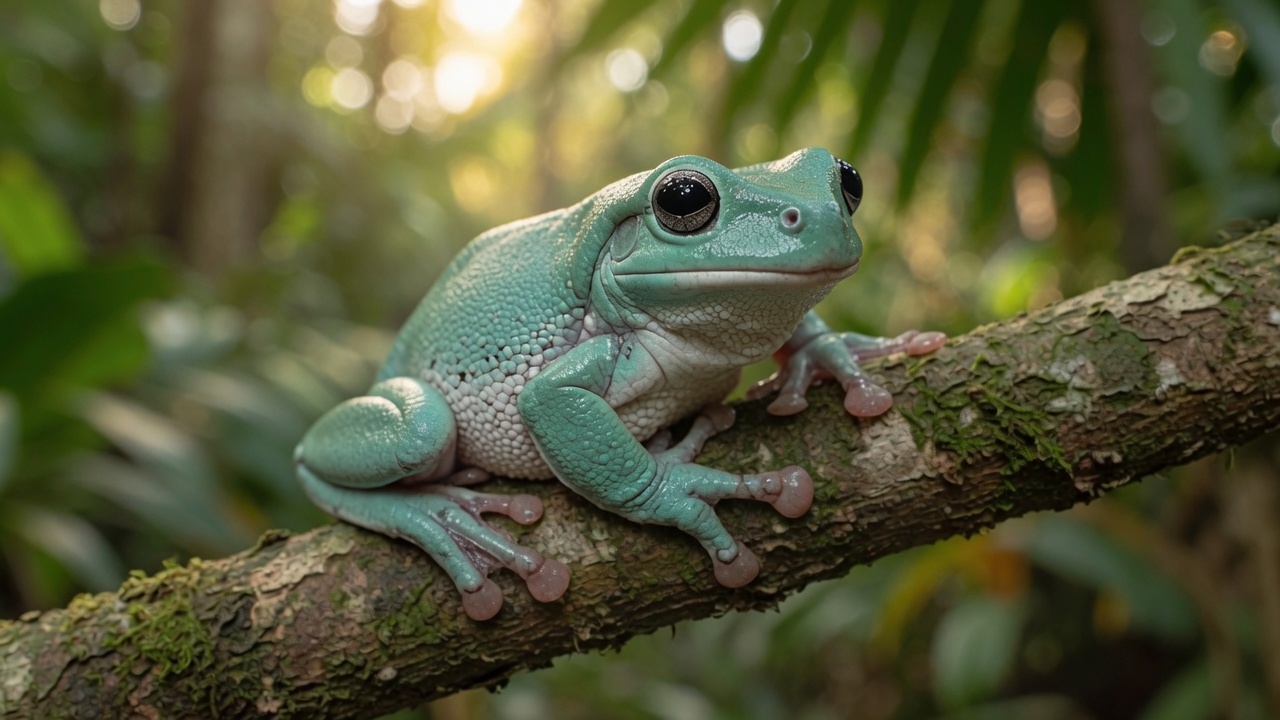
White's tree frog - also called the dumpy tree frog or Australian green tree frog - is a large, robust arboreal frog native to Australia and southern New Guinea. They are one of the most docile frog species, remarkably tolerant of handling compared to most amphibians, and have become the most popular pet frog worldwide. Their characteristic "dopey" expression comes from a large, overhanging parotoid gland above the eye. Their skin secretions contain compounds with antimicrobial and antiviral properties.
📋 Quick Facts
Native Range
Northern and eastern Australia; southern New Guinea
Natural Habitat
Forest, woodland, and near human habitation (attracted to lit areas at night)
Adult Size
3-4.5 inches (7-11 cm)
Wild Diet
Insects, moths, cockroaches, crickets, and occasionally small lizards
Wild Lifespan
Not well documented in the wild; the quoted figures are captive, an average of about 16 years with one individual recorded at 21 years in human care
Conservation Status
Least Concern (IUCN)
📜 History
The species was the first Australian frog to be described scientifically. John White, a surgeon and naturalist, published it in 1790 in his Journal of a Voyage to New South Wales as Rana caerulea, Latin for blue, because the preserved specimens he shipped to England had turned that color: the frog's green comes from a blue pigment under a yellow layer, and the preservative destroyed the yellow. The type specimen passed into Sir Joseph Banks's collection and was destroyed when the Hunterian Museum in London was bombed during the Second World War. The misleading name has stuck through every later change of genus.
⚖️ Compare
White's Tree Frog
Human
Adult Size
3-4.5 inches (7-11 cm)
5-6 feet (150-185 cm); ~135-200 lbs
Wild Lifespan
Not well documented in the wild; the quoted figures are captive, an average of about 16 years with one individual recorded at 21 years in human care
~73 years (global average)
Wild Diet
Insects, moths, cockroaches, crickets, and occasionally small lizards
Omnivorous - eats just about anything
Native Range
Northern and eastern Australia; southern New Guinea
Global - originated in Africa roughly 300,000 years ago
Natural Habitat
Forest, woodland, and near human habitation (attracted to lit areas at night)
Everywhere from arctic tundra to tropical megacities
Conservation Status
Least Concern (IUCN)
Least Concern (8+ billion and counting)
🧠 Test Yourself
What's the White's Tree Frog's native range?
📖 Care Guide
White's Tree Frog Care Guide
The chubby tree frog wearing a permanent, unbothered smile!
Subscribe - it's free
New animal facts and care guides straight to your inbox. No spam. 🐾
📰 Deep Dive
🐸 How Much Does a White's Tree Frog Really Cost?
🐸 How to Handle a White's Tree Frog
🐸 Common White's Tree Frog Health Issues (Obesity Is the Signature Risk)
🐸 White's Tree Frog Tank Setup: What Your Frog Actually Needs
🐸 White's Tree Frog Feeding: Reading the Ridges Above the Eardrum
🐸 White's Tree Frog Enrichment: Plants Changed the Frogs, Not Just the Tank
🩺 Health and More
🤓 Did You Know?
White's tree frogs are also called 'dumpy tree frogs' because they develop adorable fat rolls (parotoid glands and lipid ridges) as adults. These rolly features are a sign of a well-fed, healthy frog, not obesity!
Explore More