Fancy Rat
Rattus norvegicus domestica
On This Page▾
🌍 Overview
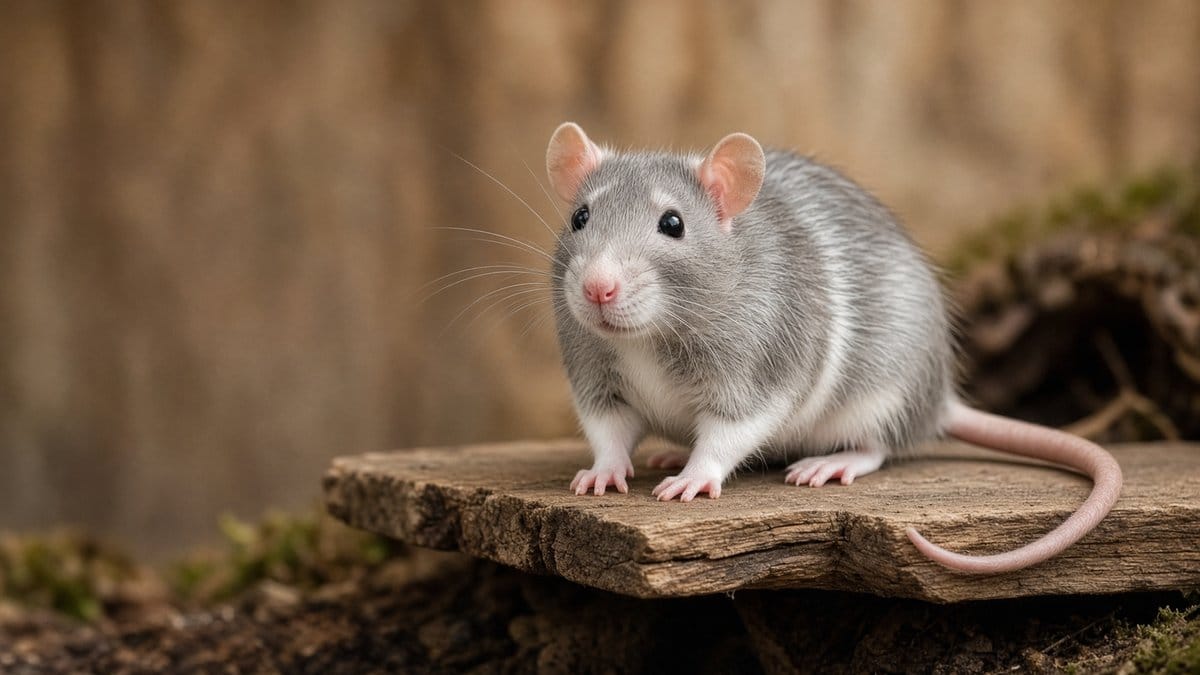
Fancy rats are the domesticated form of the wild brown rat, bred for temperament and color since Victorian England, most famously by Jack Black, Queen Victoria's official rat catcher, who caught and bred unusually colored rats and sold them to the wealthy as pets in the 1800s. The Rat Fancy became a formal hobby by 1901, and it produced a genuinely different animal from the wild rats it descends from. Fancy rats are widely considered among the most intelligent commonly kept small pets: they learn tricks, respond to their own names, and navigate mazes readily, which is also why wild-type rats have been the standard animal for spatial-learning research in psychology and neuroscience for more than a century. They're deeply social and bond closely with a consistent handler, though their reputation still suffers by association with the wild rats they were bred from.
📋 Quick Facts
Native Range
Domesticated from the wild brown rat (Rattus norvegicus); origin in northern China and Mongolia despite the misleading common name
Natural Habitat
Burrows near human settlements and farmland; originally forest and scrubland in Asia
Adult Size
7-10 inches (18-25 cm) body, plus a 6-8 inch scaled tail; 0.8-1 lb females, 1-1.4 lb males
Wild Diet
Grain, seeds, fruit, insects, and other small animals including fish, lizards, and nestling birds
Wild Lifespan
About 1 year on average in the wild (commonly 5-12 months, occasionally up to 3 years); pet fancy rats typically live 2-3 years, occasionally to 4
Conservation Status
Least Concern (IUCN - wild Norway rat population)
📜 History
The laboratory line and the pet line separated early. Henry Donaldson took four pairs of albino rats with him to the Wistar Institute in Philadelphia, where from 1906 he and Helen Dean King bred them toward a standardized research animal, and in 1912 the institute began shipping rats to other laboratories; most modern laboratory strains descend from that colony. The pet side nearly lapsed instead. British shows dropped rat classes for decades before they returned in 1968 at the London and Southern Counties Mouse Club, and the National Fancy Rat Society formed on January 13, 1976, staging its first exhibition at the Bradford Championship Show a week later.
⚖️ Compare
Fancy Rat
Human
Adult Size
7-10 inches (18-25 cm) body, plus a 6-8 inch scaled tail; 0.8-1 lb females, 1-1.4 lb males
5-6 feet (150-185 cm); ~135-200 lbs
Wild Lifespan
About 1 year on average in the wild (commonly 5-12 months, occasionally up to 3 years); pet fancy rats typically live 2-3 years, occasionally to 4
~73 years (global average)
Wild Diet
Grain, seeds, fruit, insects, and other small animals including fish, lizards, and nestling birds
Omnivorous - eats just about anything
Native Range
Domesticated from the wild brown rat (Rattus norvegicus); origin in northern China and Mongolia despite the misleading common name
Global - originated in Africa roughly 300,000 years ago
Natural Habitat
Burrows near human settlements and farmland; originally forest and scrubland in Asia
Everywhere from arctic tundra to tropical megacities
Conservation Status
Least Concern (IUCN - wild Norway rat population)
Least Concern (8+ billion and counting)
🧠 Test Yourself
What's the Fancy Rat's native range?
🤩 Fun Facts
🐀 The First Rat Maze
The link between rats and maze-learning isn't a loose comparison, it's the origin of an entire field. Willard Small built the first rat maze at Clark University in 1900, modeled on the hedge maze at England's Hampton Court Palace, and rats were chosen specifically because they learned routes quickly and consistently enough to be scientifically useful, a trait a well-socialized pet rat still shows off today.
📖 Care Guide
Fancy Rat Care Guide
The whip-smart, deeply social rodent that will learn its own name!
Subscribe - it's free
New animal facts and care guides straight to your inbox. No spam. 🐾
📰 Deep Dive
🐀 How Much Does a Pet Rat Really Cost?
🐀 How to Handle a Rat (And Why It's the Least Likely Small Pet to Bite)
🐀 Common Rat Health Issues (Respiratory Disease Is the One to Know)
🐀 Rat Enclosure Setup: Multi-Level, and Never a Tank
🐀 Rat Feeding: Diet, Portions, and Why Hamster Food Isn't Rat Food
🐀 Rat Enrichment: It Is the Number of Types That Matters
🩺 Health and More
🤓 Did You Know?
Rats can be trained to respond to their own name, give a high-five, and fetch a ball using the same reward-based methods used on dogs. That knack for learning is also why lab rats have been the standard animal for maze and memory research for more than a century.
Explore More