Fancy Mouse
Mus musculus domesticus
On This Page▾
🌍 Overview
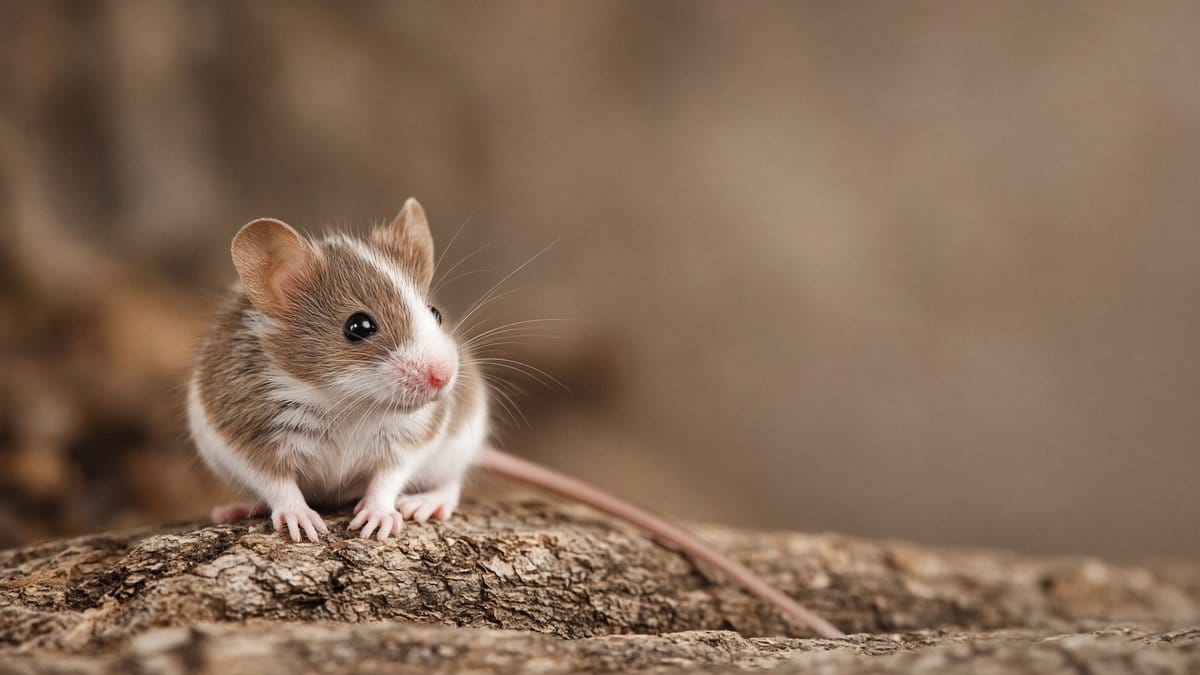
The fancy mouse is a domesticated form of the house mouse, bred for coat color and pattern since at least Victorian England, where Walter Maxey founded the National Mouse Club in 1895 and designed the standard show cage still used today. House mice have lived alongside humans for roughly 11,000 years, since the earliest agricultural settlements of the Near East, and the western subspecies Mus musculus domesticus that most fancy and laboratory mice descend from spread from there across North Africa and Europe. Mice are smaller, faster, and considerably more skittish than fancy rats, and most keepers find them harder to hand-tame to the same degree. Their most practical downside as a pet is odor: male mouse urine contains trimethylamine, a compound that gives it a distinctly pungent smell largely absent in rat urine, so a mouse cage needs more frequent cleaning than a same-sized rat setup.
📋 Quick Facts
Native Range
Domesticated from the wild house mouse (Mus musculus); the domesticus subspecies originated in the Near East and spread across North Africa and Western Europe
Natural Habitat
Burrows in walls, buildings, and farmland; also fields, pastures, and woodland edges
Adult Size
2-3 inches (5-8 cm) body, plus a 3-4 inch tail; 1-1.6 oz
Wild Diet
Seeds, roots, leaves, stems, insects, and carrion
Wild Lifespan
Under 18 months in the wild (commonly 12-18 months); pet fancy mice typically live 1.5-2 years
Conservation Status
Least Concern (IUCN - wild house mouse population)
📜 History
Abbie Lathrop moved to Granby, Massachusetts in 1900, failed at poultry farming and turned to breeding mice, starting with a pair of waltzing mice. In 1902 the Harvard geneticist William Ernest Castle placed an order with her, the first time her animals went into a laboratory for genetic work, and her operation eventually held over 10,000 mice in straw-filled wooden boxes. From 1910 she investigated tumors in her own stock alongside the pathologist Leo Loeb, and between 1913 and 1919 the pair published ten papers connecting particular mouse lines to inherited cancer. Clarence Cook Little built his dba strain from her animals, which is how a hobby breeder's barn became the source of modern laboratory mice.
⚖️ Compare
Fancy Mouse
Human
Adult Size
2-3 inches (5-8 cm) body, plus a 3-4 inch tail; 1-1.6 oz
5-6 feet (150-185 cm); ~135-200 lbs
Wild Lifespan
Under 18 months in the wild (commonly 12-18 months); pet fancy mice typically live 1.5-2 years
~73 years (global average)
Wild Diet
Seeds, roots, leaves, stems, insects, and carrion
Omnivorous - eats just about anything
Native Range
Domesticated from the wild house mouse (Mus musculus); the domesticus subspecies originated in the Near East and spread across North Africa and Western Europe
Global - originated in Africa roughly 300,000 years ago
Natural Habitat
Burrows in walls, buildings, and farmland; also fields, pastures, and woodland edges
Everywhere from arctic tundra to tropical megacities
Conservation Status
Least Concern (IUCN - wild house mouse population)
Least Concern (8+ billion and counting)
🧠 Test Yourself
What's the Fancy Mouse's native range?
🤩 Fun Facts
🐭 Eating Poop for the B12
Coprophagy in mice isn't just a fixed habit, it tracks real nutrient need. Researchers found mice fed a standard diet ate their own droppings about 9.6 times a day on average, but once the diet was fortified with vitamin B12, that dropped to roughly 4.7 times a day, direct evidence the behavior responds to actual nutritional demand rather than instinct alone.
📖 Care Guide
Mouse Care Guide
The pocket-sized speedster that's cheap to keep but easy to underestimate!
Subscribe - it's free
New animal facts and care guides straight to your inbox. No spam. 🐾
📰 Deep Dive
🐭 How Much Does a Pet Mouse Really Cost?
🐭 How to Handle a Pet Mouse (Faster, Jumpier, and Easy to Underestimate)
🐭 Common Pet Mouse Health Issues (Respiratory Disease Moves Fast)
🐭 Mouse Enclosure Setup: Why a Wire Cage Beats a Glass Tank Here
🐭 What Do Pet Mice Eat? Diet, Portions, and Foods to Avoid
🐭 Mouse Enrichment: Give Them Far More Nesting Material Than You Think
🩺 Health and More
🤓 Did You Know?
A male mouse's strong smell comes down to one specific chemical, trimethylamine, that shows up heavily in his urine and barely at all in a female's or a rat's. It's why an all-male mouse cage needs cleaning far more often than the equivalent rat setup.
Explore More