Gerbil
Meriones unguiculatus
On This Page▾
🌍 Overview
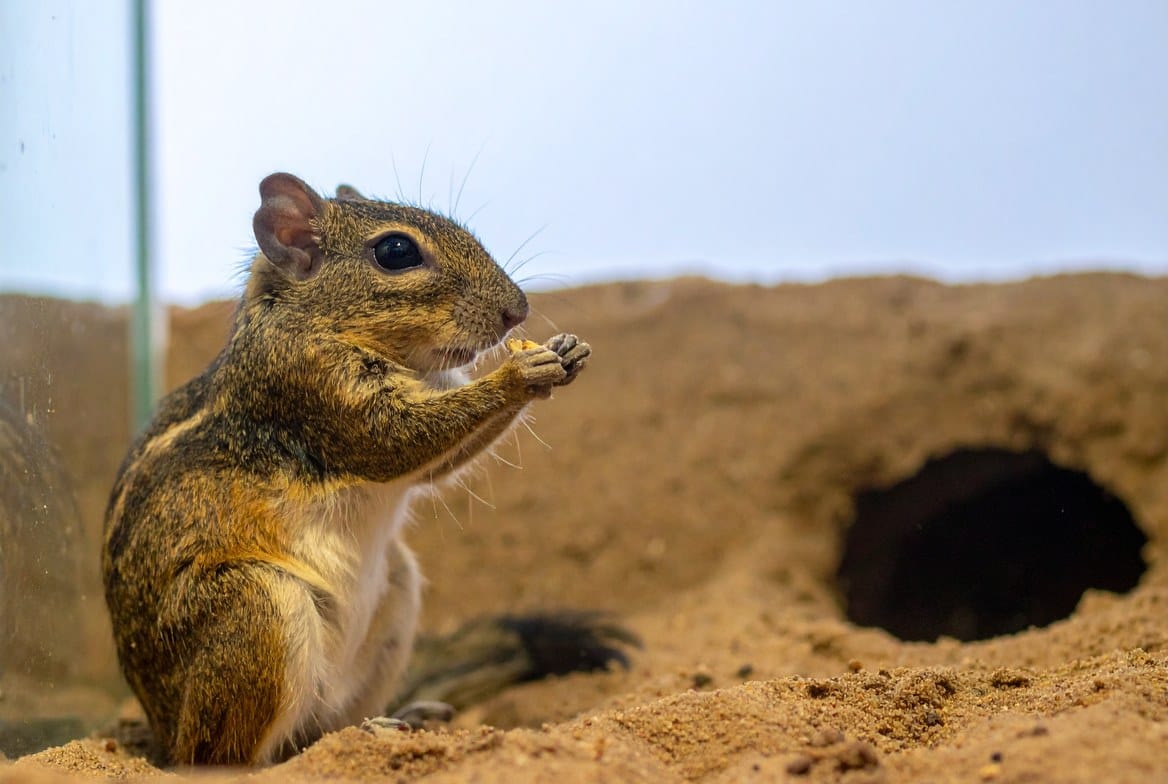
The Mongolian gerbil comes from the steppe and semi-desert of Mongolia and northern China, and it is built to lose as little water as possible: it concentrates its urine heavily, produces almost no odor, and can go a remarkably long time on the moisture in its food. That desert economy is why gerbils are among the cleanest small pets to keep. They are obsessive burrowers, and a gerbil given deep enough bedding will build and maintain a tunnel system rather than sit on top of it. They are strictly social and should never be kept alone, but introductions between adults frequently fail, which is the single hardest part of keeping them.
📋 Quick Facts
Native Range
Mongolia, northern China, and adjacent parts of Russia
Natural Habitat
Arid steppe, sandy grassland and semi-desert, in extensive burrow systems
Adult Size
4-5 inches (10-13 cm) body, plus a furred tail of similar length; 2-4 oz
Wild Diet
Seeds, grasses, roots, and insects
Wild Lifespan
Months rather than years in the wild, where Animal Diversity Web puts the average near 3 to 4; 2 to 3 years is the normal captive lifespan
Conservation Status
Least Concern (IUCN)
📜 History
Alphonse Milne-Edwards named the species Gerbillus unguiculatus in 1867, working from specimens that Father Armand David had sent to Paris from northern China the year before. The captive population rests on a much narrower base: 20 pairs of wild-caught gerbils went to Japan in 1935, and 11 of their descendants reached Victor Schwentker's Tumblebrook Farm in Brant Lake, New York, in 1954. Schwentker had imported them as research animals and then noticed how well they took to a cage. They were selling as pets across the United States by the late 1950s and arrived in Britain in 1964.
⚖️ Compare
Gerbil
Human
Adult Size
4-5 inches (10-13 cm) body, plus a furred tail of similar length; 2-4 oz
5-6 feet (150-185 cm); ~135-200 lbs
Wild Lifespan
Months rather than years in the wild, where Animal Diversity Web puts the average near 3 to 4; 2 to 3 years is the normal captive lifespan
~73 years (global average)
Wild Diet
Seeds, grasses, roots, and insects
Omnivorous - eats just about anything
Native Range
Mongolia, northern China, and adjacent parts of Russia
Global - originated in Africa roughly 300,000 years ago
Natural Habitat
Arid steppe, sandy grassland and semi-desert, in extensive burrow systems
Everywhere from arctic tundra to tropical megacities
Conservation Status
Least Concern (IUCN)
Least Concern (8+ billion and counting)
🧠 Test Yourself
What's the Gerbil's native range?
📖 Care Guide
Gerbil Care Guide
The tidy desert burrower that wants deep bedding, not a bare cage floor!
⚖️ Where it is legal
2 US jurisdictions restrict this species, from outright bans to permits. Every one quotes the rule it comes from.
Subscribe - it's free
New animal facts and care guides straight to your inbox. No spam. 🐾
📰 Deep Dive
🐹 How Much Does Gerbil Ownership Really Cost?
🐹 How to Handle a Gerbil (And Why It Needs a Companion)
🐹 Common Gerbil Health Issues
🐹 Gerbil Enclosure Setup: Depth Is Everything
🐹 Gerbil Feeding: Schedule, Diet, and Why Seed Mixes Fail This Species
🐹 Gerbil Enrichment: Deep Bedding Alone Does Not Stop the Digging
🩺 Health and More
🐿️ Two Pets Where You're Really Buying a Pair
🌡️ Heat Stress and Cold in Small Mammals: Temperature Ranges and Emergency Signs
🩺 Getting a Small Mammal to the Vet: Carriers, Car Travel, and Anesthesia
✂️ Grooming, Nails, and Molting in Small Mammals
🐹 Gerbil vs. Hamster: Which Small Pet Actually Fits Your Schedule
🐹 Gerbil vs. Guinea Pig: Which Small Pet Actually Fits Your Space
🤓 Did You Know?
Gerbils came out of the Mongolian desert with a water-conserving physiology that makes them one of the least smelly pets you can keep. They produce only a few drops of highly concentrated urine a day, so a well-kept gerbil tank barely registers compared with a mouse or a rat.
Explore More