Discus
Symphysodon spp.
On This Page▾
🌍 Overview
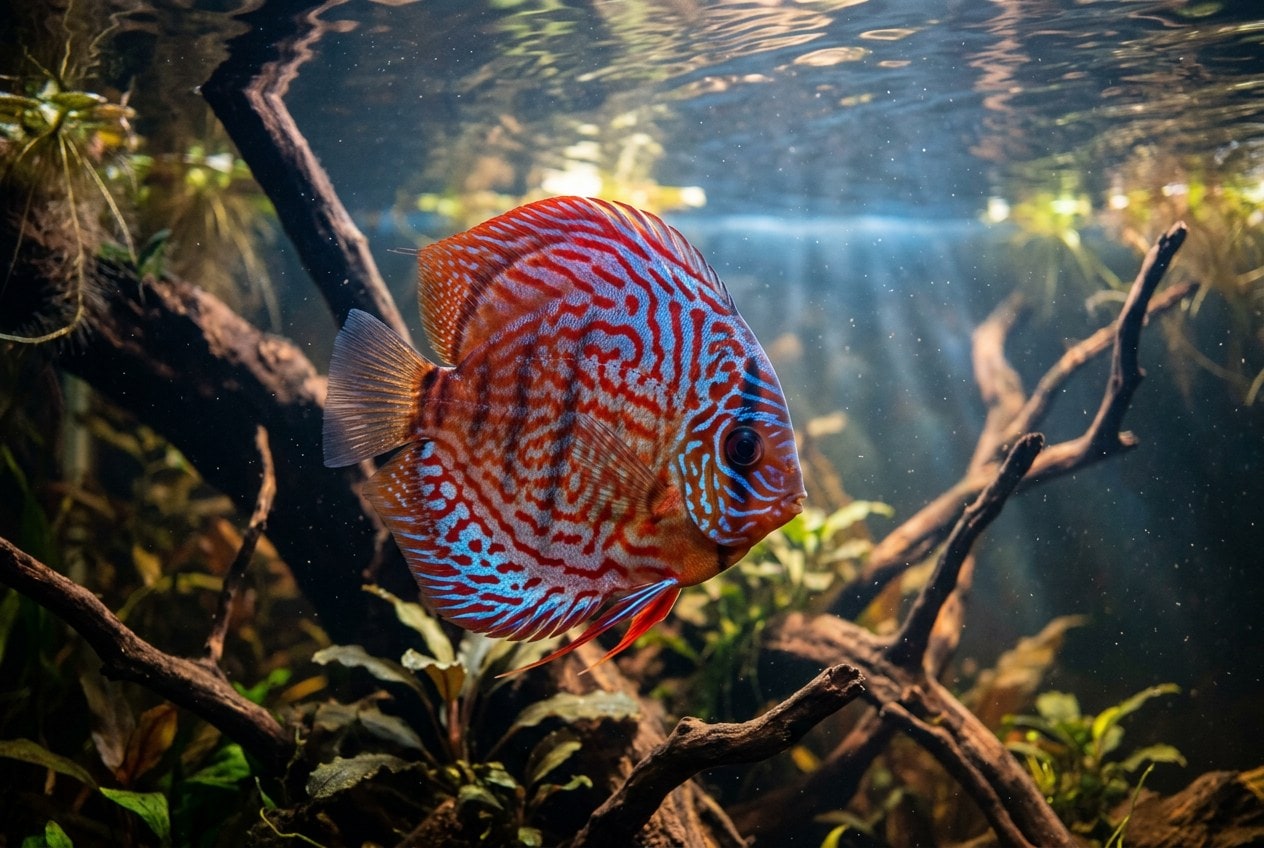
Discus are tall, laterally compressed cichlids from the slow-moving blackwater tributaries of the Amazon Basin, prized in the aquarium hobby as the self-styled 'king of the aquarium' for their vivid, selectively bred color patterns. Unlike most cichlids, which pair off and defend territory, discus are genuinely social and do best in a group. Both parents feed newly hatched fry a nutrient-rich mucus secreted from their skin, a form of parental care called 'discus milk' that is highly unusual among fish.
📋 Quick Facts
Native Range
Amazon Basin (Peru, Brazil, Colombia)
Natural Habitat
Slow-moving, soft, acidic blackwater tributaries and flooded forest
Adult Size
6-8 inches (15-20 cm) diameter
Wild Diet
Insect larvae, small invertebrates, and plant matter
Wild Lifespan
10-13 years
Conservation Status
Not evaluated (widespread in trade; wild populations locally affected by collection and habitat change)
📜 History
Johann Jakob Heckel coined the genus name Symphysodon in 1840, for the unusual joint where the teeth meet, and the fish then stayed a museum specimen for the better part of a century. Dealers only began importing discus into Europe and the United States in the 1930s and 1940s, and nobody spawned them dependably until the late 1950s, when Jack Wattley in the United States and Eduard Schmidt-Focke in Germany worked out how. Into the 1970s the palette was limited to wild blue, green, brown and Heckel forms, after which American breeders produced the turquoise and then the cobalt lines. Most strains in shops now, pigeon blood and blue diamond among them, appeared in Asia during the late 1980s and 1990s.
⚖️ Compare
Discus
Human
Adult Size
6-8 inches (15-20 cm) diameter
5-6 feet (150-185 cm); ~135-200 lbs
Wild Lifespan
10-13 years
~73 years (global average)
Wild Diet
Insect larvae, small invertebrates, and plant matter
Omnivorous - eats just about anything
Native Range
Amazon Basin (Peru, Brazil, Colombia)
Global - originated in Africa roughly 300,000 years ago
Natural Habitat
Slow-moving, soft, acidic blackwater tributaries and flooded forest
Everywhere from arctic tundra to tropical megacities
Conservation Status
Not evaluated (widespread in trade; wild populations locally affected by collection and habitat change)
Least Concern (8+ billion and counting)
🧠 Test Yourself
What's the Discus's native range?
🤩 Fun Facts
🐠 Nursing Without Milk
Discus fry don't just hide near their parents, they feed directly off them. Both parents secrete a nutrient-rich mucus from their skin that fry bite at for minutes at a time, and a 2010 study found the mucus's protein levels rise and fall across the feeding period in a pattern the researchers compared to hormonally regulated mammalian milk. It's one of the only documented cases of sustained parental feeding in fish.
📖 Care Guide
Discus Care Guide
The king of the aquarium, and it knows exactly how good it looks!
Subscribe - it's free
New animal facts and care guides straight to your inbox. No spam. 🐾
📰 Deep Dive
🐠 How Much Does Discus Ownership Really Cost?
🐠 Discus Aren't Handled, But They Are Surprisingly Social for a Cichlid
🐠 Common Discus Health Issues (And What Actually Prevents Them)
🐠 Discus Tank Setup: Why the Water-Change Routine Matters More Than the Gallon Number
🐠 Discus Feeding: Schedule, Diet, and the Beef-Heart Debate
🐠 Discus Enrichment: A Nervous Cichlid Needs a Group and a Quiet Room
🩺 Health and More
🐠 Aquarium Power Outages, Transport, and Moving Your Fish: The Complete Plan
🦠 How to Cycle a Fish Tank, Start to Finish: Fishless and Fish-In
🧽 Aquarium Filtration: How It Actually Works and How to Maintain It
🪣 Aquarium Water Changes: How Much, How Often, and What the Number Is For
🐟 Aquarium Stocking and Tankmates: How Many Fish, and Which Ones Go Together
🧪 Freshwater pH, GH, and KH: Why Chasing a Number Backfires
🤓 Did You Know?
Newly hatched discus fry feed on a nutrient-rich mucus secreted from both parents' skin, most intensively for roughly the first two weeks after they become free-swimming, with a gradual weaning over the following two weeks. It is one of the only documented cases of sustained direct parental feeding in fish, and a 2010 study found the mucus carries immune antibodies and protein at levels that rise and fall across the feeding period, in a pattern the researchers compared to mammalian milk.
Explore More