Bristlenose Pleco
Ancistrus sp.
On This Page▾
🌍 Overview
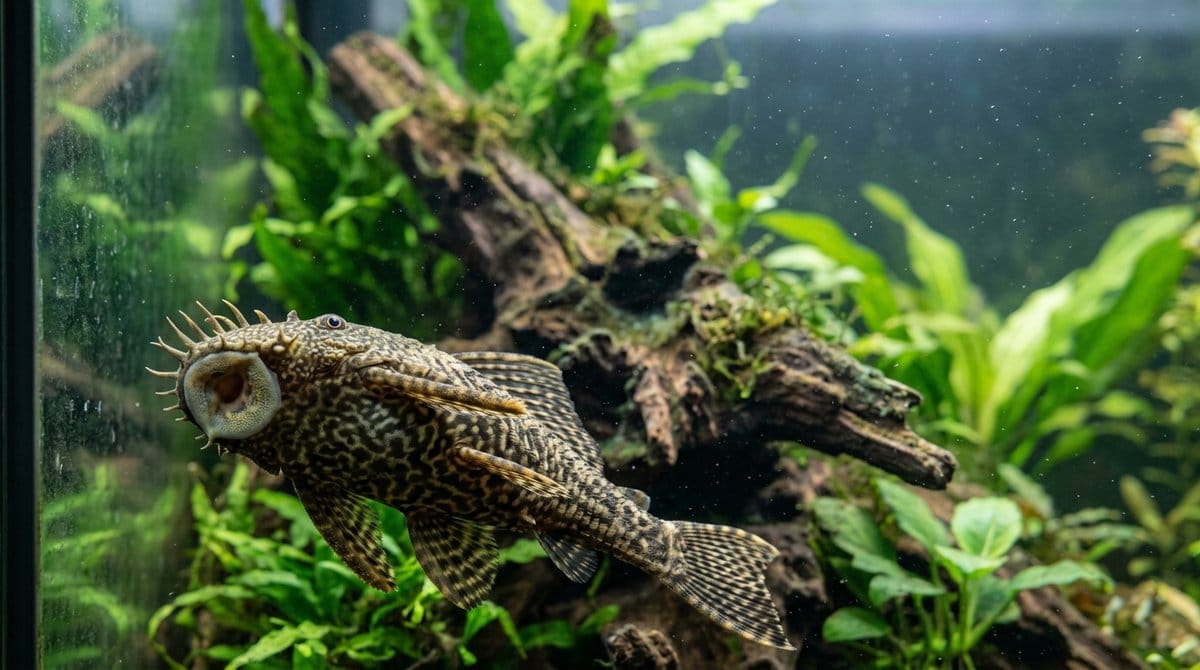
The bristlenose pleco is a small, hardy, algae-grazing armored catfish native to South America. Mature males grow branching, tentacle-like bristles across the snout, used to signal sex and to spar with rival males, while females stay smooth or grow only a few short bristles. This is the pleco species BeastlyFacts recommends for a home aquarium: the common name 'pleco' or 'plecostomus' covers dozens of very different species sold under one generic label, and the classic cheap juvenile sold as a tiny algae-eater is usually a common pleco (Hypostomus plecostomus) or a related Pterygoplichthys species that grows into a real 12 to 24 inch, 75-plus-gallon adult, a well-documented size surprise that drives constant rehoming and has left escaped or released plecos as an established invasive species in Texas and Florida waterways. A bristlenose stays a manageable 4 to 6 inches for life instead. Algae alone is not a complete diet for either type as an adult, and the aquarium-trade bristlenose has been interbred across species for so long that its exact wild ancestry is unresolved, which is why it's typically sold and catalogued simply as Ancistrus sp. rather than one specific species.
📋 Quick Facts
Native Range
South America (Amazon and Parana-Paraguay river basins); the exact ancestry of the tank-bred aquarium strain is unresolved and likely mixed among several Ancistrus species
Natural Habitat
Fast-flowing rocky streams to slower rivers and backwaters with submerged driftwood and roots
Adult Size
4-6 inches (10-15 cm)
Wild Diet
Algae and biofilm grazed from rocks and wood, plus wood fiber rasped from driftwood and roots and some detritus
Wild Lifespan
5-10 years typical in the aquarium; well-kept fish reported at 12-14 years
Conservation Status
Not evaluated (IUCN); the aquarium strain's mixed ancestry makes a species-level assessment difficult, though wild Ancistrus species are generally widespread
📜 History
Rudolf Kner erected the genus Ancistrus in 1854, and it has been a taxonomic headache ever since. Roughly 69 species are currently recognized, and a 2017 study of the Parana basin using molecular and chromosome data concluded that at least four further candidate species were hiding inside what had been called Ancistrus cirrhosus. The aquarium trade ran into its own version of that problem and answered it in 1988, when the German magazine DATZ began assigning L-numbers to undescribed suckermouth catfish so importers and keepers had a stable label for fish that science had not yet named. An L-number is retired once a species receives a formal description.
⚖️ Compare
Bristlenose Pleco
Human
Adult Size
4-6 inches (10-15 cm)
5-6 feet (150-185 cm); ~135-200 lbs
Wild Lifespan
5-10 years typical in the aquarium; well-kept fish reported at 12-14 years
~73 years (global average)
Wild Diet
Algae and biofilm grazed from rocks and wood, plus wood fiber rasped from driftwood and roots and some detritus
Omnivorous - eats just about anything
Native Range
South America (Amazon and Parana-Paraguay river basins); the exact ancestry of the tank-bred aquarium strain is unresolved and likely mixed among several Ancistrus species
Global - originated in Africa roughly 300,000 years ago
Natural Habitat
Fast-flowing rocky streams to slower rivers and backwaters with submerged driftwood and roots
Everywhere from arctic tundra to tropical megacities
Conservation Status
Not evaluated (IUCN); the aquarium strain's mixed ancestry makes a species-level assessment difficult, though wild Ancistrus species are generally widespread
Least Concern (8+ billion and counting)
🧠 Test Yourself
What's the Bristlenose Pleco's native range?
🤩 Fun Facts
🐟 Not Actually Whiskers
The branching "bristles" a mature male bristlenose pleco grows across his snout aren't whiskers, they're odontodes, modified tooth-like structures also found in smaller form on the gill covers of both sexes. Males use them to signal breeding readiness and to spar with rival males over a cave.
📖 Care Guide
Bristlenose Pleco Care Guide
The bristly-nosed algae grazer that politely stays small!
Subscribe - it's free
New animal facts and care guides straight to your inbox. No spam. 🐾
📰 Deep Dive
🐟 How Much Does Bristlenose Pleco Ownership Really Cost?
🐟 Bristlenose Plecos Aren't Handled, and They're Genuinely Hard to Catch
🐟 Common Bristlenose Pleco Health Issues
🐟 Bristlenose Pleco Tank Setup: Driftwood Is the Detail That Actually Matters
🐟 Bristlenose Pleco Feeding: Diet, Driftwood, and the Algae Myth
🐟 Bristlenose Pleco Enrichment: Wood Is Not Optional, For Murkier Reasons Than You Think
🩺 Health and More
🐠 Aquarium Power Outages, Transport, and Moving Your Fish: The Complete Plan
🦠 How to Cycle a Fish Tank, Start to Finish: Fishless and Fish-In
🧽 Aquarium Filtration: How It Actually Works and How to Maintain It
🪣 Aquarium Water Changes: How Much, How Often, and What the Number Is For
🐟 Aquarium Stocking and Tankmates: How Many Fish, and Which Ones Go Together
🧪 Freshwater pH, GH, and KH: Why Chasing a Number Backfires
🩺 Fish Quarantine and Treatment: The Hospital Tank Guide
🩹 Treating Ich: Heat, Salt or Medication, and the Temperature Ceiling That Decides
🩺 How to Tell If Your Fish Is Sick: Waste, Behavior, and Body Signs
🧊 Cooling an Aquarium Without a Chiller
🐠 Four Fish, Four Completely Different Difficulty Levels
🤓 Did You Know?
Most of the cheap, inch-long 'plecos' sold for algae control are common plecos (Hypostomus plecostomus) or a related Pterygoplichthys species, and neither stays small: both regularly reach 12 to 24 inches and need a 75-gallon-or-larger tank as adults, a size surprise so common that escaped and released pet plecos have established breeding, invasive populations in Texas and Florida rivers. Researchers pulled more than 400 invasive armored catfish from a single stretch of Texas's San Marcos River in one 2022 removal effort. The bristlenose pleco profiled here is a different, deliberately smaller species that tops out around 4 to 6 inches for life, which is exactly why it's the pleco actually worth recommending to a beginner.
Explore More