Oscar Enrichment: The Fish That Rearranges the Tank Itself
On This Page▾

Most fish enrichment is about arranging an environment for an animal that will accept it. Oscars have opinions.
Oscars dig, uproot, reposition decor, learn feeding routines and respond differently to the person who feeds them. That gives you more to work with than almost any other aquarium fish, and it starts with a tank big enough for a foot-long cichlid, which is not the tank they are sold into.
What the Research Says
Nothing on oscars. The relevant group size work, done on neon tetra, found effects were species-specific and found no group size effect for angelfish, the cichlid in that study.
The honest position is that oscar enrichment is argued from behavior rather than from controlled studies. What is not in dispute is the behavioral repertoire: an oscar interacts with its environment, its routine and its keeper in ways a tetra does not, and an environment that offers none of that leaves a large intelligent animal with a glass box.
The recognition behavior is the part keepers find hardest to overstate and hardest to prove. Oscars very clearly behave differently toward the person who feeds them than toward a stranger at the glass, which is the sort of everyday observation that formal research on aquarium fish rarely gets around to testing.
Space, First and Loudest
Everything else is downstream. Oscars reach a foot or more and get sold at two inches to people buying a tank for the two inch version.
Around 75 gallons is a floor for a single adult, and a pair or any tank mates needs considerably more. There is no enrichment that compensates for an adult oscar in a 40 gallon.
Filtration to Match
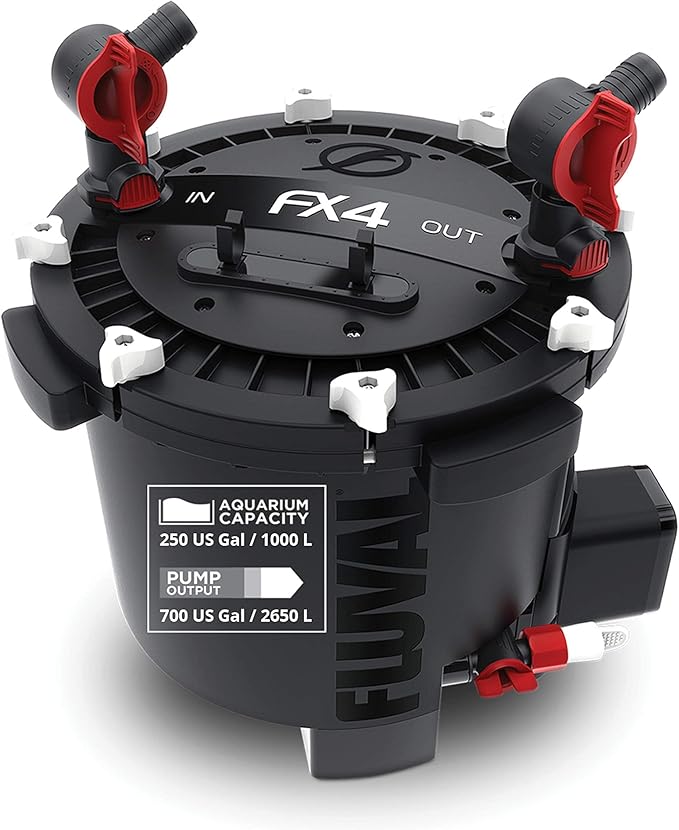
Oscars are among the messiest fish in the hobby, and a large messy fish in a big tank needs filtration rated well above the volume.
A large canister filter plus a serious water change routine, with a water test kit used regularly. Water quality is where oscar tanks fail, and it fails slowly enough that the fish looks fine until it does not.
Things They Are Allowed to Move
The enrichment that is specific to this fish. Oscars dig substrate, shift decor and uproot plants deliberately, and an aquascape they cannot alter takes that away.
Give them movable furniture: smooth stones, sizeable driftwood pieces, and a deep sand or fine gravel bed to push around. Accept that the layout will not stay where you put it, because the rearranging is the point.
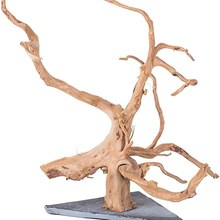
Anchor anything that could fall on the fish or crack the glass. An oscar can shift more than people expect.
Training and Routine
Oscars learn readily. Target training with a stick, hand feeding, and coming to a particular corner at a particular time all work, and they give a large intelligent animal a predictable task.
Vary feeding times and locations sometimes, so the routine is a structure and not a rut. This is the same logic as the anticipation findings in red-footed tortoises: an animal that has learned your schedule benefits from that schedule having some give in it.
Feeding, Without Feeder Fish
Varied diet: quality large cichlid pellets as a base, plus frozen and prepared foods, occasional whole items that take work to eat.
Skip the feeder fish. They are a common route for parasites and disease into a tank and are nutritionally poor, and the hunting appeal is not worth what comes with them.
Feeding an oscar something it has to work at, rather than pellets that vanish in seconds, is the cheapest enrichment available here.
Tank Mates, Cautiously
Large, robust species in a very large tank, and even then it is individual. Anything small enough to swallow eventually will be, and oscars vary enormously in temperament.
A species tank with one or two oscars is the simplest arrangement and the one least likely to go wrong.
Priority Order
- A tank sized for a foot-long adult
- Filtration rated well beyond the volume, plus real water changes
- Movable substrate, stones and wood they can rearrange
- Target training and hand feeding
- Varied diet with items that take work, and no feeder fish
- A varied feeding schedule, never a fixed one
- Tank mates chosen carefully, or none
What Not to Do
Do not buy a tank for the two inch fish. Do not under-filter. Do not build an aquascape you need to stay put. Do not feed feeder fish. Do not keep them with anything they can swallow. Do not let water quality drift, given the link to hole-in-the-head. And take real care moving a large cichlid, since they are strong and they do bite.
Sources & Further Reading
2 sources
- Borrowed evidence. No welfare study covers oscars. The group size findings below are from other home aquarium species, neon tetra chief among them.
- Saxby A, Adams L, Snellgrove D, Wilson RW and Sloman KA (2010). The effect of group size on the behaviour and welfare of four fish species commonly kept in home aquaria. Applied Animal Behaviour Science
- The effects of mixed-species assemblage on the behaviour and welfare of fish held in home aquaria. Applied Animal Behaviour Science
❓ Frequently Asked Questions
Is there research on oscar welfare?
Not on the species. The nearest evidence is the 2010 home aquarium group size study, which found effects were species-specific and found no group size effect for angelfish, the cichlid in that study. Cichlid enrichment is better argued from behavior than from the shoaling literature.
Are oscars intelligent?
They behave that way in ways keepers can observe: they recognize and respond differently to the person who feeds them, learn routines, take food from the hand, and interact with objects deliberately. Whether that meets a formal definition is a separate question from whether they need something to do.
How big a tank does one need?
Much bigger than they are sold for. Oscars reach a foot or more and are sold at two inches. A single adult needs a tank in the region of 75 gallons as a floor, and a pair or a community needs considerably more.
Why do they dig everything up?
Because that is what they do. Oscars move substrate, uproot plants and reposition decor as normal behavior, not as misbehavior. An enclosure they cannot alter removes one of the few things a large cichlid can do in a glass box.
Can I feed them feeder fish?
Better not. Feeder fish are a common route for parasites and disease into a tank, and they are nutritionally poor compared with a proper pellet and frozen diet. The hunting appeal is real and the risk outweighs it.
Can oscars be kept with other fish?
With large, robust tank mates in a very large tank, and even then it is unpredictable. Anything small enough to swallow will eventually be swallowed, and individual oscars vary enormously in temperament.
📰 More on the Oscar Fish
📘 Oscar Fish care guide
🐠 How Much Does Oscar Fish Ownership Really Cost?
🐠 Oscar Fish Aren't Handled, But They're the Closest Thing to a Pet Dog in Your Tank
🐠 Common Oscar Fish Health Issues (Hole-in-the-Head Is the One to Know)
🐠 Oscar Fish Tank Setup: Bigger and More Filtered Than You Expect
🐠 Oscar Fish Feeding: Schedule, Diet, and Why Feeder Goldfish Are a Mistake
🛒 Recommended Gear
As an Amazon Associate, we earn from qualifying purchases through the links above - at no extra cost to you.
Written by Michael Ryan
Mike keeps two rescued bearded dragons, Dex and Cera, and writes the care guides on BeastlyFacts from his own research and mistakes. He is not a veterinarian.
More about Michael Ryan →Comments
No comments yet - be the first!