Zebra Finch
Taeniopygia guttata
On This Page▾
🌍 Overview
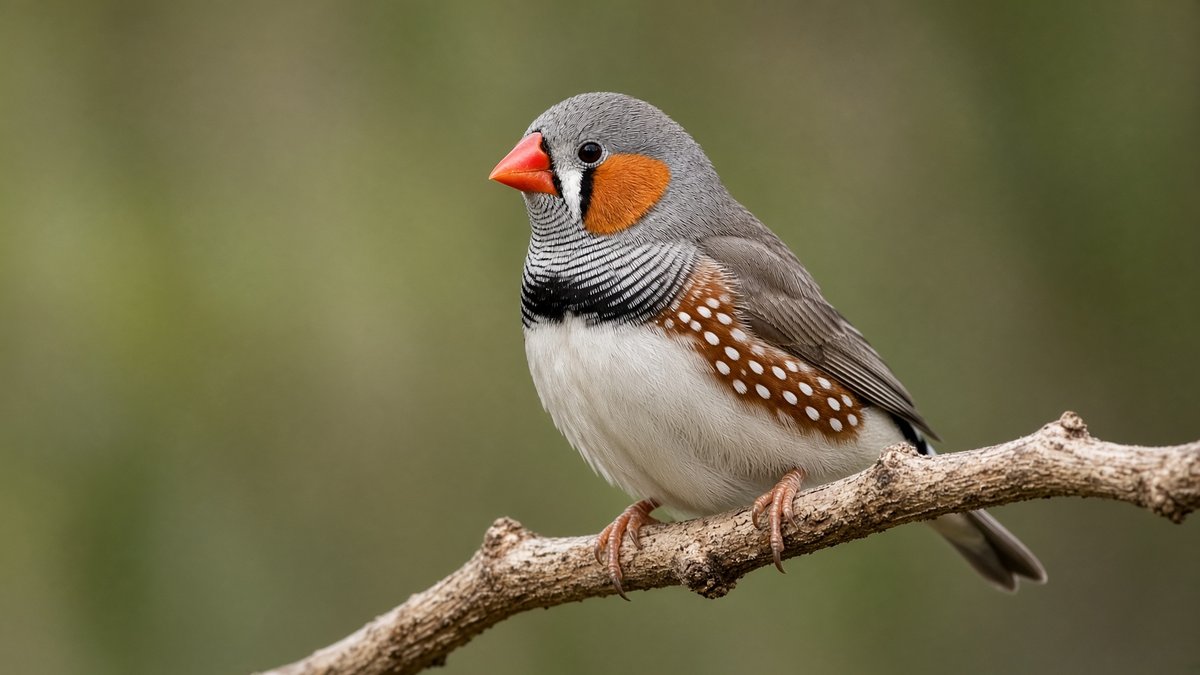
The zebra finch is one of the most popular pet birds in the world and, alongside the canary, one of the few non-parrot birds kept as a pet - it is a true finch, and its care reflects that: no talking, no hand-taming the way a parrot bonds with an owner, and a strong instinct to live in flocks rather than pair off with a person. Native to the arid interior of Australia, wild zebra finches live in flocks of dozens to over a hundred birds, foraging for grass seed around waterholes. Males are unmistakable, with a fine black-and-white barred throat (the source of the species' name), a solid black breast band, chestnut flanks spotted with white, an orange cheek patch, and a red bill; females are a plain uniform grey with an orange bill and none of those markings. Beyond the pet trade, the zebra finch is the single most widely used songbird in neuroscience, since males learn their song from a tutor as juveniles in a process that has made them central to research on vocal learning.
📋 Quick Facts
Native Range
Interior of Australia
Natural Habitat
Semi-arid grassland, scrubland, and open woodland near water
Adult Size
3.9-4.3 inches (10-11 cm); 0.3-0.5 oz
Wild Diet
Grass seeds, with insects taken for extra protein during breeding
Wild Lifespan
2 to 3 years in the wild; 5 to 7 years in captivity
Conservation Status
Least Concern (IUCN)
📜 History
John Gould described the Australian bird in 1837 as Amadina castanotis, about two decades after Vieillot named the smaller Timor form. It reached European keepers soon after and became a common cage bird through the nineteenth century, largely because it bred so willingly indoors. That aviary stock, not fresh wild imports, founded the research colonies: laboratory birds descend from lines aviculturists have kept for more than a hundred generations. Laboratories took the species up steadily from the 1950s onward, and in 2010 it became the second bird after the chicken to have its genome sequenced.
⚖️ Compare
Zebra Finch
Human
Adult Size
3.9-4.3 inches (10-11 cm); 0.3-0.5 oz
5-6 feet (150-185 cm); ~135-200 lbs
Wild Lifespan
2 to 3 years in the wild; 5 to 7 years in captivity
~73 years (global average)
Wild Diet
Grass seeds, with insects taken for extra protein during breeding
Omnivorous - eats just about anything
Native Range
Interior of Australia
Global - originated in Africa roughly 300,000 years ago
Natural Habitat
Semi-arid grassland, scrubland, and open woodland near water
Everywhere from arctic tundra to tropical megacities
Conservation Status
Least Concern (IUCN)
Least Concern (8+ billion and counting)
🧠 Test Yourself
What's the Zebra Finch's native range?
🤩 Fun Facts
🐦 Taught to Sing by Dad
Only male zebra finches sing, and they learn their song from a tutor, usually their father, as juveniles. Researchers treat the zebra finch as a leading lab model for vocal learning, since songbirds and humans share real similarities in how they acquire complex, learned vocalizations, a genuine scientific parallel to how children learn speech.
📖 Care Guide
Zebra Finch Care Guide
The busy little finch that wants a friend far more than a finger!
Subscribe - it's free
New animal facts and care guides straight to your inbox. No spam. 🐾
📰 Deep Dive
🩺 Health and More
⚠️ Household Hazards for Pet Birds: The Complete Safety Checklist
🦠 Avian Gastric Yeast (Megabacteriosis): The Silent Weight-Loss Disease
🚪 Quarantining a New Bird: The Real Timeline and Why It Matters
💩 Reading Bird Droppings: The Daily Health Check Every Owner Should Know
🌙 Photoperiod and Sleep: The Light Schedule That Controls Your Bird's Hormones
🦜 Converting a Seed-Eating Bird to Pellets Without Starving It
🔦 Bird Emergency Plan: Power Outages, Travel, and Transport
⚖️ Sexing, Weight, and Body Condition in Pet Birds: What Actually Works
🥚 Chronic Egg Laying and Egg Binding in Budgies, Cockatiels, and Lovebirds
🪶 Why Is My Bird Losing Feathers? Molt vs. Plucking vs. PBFD vs. Giardia
🦜 Choosing a Pet Bird: What You're Actually Signing Up For
🦠 Avian Polyomavirus: Budgerigar Fledgling Disease and French Molt
🦜 Reading Bird Body Language: Fluffed Content vs. Fluffed Sick
🐦 Colony and Aviary Keeping: Budgies, Canaries, and Finches in Groups
🎯 Parrot Training: The Behavior Ladder From Budgie to Macaw
🩹 Bird First Aid Kit and Grooming: Nails, Beak, and Blood Feathers
🐦 Two Small Birds, Two Completely Different Pets
🦅 The Ultimate Birdwatching Guide: Best Places, Times, and Tips for Beginners (2026)
🤓 Did You Know?
Zebra finches are the most widely studied songbird in neuroscience. Only males sing, and they learn their song from a tutor as juveniles in a process remarkably similar to how human babies learn speech, which has made them one of science's best models for understanding vocal learning.
Explore More