Quaker Parakeet
Myiopsitta monachus
On This Page▾
🌍 Overview
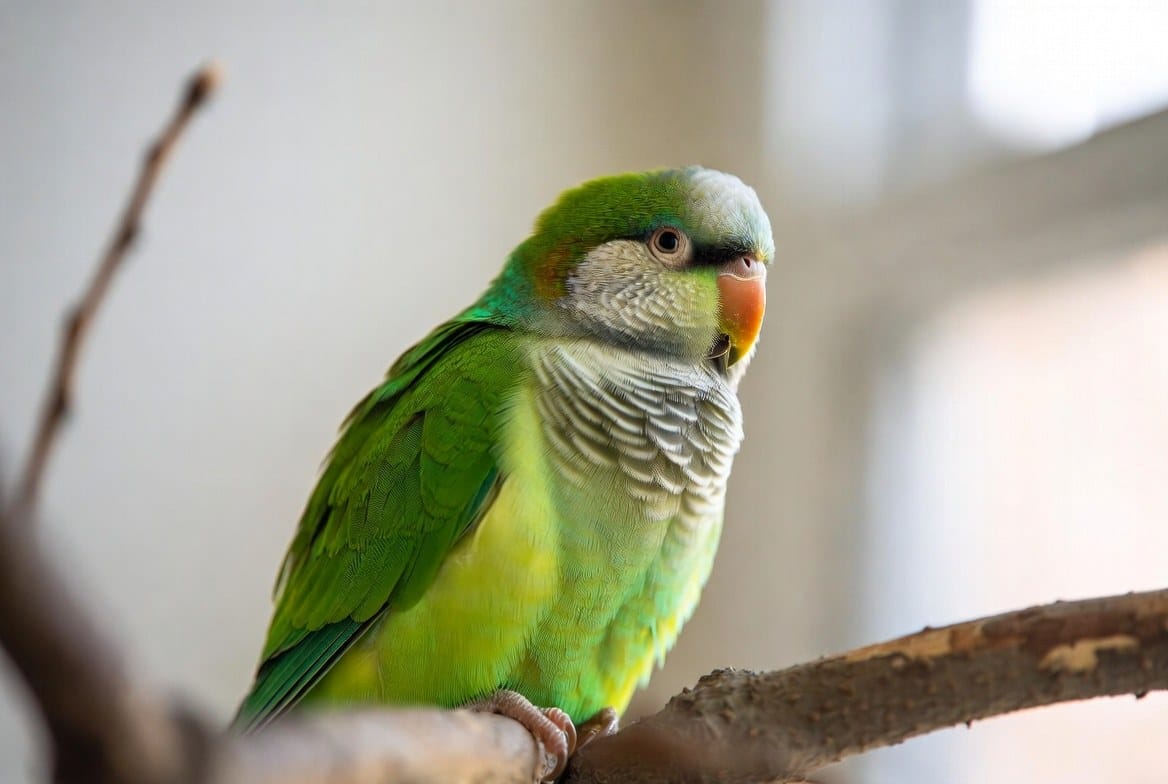
Also called the monk parakeet, this is the only parrot in the world that builds its own stick nest rather than using a tree hollow. Wild colonies construct enormous communal structures with separate chambers for each pair, and those nests are why the species is regulated in a way no other pet parrot is: escaped birds have established self-sustaining colonies across the United States and Europe, and their nests on electrical substations and transmission towers cause outages and fires. Several US states ban or restrict the species for that reason alone. As a pet the Quaker is famously bold for its size and among the most reliable talkers of any small parrot.
📋 Quick Facts
Native Range
Temperate and subtropical South America, from Bolivia and Brazil to central Argentina
Natural Habitat
Open woodland, savanna and farmland; readily colonises cities
Adult Size
11-12 inches (28-30 cm); 3-5 oz
Wild Diet
Seeds, grains, fruit, blossoms and some insects
Wild Lifespan
Not documented in the wild; an average of 22.1 years in captivity
Conservation Status
Least Concern (IUCN), and an established invasive species well outside its native range
📜 History
Nearly 65,000 monk parakeets entered the United States through the pet trade between 1968 and 1972, and the feral population dates from that window. A popular account has a shipping crate splitting open at John F. Kennedy airport and seeding the whole invasion, but retellings put the accident in different years and the number of escapees anywhere from a dozen to 2,000, and no first-hand record of it has ever surfaced. The US Fish and Wildlife Service began pulling down birds and nests in the 1970s and failed. Numbers then held steadier than biologists had feared, for reasons still unsettled, with roughly 100,000 birds in Florida today.
⚖️ Compare
Quaker Parakeet
Human
Adult Size
11-12 inches (28-30 cm); 3-5 oz
5-6 feet (150-185 cm); ~135-200 lbs
Wild Lifespan
Not documented in the wild; an average of 22.1 years in captivity
~73 years (global average)
Wild Diet
Seeds, grains, fruit, blossoms and some insects
Omnivorous - eats just about anything
Native Range
Temperate and subtropical South America, from Bolivia and Brazil to central Argentina
Global - originated in Africa roughly 300,000 years ago
Natural Habitat
Open woodland, savanna and farmland; readily colonises cities
Everywhere from arctic tundra to tropical megacities
Conservation Status
Least Concern (IUCN), and an established invasive species well outside its native range
Least Concern (8+ billion and counting)
🧠 Test Yourself
What's the Quaker Parakeet's native range?
⚖️ Where it is legal
18 US jurisdictions restrict this species, from outright bans to permits. Every one quotes the rule it comes from.
⚖️ Legal Guide
Subscribe - it's free
New animal facts and care guides straight to your inbox. No spam. 🐾
📰 Deep Dive
🦜 How Much Does a Quaker Parakeet Really Cost?
🦜 Is It Legal to Own a Quaker Parakeet? And How to Handle One
🦜 Common Quaker Parakeet Health Issues
🦜 Quaker Parakeet Cage Setup
🦜 Quaker Parakeet Feeding: Seventy Percent Pellets, a Small Handful a Day, and the Seed Diet Behind the Fatty Liver
🦜 Quaker Parakeet Enrichment: The Only Parrot That Builds a House
🩺 Health and More
🎭 Three Pets That Are a Bigger Deal Than They Look
⚠️ Household Hazards for Pet Birds: The Complete Safety Checklist
🚪 Quarantining a New Bird: The Real Timeline and Why It Matters
💩 Reading Bird Droppings: The Daily Health Check Every Owner Should Know
🌙 Photoperiod and Sleep: The Light Schedule That Controls Your Bird's Hormones
🦜 Converting a Seed-Eating Bird to Pellets Without Starving It
✂️ Wing Clipping: Flighted vs. Clipped, Both Sides Explained
🔦 Bird Emergency Plan: Power Outages, Travel, and Transport
⚖️ Sexing, Weight, and Body Condition in Pet Birds: What Actually Works
🥚 Chronic Egg Laying and Egg Binding in Budgies, Cockatiels, and Lovebirds
🪶 Why Is My Bird Losing Feathers? Molt vs. Plucking vs. PBFD vs. Giardia
🦜 Choosing a Pet Bird: What You're Actually Signing Up For
🦠 Avian Polyomavirus: Budgerigar Fledgling Disease and French Molt
🦜 Reading Bird Body Language: Fluffed Content vs. Fluffed Sick
🌫️ Feather Dust, Air Quality, and Bird Fancier's Lung
🎯 Parrot Training: The Behavior Ladder From Budgie to Macaw
🩹 Bird First Aid Kit and Grooming: Nails, Beak, and Blood Feathers
📋 Succession Planning for a Pet That May Outlive You
🕊️ Adopting a Rescue Parrot: The First Months, Honestly
🦅 The Ultimate Birdwatching Guide: Best Places, Times, and Tips for Beginners (2026)
🤓 Did You Know?
The quaker is the only parrot that does not nest in a tree cavity. It weaves a bulky stick nest instead, often on electrical infrastructure, and the nest material arcs the current. Every US state ban on this bird is an escape-and-establishment rule rather than a dangerous-animal one.
Explore More