Ferret
Mustela putorius furo
On This Page▾
🌍 Overview
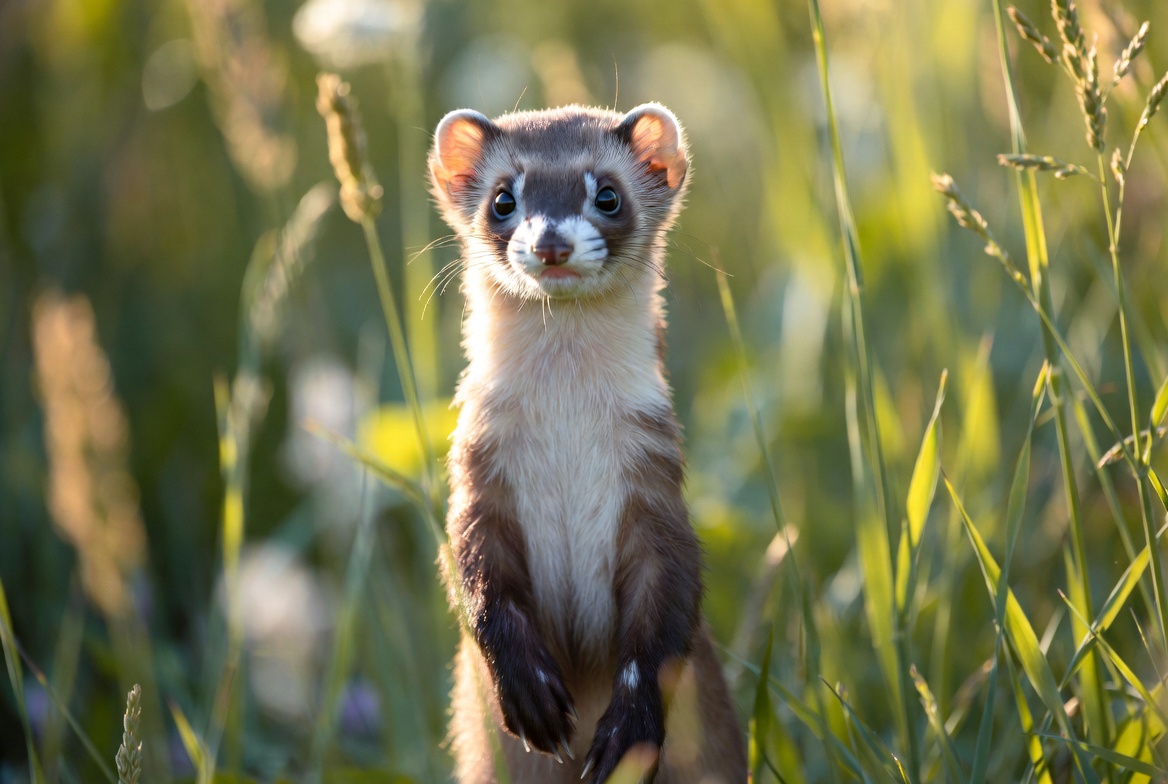
Ferrets are fully domesticated descendants of the European polecat, bred by humans for at least 2,500 years - initially for hunting rabbits (a practice called ferreting). They belong to the Mustelidae family, making them relatives of otters, minks, and badgers. Highly social, playful, and mischievous, ferrets sleep up to 16-18 hours per day but are intensely active during their waking periods. They are obligate carnivores requiring high-protein diets.
📋 Quick Facts
Native Range
Domesticated from the European polecat; origin in Europe
Natural Habitat
Fully domesticated; no established wild population
Adult Size
13-16 inches (33-40 cm) body; males significantly larger
Wild Diet
(Ancestral polecat) Small mammals, birds, amphibians, and eggs
Wild Lifespan
5-10 years
Conservation Status
Not assessed (domesticated); European polecat is Least Concern (IUCN)
📜 History
In 1933 the ferret handed virology its first grip on human influenza. Wilson Smith, Christopher Andrewes and Patrick Laidlaw, working at the National Institute for Medical Research in London during an English epidemic, had filtered throat washings from patients and failed to infect guinea pigs, mice, rabbits, hamsters, hedgehogs or monkeys. Ferrets were on hand only because a neighboring laboratory kept them for canine distemper work. Two inoculated animals came down with a two-day incubation, a double temperature spike and streaming noses, close enough to the human illness to establish that a virus caused it. The species has been the standard influenza model ever since.
⚖️ Compare
Ferret
Human
Adult Size
13-16 inches (33-40 cm) body; males significantly larger
5-6 feet (150-185 cm); ~135-200 lbs
Wild Lifespan
5-10 years
~73 years (global average)
Wild Diet
(Ancestral polecat) Small mammals, birds, amphibians, and eggs
Omnivorous - eats just about anything
Native Range
Domesticated from the European polecat; origin in Europe
Global - originated in Africa roughly 300,000 years ago
Natural Habitat
Fully domesticated; no established wild population
Everywhere from arctic tundra to tropical megacities
Conservation Status
Not assessed (domesticated); European polecat is Least Concern (IUCN)
Least Concern (8+ billion and counting)
🧠 Test Yourself
What's the Ferret's native range?
⚖️ Where it is legal
9 US jurisdictions restrict this species, from outright bans to permits. Every one quotes the rule it comes from.
⚖️ Legal Guide
Subscribe - it's free
New animal facts and care guides straight to your inbox. No spam. 🐾
📰 Deep Dive
🦡 How Much Does a Ferret Really Cost?
🦡 How to Handle a Ferret
🦡 Common Ferret Health Issues (And Why Middle Age Is the Real Turning Point)
🦡 Ferret Cage Setup (And Why the Cage Is Only Half the Job)
🦡 Ferret Feeding: Schedule, Diet, and Why They Stop Eating
🦡 Ferret Enrichment: Lying Awake With Their Eyes Open
🩺 Health and More
🤓 Did You Know?
Ferrets do a 'war dance' when they're excited: a frenzied hopping, bouncing, and sideways leaping display also called the 'dooking.' Dooking means your ferret is having the time of their life!
Explore More