Cockatiel
Nymphicus hollandicus
On This Page▾
🌍 Overview
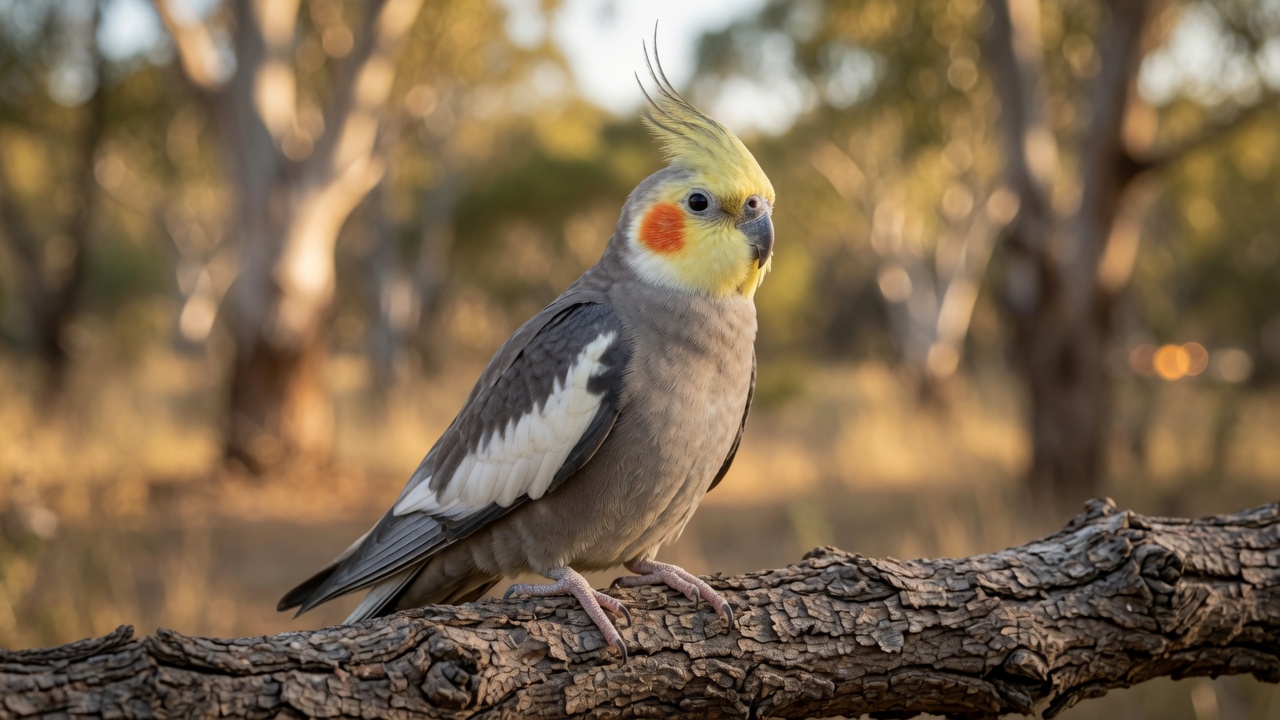
Cockatiels are the smallest member of the cockatoo family and are endemic to Australia, where they inhabit open country and lightly wooded areas across the continent. They are highly nomadic, following water sources and seeding grasses. Cockatiels were the first parrot species to be widely bred in captivity and remain among the most popular pet birds worldwide, prized for their gentle temperament, whistling ability, and trainability.
📋 Quick Facts
Native Range
Australia
Natural Habitat
Open grassland, scrubland, and lightly wooded areas
Adult Size
12-13 inches (30-33 cm) including tail; 2.5-3.5 oz
Wild Diet
Grass seeds, grains, berries, and insects
Wild Lifespan
10 to 14 years in the wild; up to 25 years in captivity, the oldest on record 36
Conservation Status
Least Concern (IUCN)
📜 History
Johann Friedrich Gmelin described the bird in 1788 as Psittacus novaehollandiae, Robert Kerr renamed it Psittacus hollandicus in 1792, and Johann Georg Wagler gave it a genus of its own, Nymphicus, in 1832. Australia prohibits the export of its native birds, a restriction carried today by the Wildlife Protection (Regulation of Exports and Imports) Act of 1982, so cockatiels kept anywhere else descend entirely from stock already outside the country. Breeders answered that closed border with color. A pied mutation appeared in California in 1949, lutino followed in 1958, cinnamon during the 1950s and pearl in 1967, and those four underpin nearly every variety on sale now.
⚖️ Compare
Cockatiel
Human
Adult Size
12-13 inches (30-33 cm) including tail; 2.5-3.5 oz
5-6 feet (150-185 cm); ~135-200 lbs
Wild Lifespan
10 to 14 years in the wild; up to 25 years in captivity, the oldest on record 36
~73 years (global average)
Wild Diet
Grass seeds, grains, berries, and insects
Omnivorous - eats just about anything
Native Range
Australia
Global - originated in Africa roughly 300,000 years ago
Natural Habitat
Open grassland, scrubland, and lightly wooded areas
Everywhere from arctic tundra to tropical megacities
Conservation Status
Least Concern (IUCN)
Least Concern (8+ billion and counting)
🧠 Test Yourself
What's the Cockatiel's native range?
📖 Care Guide
Cockatiel Care Guide
The crested whistler that will learn your ringtone and improve on it!
Subscribe - it's free
New animal facts and care guides straight to your inbox. No spam. 🐾
📰 Deep Dive
🦜 How Much Does a Cockatiel Really Cost?
🦜 How to Handle and Tame a Cockatiel
🦜 Common Cockatiel Health Issues (And Why the Kitchen Can Be Dangerous)
🦜 Cockatiel Cage Setup: Width, Safety, and the Diet Debate
🐦 Cockatiel Feeding: Schedule, Diet, and Why They Stop Eating
🦜 Cockatiel Enrichment: Two Studies, Five Years Apart
🩺 Health and More
⚠️ Household Hazards for Pet Birds: The Complete Safety Checklist
🦠 Avian Gastric Yeast (Megabacteriosis): The Silent Weight-Loss Disease
🚪 Quarantining a New Bird: The Real Timeline and Why It Matters
💩 Reading Bird Droppings: The Daily Health Check Every Owner Should Know
🌙 Photoperiod and Sleep: The Light Schedule That Controls Your Bird's Hormones
🦜 Converting a Seed-Eating Bird to Pellets Without Starving It
✂️ Wing Clipping: Flighted vs. Clipped, Both Sides Explained
🔦 Bird Emergency Plan: Power Outages, Travel, and Transport
⚖️ Sexing, Weight, and Body Condition in Pet Birds: What Actually Works
🥚 Chronic Egg Laying and Egg Binding in Budgies, Cockatiels, and Lovebirds
🪶 Why Is My Bird Losing Feathers? Molt vs. Plucking vs. PBFD vs. Giardia
🦜 Choosing a Pet Bird: What You're Actually Signing Up For
🦠 Avian Polyomavirus: Budgerigar Fledgling Disease and French Molt
🦜 Reading Bird Body Language: Fluffed Content vs. Fluffed Sick
🐦 Colony and Aviary Keeping: Budgies, Canaries, and Finches in Groups
🌫️ Feather Dust, Air Quality, and Bird Fancier's Lung
🎯 Parrot Training: The Behavior Ladder From Budgie to Macaw
🩹 Bird First Aid Kit and Grooming: Nails, Beak, and Blood Feathers
📋 Succession Planning for a Pet That May Outlive You
🕊️ Adopting a Rescue Parrot: The First Months, Honestly
🔑 Four Pets With One Rule Each Worth Knowing First
🦜 Budgie vs. Cockatiel: Which Beginner Bird Fits You Better
🦜 Cockatiel vs. Cockatoo: Which Parrot Actually Fits Your Life
🦅 The Ultimate Birdwatching Guide: Best Places, Times, and Tips for Beginners (2026)
🤓 Did You Know?
Cockatiels are masters of mimicry. Males especially love to learn whistled tunes and will serenade you (and any reflective surface) for hours. Many can even learn short phrases!
Explore More