Amano Shrimp
Caridina multidentata
On This Page▾
🌍 Overview
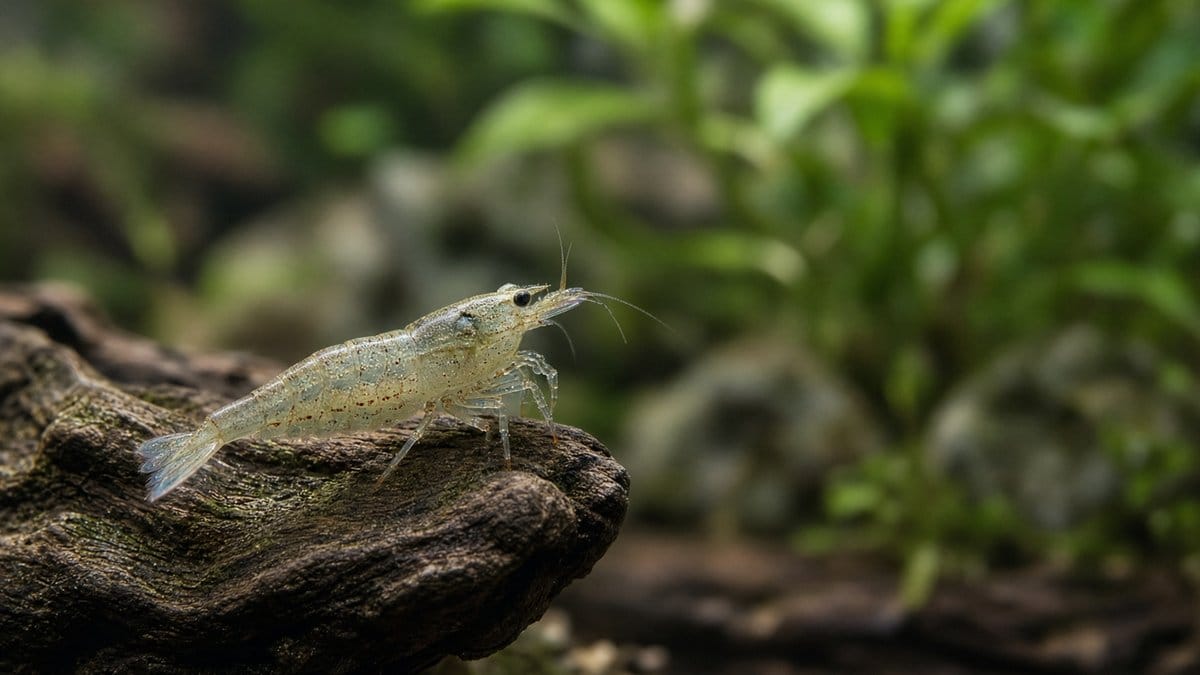
The Amano shrimp is the largest of the dwarf shrimp commonly kept in freshwater aquariums and arguably the single best algae eater in the hobby, tackling hair, thread, and even tough beard algae that most fish and other shrimp ignore. It gets its name from Takashi Amano, the Japanese aquascaper who began using it to keep his pioneering planted tanks algae-free in the early 1980s. Unlike the cherry shrimp it's often sold alongside, the Amano shrimp cannot complete its life cycle in freshwater: its larvae hatch needing brackish to full-strength salt water to develop, so almost every Amano shrimp in the trade is wild-caught rather than captive-bred.
📋 Quick Facts
Native Range
Japan (southwestern) and Taiwan
Natural Habitat
Fast-flowing freshwater streams and rivers
Adult Size
Up to about 2 inches (5 cm); large for a dwarf shrimp, though bamboo and vampire shrimp are bigger still
Wild Diet
Algae and organic biofilm grazed from rocks and streambeds in fast-flowing water
Wild Lifespan
No biological study of wild lifespan exists for dwarf shrimp; 2 to 3 years in an aquarium, occasionally up to 5 with excellent, stable conditions
Conservation Status
Least Concern (IUCN)
📜 History
William Stimpson described the shrimp in 1860, but his specimens and most of the North Pacific Exploring Expedition collection he had brought to Chicago burned in the Great Chicago Fire of October 1871, and he died nine months later. With the types gone, the same animal was described again as Caridina japonica by De Man in 1892, and that name held for over a century. In 2006 a team led by Yixiong Cai collected fresh material at Stimpson's original localities, showed the two names covered one species, and restored the older multidentata. Takashi Amano, who founded his aquarium company in 1982 and whose Nature Aquarium World books began appearing in 1994, died in 2015.
⚖️ Compare
Amano Shrimp
Human
Adult Size
Up to about 2 inches (5 cm); large for a dwarf shrimp, though bamboo and vampire shrimp are bigger still
5-6 feet (150-185 cm); ~135-200 lbs
Wild Lifespan
No biological study of wild lifespan exists for dwarf shrimp; 2 to 3 years in an aquarium, occasionally up to 5 with excellent, stable conditions
~73 years (global average)
Wild Diet
Algae and organic biofilm grazed from rocks and streambeds in fast-flowing water
Omnivorous - eats just about anything
Native Range
Japan (southwestern) and Taiwan
Global - originated in Africa roughly 300,000 years ago
Natural Habitat
Fast-flowing freshwater streams and rivers
Everywhere from arctic tundra to tropical megacities
Conservation Status
Least Concern (IUCN)
Least Concern (8+ billion and counting)
🧠 Test Yourself
What's the Amano Shrimp's native range?
🤩 Fun Facts
🦐 Needs Salt Water to Be Born, Dies From It as an Adult
Amano shrimp larvae cannot survive unless they reach brackish or marine water within their first days of life, yet the adults are the opposite, even a small, accidental dose of salt can kill a mature amano shrimp outright. The same animal that's biologically obligated to spend part of its life cycle in salt water would die if you tried to acclimate it into a saltwater tank as an adult.
📖 Care Guide
Amano Shrimp Care Guide
The champion algae eater that clears a tank and never overruns it!
Subscribe - it's free
New animal facts and care guides straight to your inbox. No spam. 🐾
📰 Deep Dive
🦐 How Much Does Amano Shrimp Ownership Really Cost?
🦐 How to Handle Amano Shrimp (Minimal Contact, Careful Acclimation)
🦐 Common Amano Shrimp Health Issues (And Why 'Disease' Usually Isn't the Right Word)
🦐 Amano Shrimp Tank Setup: Minimal Bioload, Real Current, and a Lid That Actually Seals
🦐 Amano Shrimp Feeding: The Hobby's Best Algae Eater, With Real Limits
🦐 Amano Shrimp Enrichment: The Algae Runs Out and Nobody Notices
🩺 Health and More
🦠 How to Cycle a Fish Tank, Start to Finish: Fishless and Fish-In
🧽 Aquarium Filtration: How It Actually Works and How to Maintain It
🪣 Aquarium Water Changes: How Much, How Often, and What the Number Is For
🐟 Aquarium Stocking and Tankmates: How Many Fish, and Which Ones Go Together
🦐 Shrimp Molting: What a Normal Molt Looks Like, and the White Ring That Means It Failed
🧪 Freshwater pH, GH, and KH: Why Chasing a Number Backfires
🤓 Did You Know?
Amano shrimp can't reproduce in a home freshwater aquarium at all. Females carry eggs and release free-swimming larvae just fine, but those larvae need brackish to full-strength salt water to survive past their first few hours of life, then must be raised through several weeks of saltwater development before metamorphosing into juveniles that can return to fresh water. Because of this, almost every Amano shrimp sold in stores today is wild-caught, not captive-bred.
Explore More