Stick Insect
Phasmatodea
On This Page▾
🌍 Overview
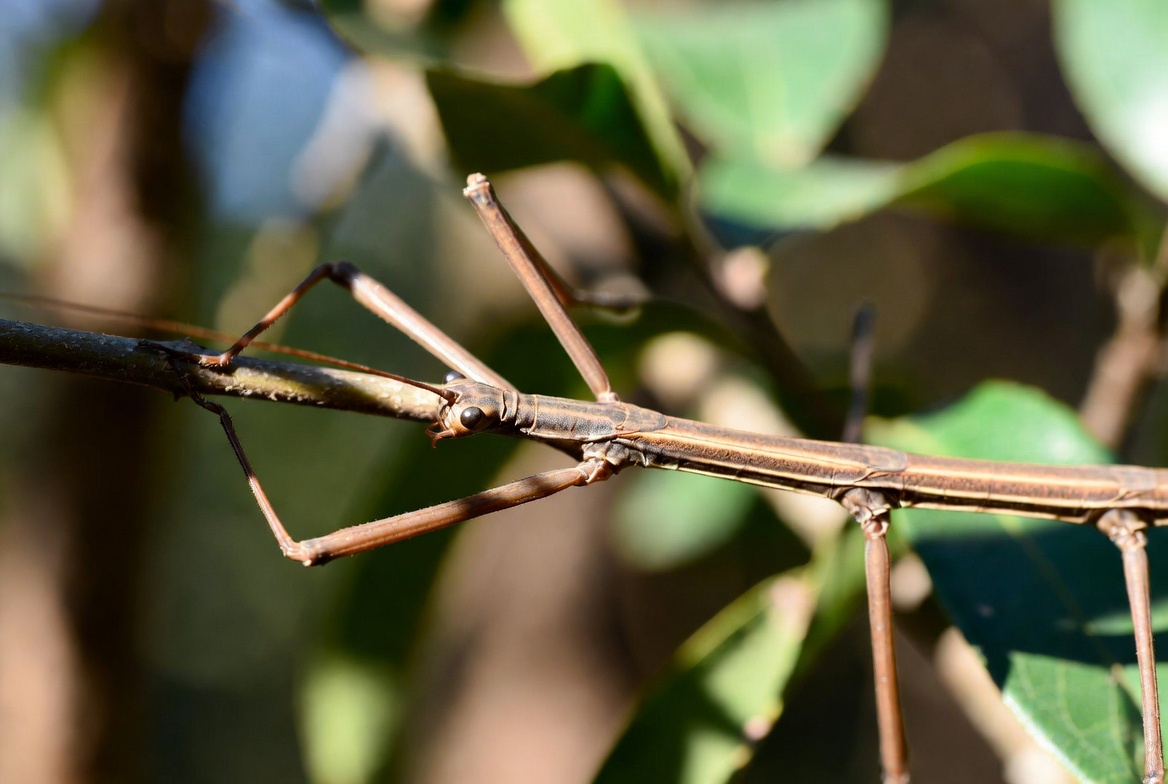
Stick insects (phasmatids) are the world's greatest masters of camouflage, with over 3,000 species evolved to mimic twigs, leaves, and bark with remarkable precision. Some species can regenerate lost limbs between molts. Many reproduce through parthenogenesis - females produce viable eggs without fertilization. The longest known insect is Chan's megastick from Borneo, exceeding 22 inches in total body length including legs.
📋 Quick Facts
Native Range
Worldwide, primarily tropical and subtropical regions
Natural Habitat
Forest and woodland; highly variable by species
Adult Size
1-22 inches (2-55 cm) depending on species
Wild Diet
Leaves of various plants (highly species-specific)
Wild Lifespan
6 months-2 years depending on species
Conservation Status
Varies; some island species Critically Endangered (IUCN)
📜 History
One species carried the whole order into laboratories. Carausius morosus, named by de Sinéty in 1901, traces its culture stock to a collection from Tamil Nadu and consists entirely of parthenogenetic females, which is why generations of students have reared it under the name Indian or laboratory stick insect. The order also produced one of the more improbable conservation stories on record: Dryococelus australis, the Lord Howe Island stick insect, was written off as extinct by 1920 until a February 2001 survey of Ball's Pyramid found roughly two dozen animals on a single terrace. Two breeding pairs were collected in 2003, one going to a private breeder in Sydney and the other to Melbourne Zoo, which built a captive population from them.
⚖️ Compare
Stick Insect
Human
Adult Size
1-22 inches (2-55 cm) depending on species
5-6 feet (150-185 cm); ~135-200 lbs
Wild Lifespan
6 months-2 years depending on species
~73 years (global average)
Wild Diet
Leaves of various plants (highly species-specific)
Omnivorous - eats just about anything
Native Range
Worldwide, primarily tropical and subtropical regions
Global - originated in Africa roughly 300,000 years ago
Natural Habitat
Forest and woodland; highly variable by species
Everywhere from arctic tundra to tropical megacities
Conservation Status
Varies; some island species Critically Endangered (IUCN)
Least Concern (8+ billion and counting)
🧠 Test Yourself
What's the Stick Insect's native range?
📖 Care Guide
Stick Insect Care Guide
The master of disguise that is literally a twig with legs!
Subscribe - it's free
New animal facts and care guides straight to your inbox. No spam. 🐾
📰 Deep Dive
🦋 How Much Does a Stick Insect Really Cost? (And a Legal Note to Read First)
🦋 How to Handle a Stick Insect (And Why You Can Keep More Than One)
🦋 Common Stick Insect Health Issues (Molting Is the Biggest Risk)
🦋 Stick Insect Enclosure Setup: Height, Humidity, and the Right Host Plant
🌿 Stick Insect Feeding: Bramble in a Jar, the Right Plant for the Species, and Water That Cannot Drown a Nymph
🦗 Stick Insect Enrichment: Fresh Leaves and Room to Hang
🩺 Health and More
🕷️ Invertebrate Molting 101: What's Normal, Species by Species
☠️ Household Pesticides and Your Invertebrate Pet: The Hidden Hazard
📦 Rehousing an Invertebrate: Method, Timing, and Urticating Hair First Aid
🕷️ Invertebrate Housekeeping: Quarantining a New Arrival, Cleaning the Enclosure, and Finding an Escapee
📦 Invertebrate Emergency Plan: Power Outages, Travel, and Shipping
⚠️ Four Pets, Four Things Nobody Mentions Before You Buy
🤓 Did You Know?
Stick insects are parthenogenetic: females can reproduce without males and lay fertile eggs throughout their lives. The eggs of some species can remain viable in soil for years, hatching after the mother is long dead, mimicking plant seeds so perfectly that ants carry them underground.
Explore More