Persian
Felis catus
On This Page▾
🌍 Overview
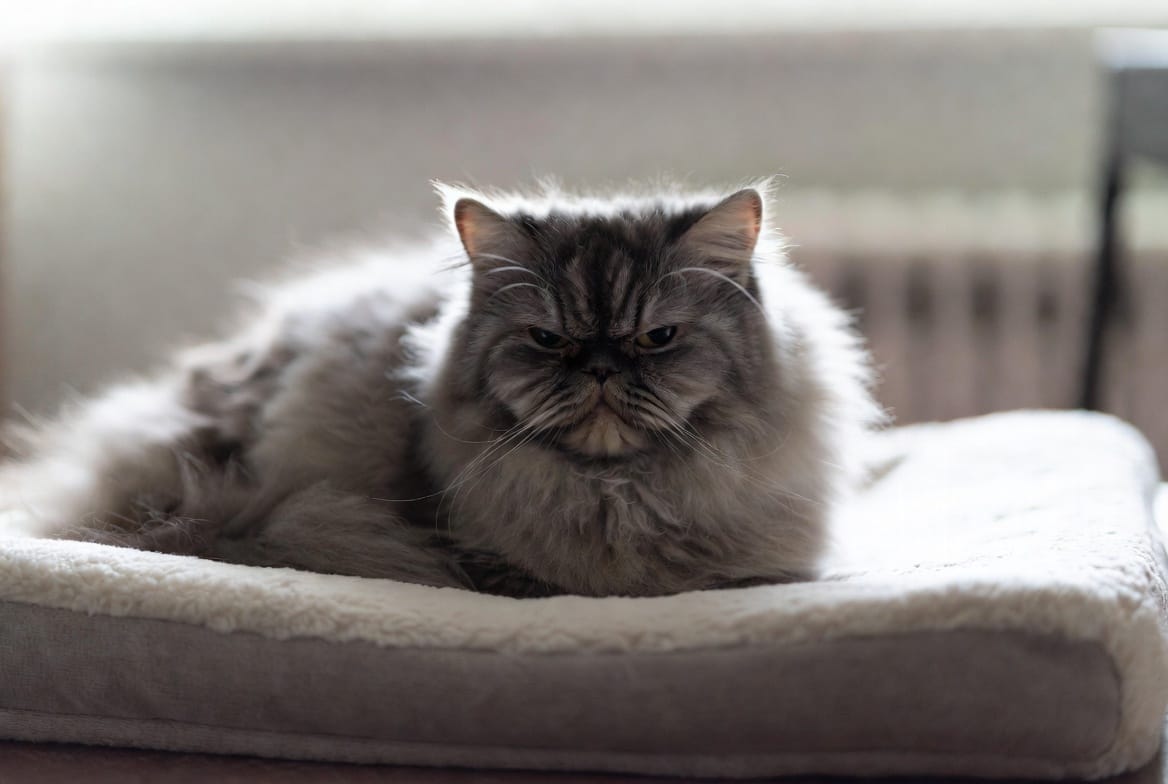
Persians are one of the oldest recognized cat breeds, with a history tracing to the 1600s when longhaired cats from Persia (modern Iran) and Turkey were brought to Europe. Their dramatically flat faces, luxurious long coats, and calm, gentle temperament have made them perennially popular show and companion cats. Their flat facial structure, however, comes with significant health consequences: dental crowding, chronic eye drainage, and breathing difficulties are common.
📋 Quick Facts
Native Range
Breed origin: Persia (modern Iran) and Turkey; popularized in Europe
Natural Habitat
Fully domesticated
Adult Size
10-15 inches at shoulder; 7-12 lbs
Wild Diet
Fully domesticated
Wild Lifespan
UK primary-care records give a median longevity of 13.5 years (IQR 9.9 to 16.0)
Conservation Status
Not applicable (domesticated breed)
📜 History
The show ring made the modern Persian. The first organized cat show, at the Crystal Palace in London on July 13, 1871, drew more than 20,000 visitors and gave longhairs their own classes, and its instigator Harrison Weir published the first breed standard in 1889, separating Persians from Angoras by fuller coat and larger head. The extreme face came much later and by accident: in the late 1950s a spontaneous mutation in American red tabby litters produced the flattened peke-faced look, named for the Pekingese dog. Breeders liked it, crossed it into other colors, and within a few decades the show standard had moved to meet it.
⚖️ Compare
Persian
Human
Adult Size
10-15 inches at shoulder; 7-12 lbs
5-6 feet (150-185 cm); ~135-200 lbs
Wild Lifespan
UK primary-care records give a median longevity of 13.5 years (IQR 9.9 to 16.0)
~73 years (global average)
Wild Diet
Fully domesticated
Omnivorous - eats just about anything
Native Range
Breed origin: Persia (modern Iran) and Turkey; popularized in Europe
Global - originated in Africa roughly 300,000 years ago
Natural Habitat
Fully domesticated
Everywhere from arctic tundra to tropical megacities
Conservation Status
Not applicable (domesticated breed)
Least Concern (8+ billion and counting)
🧠 Test Yourself
What's the Persian's native range?
⚖️ Legal Guide
Subscribe - it's free
New animal facts and care guides straight to your inbox. No spam. 🐾
🩺 Health and More
🐈 Cat Enrichment: Five Pillars, and Most Homes Miss the Second One
🧬 What a Pet DNA Test Actually Tells You
👁️ Inherited Eye Disease: What Screening Actually Catches
🫘 Kidney Disease in Cats: What the Numbers Actually Mean
🫀 Cardiomyopathy in Cats and Dogs: HCM, DCM and What They Mean
🐽 BOAS: What Flat-Faced Breathing Actually Costs
🤓 Did You Know?
Persian breeders quietly pulled off one of the most successful genetic clean-ups in the cat fancy. Surveys from the 1990s and 2000s put polycystic kidney disease in Persians somewhere around 36 to 50 percent in most countries. Then the PKD1 DNA test arrived, and submissions to the UK lab that runs it went from 29 percent positive in 2005 to 10 percent in 2009. When researchers later genotyped 11,036 cats across 90 breeds, the variant turned up in none of the 118 Persians tested. A defect that once affected roughly half the breed was bred down to near-absence in about fifteen years by a cheek swab and breeder discipline.
Explore More